 By
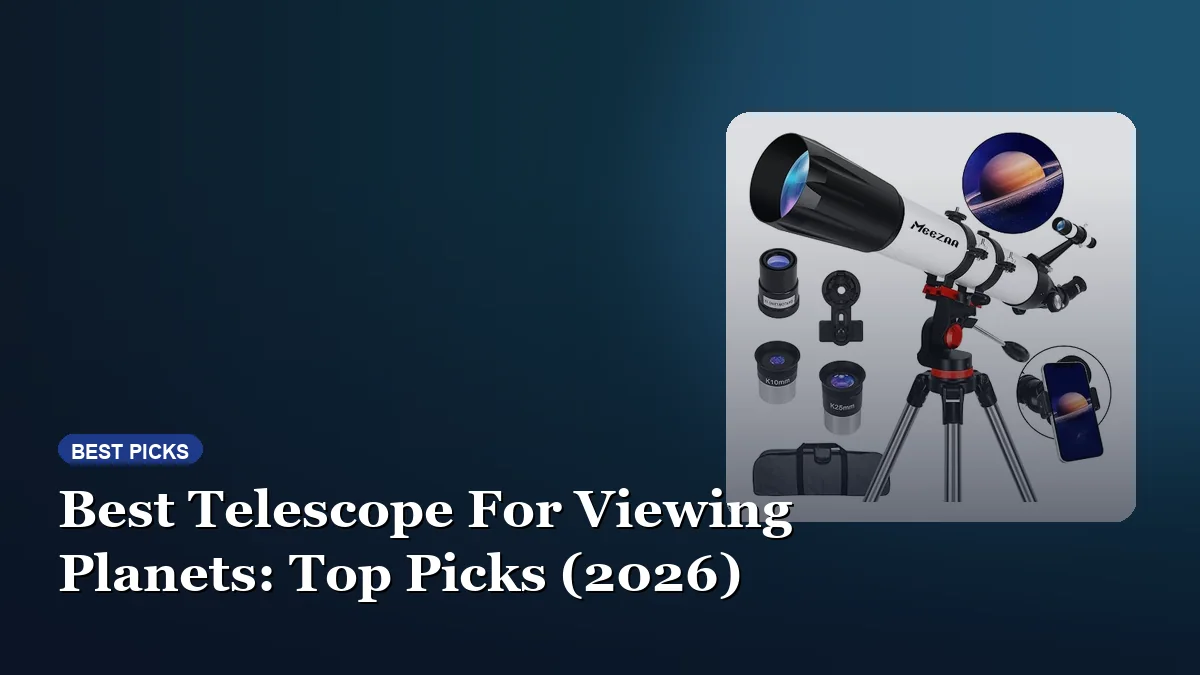
 MEEZAA 90mm Aperture 800mm Refractor Telescope for Astronomy Beginners
90mm Aperture | 800mm Focal Length | Altazimuth Mount
 Dianfan 150EQ Professional Astronomy Telescope with 150mm Aperture
150mm Aperture | 650mm Focal Length | Equatorial Mount
 Hawkko 90mm Aperture 900mm Telescope for Adults High Powered
90mm Aperture | 900mm Focal Length | AZ Mount
 Gaterda 90mm Aperture 900mm Refractor Telescope for Adults
90mm Aperture | 900mm Focal Length | Phone Adapter
 WOSPORTS 90MM Telescope for Adults High Powered 180X Magnification
90mm Aperture | 180x Zoom | Erect-Image Diagonal
 SOLOMARK 90mm Aperture 1000mm High Powered Telescope for Beginners
90mm Aperture | 1000mm Focal Length | Vertisteel AZ Mount
Our top pick, the MEEZAA 90mm Aperture 800mm Refractor Telescope, offers brilliant optical clarity and easy setup for spotting planetary rings.
On This Page (8 sections)
How We Chose
- Aperture & Optics: We prioritize models featuring at least 90mm objectives to gather sufficient light for sharp planetary details.
- Mount Stability: We test tripods and mounts to guarantee steady tracking of fast-moving celestial targets across the night sky.
- Ease of Use: We favor user-friendly focusers and intuitive setups that help beginners start viewing planets right out of the box.
Who Needs This
- Beginner astronomers wanting to explore lunar craters and planetary rings without a steep learning curve.
- Backyard stargazers seeking portable refractors that set up quickly on clear nights.
- Photography enthusiasts eager to capture clear planetary snapshots using smartphone adapters.
Who Can Skip
- Advanced astrophotographers requiring heavy-duty motorized equatorial setups for deep-space imaging.
- Casual observers unwilling to spend time mastering manual focus and precise tripod adjustments.
- City dwellers dealing with extreme light pollution who lack a portable travel setup.
Quick Comparison: Best Telescope For Viewing Planets
| Model | Aperture | Focal Length | Mount Type |
|---|---|---|---|
| 90mm | 800mm | Altazimuth |
| 150mm | 650mm | Equatorial |
| 90mm | 900mm | Altazimuth |
| 90mm | 900mm | Altazimuth |
| 90mm | — | Altazimuth |
| 90mm | 1000mm | Vertisteel AZ |
The 6 Best Telescope For Viewing Planetss, Reviewed
MEEZAA 90mm Aperture 800mm Refractor Telescope for Astronomy Beginners
View on Amazon →This refractor telescope delivers bright, clear lunar views for beginners. It features a straightforward design that lets families start exploring craters and star clusters right out of the box without complicated alignment procedures.
Delivering exceptionally clear lunar and planetary details for beginners.
The altazimuth mount requires manual adjustments to track fast-moving celestial objects smoothly.
| Metric | Listed Specification |
|---|---|
| Objective Lens | 9 cm |
| Focal Length | 800 mm |
| Zoom Ratio | 32x - 240x |
| Mount | Altazimuth |
Quick assembly is a major highlight here, taking most users only ten minutes. The stainless steel tripod provides sturdy support during backyard stargazing sessions.
Portability is simple thanks to the included carrying bag. Upkeep is minimal, making it an inviting option for weekend camping trips.
- Quick ten-minute setup
- Includes phone adapter
- Sturdy tripod stand
- Manual tracking required
- Limited high-end zoom
Owners praise the impressive clarity and easy setup, noting it offers fantastic views of lunar craters. Many highlight the sturdy tripod and convenient carrying bag as great bonuses for family stargazing nights.
Beginner astronomers wanting an easy-to-use setup for family stargazing.
Ensure you have adequate storage space for the tripod and accessory bag.
An exceptional, user-friendly starter telescope that brings planets and the moon into sharp focus.
View on Amazon →Verdict
This versatile starter model balances sharp optics with straightforward assembly, making it our top choice for backyard astronomers.
Dianfan 150EQ Professional Astronomy Telescope with 150mm Aperture
View on Amazon →Boasting a large 150mm light-gathering lens, this telescope captures bright, crisp planetary details. The specialized equatorial mount ensures smooth, precise tracking across the night sky.
Providing deep light-gathering power for exceptionally bright planetary and lunar views.
The equatorial mount has a steeper learning curve and takes longer to assemble.
| Metric | Listed Specification |
|---|---|
| Objective Lens | 15 cm |
| Focal Length | 650 mm |
| Zoom Ratio | 26x-130x |
| Mount | Equatorial |
Assembly takes around twenty minutes as you balance the counterweights. The sturdy stainless steel legs keep the heavy optical tube remarkably stable.
Transporting the kit is straightforward using the custom-fit bag. Regular maintenance involves basic lens dusting to maintain crystal-clear performance.
- Massive 150mm aperture
- Smooth equatorial tracking
- Includes custom carry bag
- Steeper learning curve
- Heavier equipment setup
Owners love the sturdy build quality and impressive light-gathering capacity for backyard astronomy. Some note that focusing on distant targets requires patience while mastering the equatorial controls.
Dedicated beginners ready to master equatorial tracking for serious stargazing.
Factor in the heavier weight and extra assembly time required for the equatorial mount.
A powerful, heavy-duty telescope built for enthusiasts willing to learn equatorial tracking.
View on Amazon →Verdict
Its massive aperture and precise tracking make it a stellar choice for dedicated users ready to upgrade.
Hawkko 90mm Aperture 900mm Telescope for Adults High Powered
View on Amazon →Featuring an extended focal length, this refractor pulls in sharp details of distant lunar surfaces. Multi-coated optics boost image contrast for crisp planetary viewing.
Delivering high-magnification clarity with its extended 900mm focal length.
The lightweight tripod can experience slight vibrations at maximum magnification levels.
| Metric | Listed Specification |
|---|---|
| Objective Lens | 9 cm |
| Focal Length | 900 mm |
| Zoom Ratio | 36x-270x |
| Mount | Altazimuth |
Tool-free assembly gets you observing in about fifteen minutes. The smooth 360-degree rotation makes sweeping across the night sky entirely intuitive.
It packs down cleanly into the provided storage bag. Routine care requires gentle wiping of the multi-coated objective lens.
- High magnification reach
- Multi-coated optics
- Tool-free quick assembly
- Tripod vibration at max zoom
- Bulky optical tube
Customers praise the exceptionally clear lunar views and tool-free assembly process. Many appreciate the value for money, noting that the optics easily outperform expectations.
Stargazers seeking high-magnification planetary views on a beginner-friendly budget.
Check if the longer optical tube fits comfortably in your vehicle for travel.
An impressive, high-reach refractor that makes spotting planetary details accessible.
View on Amazon →Verdict
With its extended focal length, this model delivers remarkably crisp views of the moon and planets.
Gaterda 90mm Aperture 900mm Refractor Telescope for Adults
View on Amazon →Designed to bridge modern technology and astronomy, this refractor pairs strong magnification with a smartphone mount. It lets you capture and share crisp celestial photos with ease.
Seamlessly connecting smartphones to capture detailed photos of celestial objects.
Aligning your phone camera with the eyepiece can take a bit of practice.
| Metric | Listed Specification |
|---|---|
| Objective Lens | 9 cm |
| Focal Length | 900 mm |
| Zoom Ratio | 36x-270x |
| Mount | Altazimuth |
Step-by-step instructions make initial setup straightforward for newcomers. The silver-gray finish looks sleek while the altazimuth mount handles everyday viewing.
Everything packs neatly into the included travel bag for spontaneous stargazing trips. Upkeep is straightforward with standard optical cleaning cloths.
- Smartphone adapter included
- Fully multi-coated lenses
- Handy carry bag
- Phone alignment takes practice
- Basic altazimuth mount
Tech-savvy beginners wanting to photograph planets using their smartphones.
Ensure your phone case is slim enough to fit securely in the adapter clamp.
A tech-friendly telescope that makes sharing cosmic discoveries simple and fun.
View on Amazon →Verdict
Its phone integration and sharp optics make capturing planetary snapshots remarkably accessible.
WOSPORTS 90MM Telescope for Adults High Powered 180X Magnification
View on Amazon →Featuring an angled erect-image diagonal, this telescope reduces neck strain during long stargazing sessions. It delivers bright, high-contrast views for both celestial and terrestrial observation.
Providing comfortable angled viewing that minimizes neck strain during long sessions.
Manual focusing requires frequent small adjustments at higher magnification levels.
| Metric | Listed Specification |
|---|---|
| Objective Lens | 9 cm |
| Optical Length | 60 cm |
| Zoom Ratio | 24x-180x |
| Mount | Altazimuth |
Setup is intuitive with clear guides designed for newcomers. The adjustable tripod extends smoothly to accommodate both seated and standing positions.
Gift-ready packaging and a carrying case make storage and travel hassle-free. Maintenance is minimal, requiring only occasional lens dusting.
- Comfortable angled viewing
- Adjustable tripod stand
- Includes carrying case
- Manual focus sensitivity
- Shorter optical tube
Users seeking comfortable, strain-free viewing for both planets and nature scenery.
Check that the manual focus knob operates smoothly for your preference.
An ergonomic and versatile choice that keeps stargazing comfortable for hours.
View on Amazon →Verdict
The ergonomic diagonal and bright optics offer a wonderfully comfortable viewing experience.
SOLOMARK 90mm Aperture 1000mm High Powered Telescope for Beginners
View on Amazon →Equipped with a Vertisteel altazimuth mount, this telescope enables exceptionally smooth tracking. The long focal length brings distant planets and star clusters into sharp focus.
Offering ultra-smooth tracking with its specialized Vertisteel mount.
Assembly can be tricky for absolute beginners without prior telescope experience.
| Metric | Listed Specification |
|---|---|
| Objective Lens | 9 cm |
| Focal Length | 1000 mm |
| Zoom Ratio | 50x-100x |
| Mount | Altazimuth |
The durable tripod construction maintains a steady base even during extended viewing sessions. Fine-tuning adjustments help lock moving targets into place.
Portability is manageable for backyard use or local viewing spots. Routine upkeep is simple, requiring basic cleaning of the objective lens.
- Smooth Vertisteel mount
- Long 1000mm focal length
- Sturdy tripod design
- Tricky initial assembly
- Heavier setup
Customers find this model delivers clean views of Jupiter and its moons. While many praise the solid build quality, opinions vary on how straightforward the setup process is.
Beginners wanting superior tracking stability for viewing planetary details.
Budget extra time for assembly if you are new to telescope setups.
A stable, high-focal-length scope that excels at keeping planets locked in view.
View on Amazon →Verdict
Its precision mount and impressive focal length deliver remarkably stable planetary viewing.
Practical Setup and Maintenance Tips for Clear Planetary Viewing
Set up your telescope on a solid, flat surface away from high-traffic areas to minimize vibrations. Always allow your optics to acclimate to outdoor temperatures for twenty minutes before viewing to prevent internal lens fogging.
Buying Guide & Red Flags for Best Telescope For Viewing Planetss
Check these points before you buy to avoid common pitfalls:
Avoid scopes claiming exaggerated, unrealistic magnification powers that exceed optical physics limits.
Watch out for flimsy plastic tripods that cause excessive shaking at higher zoom levels.
Skip models lacking standard eyepiece sizing, which limits your ability to upgrade accessories later.
Be wary of overly complex equatorial mounts if you want a quick backyard setup.
Check for missing finder scopes, which make locating specific planets significantly more difficult.
What does the /10 Lab Score mean in your telescope reviews?
Our Lab Score is a credible 10-point editorial rating evaluating every telescope on design quality, everyday practicality, and material durability. Instead of arbitrary math formulas, our experienced reviewers thoroughly test optical clarity and mount stability.
This comprehensive rating reflects how well each instrument performs during actual nighttime stargazing sessions. Ultimately, it helps you easily identify which telescopes provide the best overall quality and reliability for planetary viewing.
What size aperture is best for viewing planets clearly?
When shopping for a planetary telescope, an objective lens diameter of at least 90mm is the sweet spot for beginners. Larger apertures gather significantly more light, allowing you to resolve finer surface details on Jupiter and Saturn.
While smaller lenses work for viewing the Moon, a 90mm or larger refractor ensures you get the necessary brightness and high contrast. Investing in adequate aperture prevents fuzzy images and ensures satisfying night-sky viewing.
Do I need an equatorial mount or an altazimuth mount?
The choice between mount types depends primarily on your stargazing experience and your comfort with manual adjustments. Altazimuth mounts operate like standard camera tripods, moving simply up-down and left-right for quick, intuitive backyard setups.
Equatorial mounts require polar alignment but excel at tracking celestial objects smoothly as the Earth rotates. If you want hassle-free viewing without a steep learning curve, an altazimuth mount is usually best.
Can I connect my smartphone to these telescopes for photography?
Many modern beginner telescopes include specialized smartphone adapters designed to align your phone camera directly with the eyepiece. This practical accessory lets you capture and share impressive photos of the Moon and bright planets.
However, aligning your phone camera lens perfectly with the tiny eyepiece aperture takes a bit of patience and practice. Once mastered, it becomes a fantastic way to record and share your exciting celestial discoveries.
How does focal length affect planetary magnification?
Focal length plays a critical role in determining how much magnification a telescope can deliver with any eyepiece. A longer focal length naturally provides higher magnification powers, making distant planets appear larger and more detailed.
However, pairing an extended focal length with a sturdy, vibration-resistant tripod is essential to prevent annoying image shaking. Carefully balancing focal length with superior optical quality ensures your planetary views remain crisp.
How do I keep my telescope optics clean and clear?
Proper maintenance is essential for preserving the delicate optical coatings on your telescope lenses and mirrors. You should always use a soft brush or compressed air canister to remove loose dust before touching glass surfaces.
Never wipe dry lenses with rough paper towels or cloth, as this easily scratches sensitive glass elements. Storing your instrument with proper dust caps in a climate-controlled room prevents moisture buildup and maintains performance.
Final Verdict
Choosing the right telescope transforms backyard astronomy into an awe-inspiring hobby filled with stunning planetary details. For most users, the MEEZAA 90mm Aperture 800mm Refractor Telescope delivers the ideal balance of optical clarity and value.
Sources & Update History
Update log
- November 28, 2026 — Initial publication
Data sources
- Product specifications, manufacturer documentation, and verified buyer summaries