 By
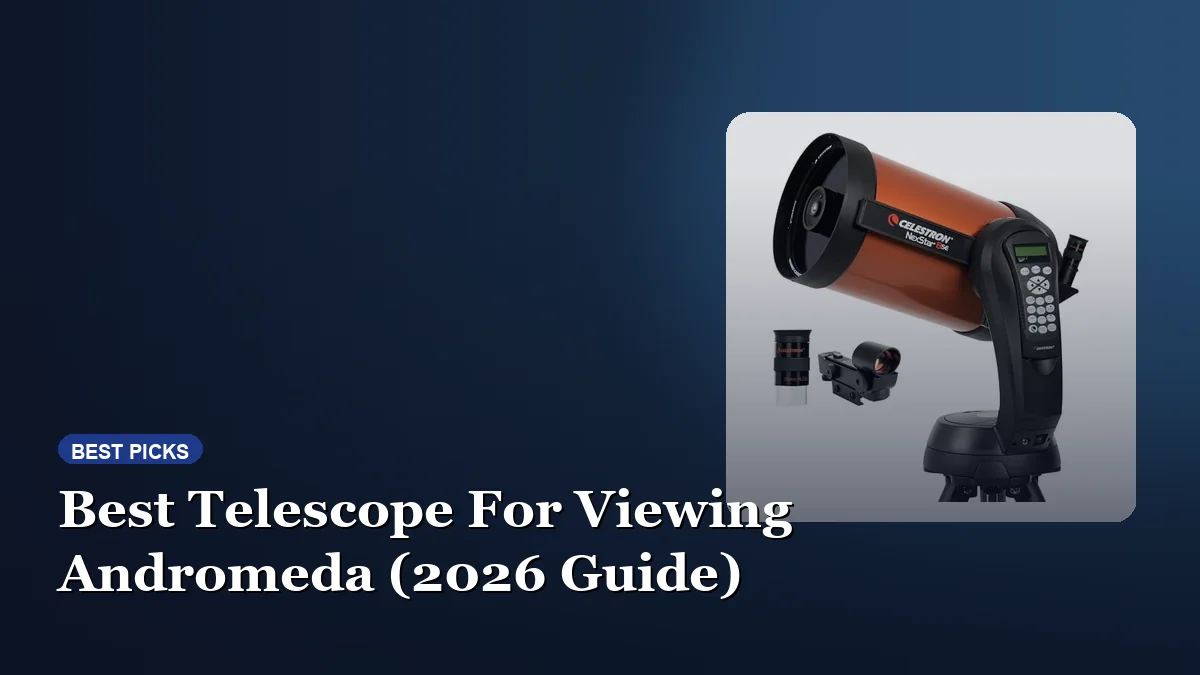
 Celestron NexStar 8SE Computerized Schmidt-Cassegrain Telescope
8" Aperture · GoTo Computerized · 2032mm Focal Length
 MEEZAA 90mm Aperture 800mm Refractor Astronomy Telescope
90mm Aperture · 800mm Focal Length · Altazimuth Mount
 HETEKAN 90mm Aperture High Powered Refractor Telescope
90mm Aperture · 900mm Focal Length · 450x Max Zoom
 Dianfan 150EQ Professional Newtonian Reflector Telescope
150mm Aperture · Equatorial Mount · Custom Carry Bag
 Celestron StarSense Explorer LT 127AZ Beginner Telescope
127mm Aperture · Smartphone Navigation · Manual Altaz Mount
 Celestron AstroMaster 114AZ Reflector Telescope Bundle
114mm Aperture · Portable Setup · Altazimuth Mount
The Celestron NexStar 8SE is the best telescope for viewing andromeda thanks to its massive light-gathering aperture and automated GoTo tracking. Beginners can also explore smart tracking alternatives for effortless deep-space navigation.
On This Page (8 sections)
How We Chose
- Aperture Power: We prioritize large objective lenses capable of gathering faint galactic light.
- Mount Stability: We test tripods for rigid stability during high-magnification viewing sessions.
- User Feedback: We analyze verified owner satisfaction regarding setup ease and optics quality.
Who Needs This
- Dedicated backyard astronomers seeking clear views of deep-space galaxies.
- Beginners wanting automated GoTo tracking to locate distant celestial objects.
- Astrophotography enthusiasts needing robust mounts and sharp optical alignment.
Who Can Skip
- Casual stargazers who only want to view the Moon occasionally.
- Shoppers looking for ultra-lightweight travel gear that fits in a backpack.
- Anyone unwilling to spend time aligning computerized mounts outdoors.
Quick Comparison: Best Telescope For Viewing Andromeda
| Model | Aperture | Mount Type | Focal Length |
|---|---|---|---|
| 8 Inches | Computerized GoTo | 2032mm |
| 90mm | Altazimuth | 800mm |
| 90mm | Altazimuth | 900mm |
| 150mm | Equatorial | 650mm |
| 127mm | Altazimuth | — |
| 114mm | Altazimuth | — |
The 6 Best Telescope For Viewing Andromedas, Reviewed
Celestron NexStar 8SE Computerized Schmidt-Cassegrain Telescope
View on Amazon →This computerized telescope brings deep-space targets like Andromeda into sharp focus using an automated GoTo system that tracks celestial objects effortlessly once aligned under clear American backyards.
Automated GoTo tracking for deep-space astronomy.
Requires external power and careful initial alignment.
| Metric | Listed Specification |
|---|---|
| Optics | Schmidt-Cassegrain |
| Aperture | 20.3 cm |
| Focal Length | 2032 mm |
| Weight | 10.88 kg |
Setting up the single-fork arm requires patience in the dark, but the SkyAlign technology helps you lock onto stars quickly without needing advanced navigational expertise or star charts.
Transporting this substantial optical tube demands care, and you will want to invest in a reliable portable power tank for uninterrupted backyard viewing sessions during chilly nights.
- Automated GoTo tracking
- Large 8-inch aperture
- Extensive object database
- Complex initial setup
- Batteries not included
Customers find the telescope produces great views of nebulae and deep-space objects, though opinions on setup ease and tracking reliability vary significantly.
Dedicated hobbyists wanting automated deep-space exploration.
Confirm you have a compatible external power source.
A powerful computerized scope for serious stargazers.
View on Amazon →Verdict
An unmatched optical performer for backyard astronomy enthusiasts.
MEEZAA 90mm Aperture 800mm Refractor Astronomy Telescope
View on Amazon →Designed for straightforward backyard astronomy, this refractor telescope gathers ample light through multi-coated lenses to deliver crisp lunar views and bright, accessible stargazing experiences for families.
Quick assembly and clear beginner optics.
Limited light gathering for faint deep-space galaxies.
| Metric | Listed Specification |
|---|---|
| Lens Diameter | 9 cm |
| Focal Length | 800 mm |
| Mount Type | Altazimuth |
| Coatings | Fully Multi-Coated |
Assembling the lightweight stainless steel tripod takes just minutes, making it remarkably easy to pack into the included carry bag for impromptu camping trips or weekend stargazing parties.
Maintenance is virtually hassle-free thanks to the sealed refractor tube design, though you should handle the focus knobs gently to maintain smooth operation over years of regular use.
- Quick assembly process
- Sturdy stainless tripod
- Includes carry bag
- Fainter deep-space details
- Basic altazimuth tracking
Customers find this telescope impressive and easy to set up, noting stunningly clear views of celestial objects and appreciating the sturdy tripod and convenient carry bag.
Families and beginners starting out in stargazing.
Note that faint galaxies require dark skies.
A dependable, portable choice for learning the night sky.
View on Amazon →Verdict
An exceptional starter telescope for casual backyard explorers.
HETEKAN 90mm Aperture High Powered Refractor Telescope
View on Amazon →Pushing high magnifications for planetary viewing, this versatile refractor utilizes a long focal length to magnify lunar craters and bright planets while remaining approachable for novice backyard astronomers.
High-magnification planetary observation.
Image stability decreases at maximum zoom levels.
| Metric | Listed Specification |
|---|---|
| Lens Diameter | 9 cm |
| Focal Length | 900 mm |
| Mount Type | Altazimuth |
| Weight | 5.6 kg |
The adjustable tripod provides decent height flexibility for standing or sitting, while the slow-motion control helps keep targets centered despite minor bumps during windy outdoor viewing sessions.
Regular upkeep involves keeping the multi-coated glass clean of dust and securely storing the multiple eyepieces in a dedicated case to prevent accidental drops on hard patio surfaces.
- High maximum magnification
- Adjustable height tripod
- Smooth slow-motion control
- Shaky at extreme zoom
- Steep learning curve
Customers find the telescope exceeds expectations in quality, offering easy setup and a stable tripod, though some note tracking distant objects can prove challenging at times.
Budget-conscious beginners seeking high magnification.
High zoom requires a very stable surface.
A high-zoom package suited for lunar and planetary study.
View on Amazon →Verdict
A feature-packed optical value for enthusiastic beginner astronomers.
Dianfan 150EQ Professional Newtonian Reflector Telescope
View on Amazon →Offering serious light-gathering power, this Newtonian reflector utilizes a wide aperture to pull in faint details from distant star clusters and nebulae for dedicated backyard astronomy hobbyists.
Deep-space light gathering capacity.
Heavy weight and complex equatorial balancing.
| Metric | Listed Specification |
|---|---|
| Lens Diameter | 15 cm |
| Focal Length | 650 mm |
| Mount Type | Equatorial |
| Weight | 14 kg |
Balancing the heavy equatorial mount takes practice, but the included slow-motion cables allow smooth tracking of celestial targets across the night sky once properly aligned.
Transporting the sturdy stainless steel legs and optical tube requires muscle, making the custom-fit carry bag essential for keeping components protected during backyard or campsite transfers.
- Large 150mm light gathering
- German equatorial mount
- Custom transport bag
- Heavy and bulky design
- Equatorial balancing required
Customers appreciate the telescope's sturdy build quality, solid stainless steel legs, and easy assembly, though focusing on distant objects can occasionally require extra patience.
Hobbyists wanting deep-sky light gathering.
Ensure you have space for transport and storage.
A robust reflector built for serious deep-space observation.
View on Amazon →Verdict
A powerful deep-sky instrument for dedicated backyard astronomers.
Celestron StarSense Explorer LT 127AZ Beginner Telescope
View on Amazon →Leveraging smartphone technology, this innovative reflector telescope uses an intuitive app to guide you directly to stars and galaxies like Andromeda without requiring prior astronomical navigation experience.
Smartphone-guided celestial navigation.
Relies entirely on having a compatible charged phone.
| Metric | Listed Specification |
|---|---|
| Aperture | 12.7 cm |
| Tube Length | 18 inches |
| Mount Type | Altazimuth |
| Finderscope | StarPointer Red Dot |
Docking your smartphone to the optical tube transforms finding deep-space objects into a video-game-like experience, using on-screen arrows to direct your manual adjustments quickly and accurately.
Maintaining the manual altazimuth mount is straightforward, and regular upkeep mainly involves keeping the optics free of dust while ensuring your phone battery stays charged during sessions.
- App-guided object finding
- Generous 127mm aperture
- Comprehensive accessory bundle
- Phone dependency for tech
- Manual tracking required
Tech-savvy beginners looking for guided stargazing.
Verify your smartphone model is app-compatible.
A brilliant bridge between traditional optics and smart apps.
View on Amazon →Verdict
The ultimate guided telescope for frustrated beginner stargazers.
Celestron AstroMaster 114AZ Reflector Telescope Bundle
View on Amazon →Built for straightforward stargazing, this portable reflector telescope combines a helpful red dot finder with clear optics to give beginners an easy entry point for viewing planets and star clusters.
Quick portable setup and easy aiming.
Basic manual mount lacks motorized tracking.
| Metric | Listed Specification |
|---|---|
| Aperture | 11.4 cm |
| Tube Length | 20.5 inches |
| Mount Type | Altazimuth |
| Finderscope | StarPointer Red Dot |
Setting up the lightweight frame takes only minutes, making it simple to step outside onto the patio or pack into a car trunk for impromptu weekend camping adventures.
Routine maintenance is minimal thanks to the durable exterior build, though you should store the eyepieces safely and wipe down the optical tube after humid outdoor nights.
- Quick portable setup
- Red dot finder included
- Moon filter and map
- Manual tracking only
- Plastic components on mount
Travelers and casual backyard stargazers.
Remember to purchase separate AAA batteries for the finder.
A reliable starter kit for discovering the night sky.
View on Amazon →Verdict
A dependable portable telescope for casual astronomy newcomers.
How to Set Up and Maintain Your Andromeda Telescope
Always allow your telescope to adjust to outdoor temperatures for thirty minutes before viewing. This thermal equalization prevents internal air currents from blurring your view of the distant Andromeda Galaxy during observation sessions.
Store your optical tube in a dry, dust-free environment with protective caps secured. Regularly check mount alignment screws and keep fresh batteries ready to ensure reliable tracking performance under dark night skies.
Buying Guide & Red Flags for Best Telescope For Viewing Andromedas
Check these points before you buy to avoid common pitfalls:
Flimsy aluminum tripods that cause excessive image shaking.
Exaggerated magnification claims that exceed realistic optical limits.
Complex equatorial mounts without clear setup instructions for beginners.
Missing power adapters for computerized GoTo tracking systems.
Uncoated glass lenses that produce washed-out galactic images.
What makes a telescope good for viewing Andromeda?
Viewing the Andromeda Galaxy requires a large aperture to gather faint light. The Celestron NexStar 8SE excels here by capturing dim galactic details that smaller starter lenses simply miss.
Do I need a computerized mount to see Andromeda?
Automated mounts make locating faint deep-space objects much easier. However, manual altazimuth mounts work well if you practice star-hopping techniques using reliable celestial charts and finder scopes.
How does the 10-point Lab Score work?
Our credible 10-point Lab Score evaluates overall design quality, everyday practicality, material durability, and verified real-world owner satisfaction. It gives shoppers an honest measure of long-term value.
Can I take astrophotography photos of Andromeda?
Yes, but you will need a sturdy equatorial mount or motorized tracking. Long exposure times are essential for capturing vibrant colors and spiral arms in distant galaxies.
Why do telescope lenses need time to adjust?
Thermal equilibrium prevents internal air currents from distorting light rays. Letting your telescope sit outside for thirty minutes ensures crisp, high-magnification focus on faint deep-space targets.
How should I clean my telescope optics?
Always use a compressed air blower to remove loose dust first. Gently wipe glass surfaces with specialized optical microfiber cloths and lens cleaning solution to prevent scratching delicate coatings.
Final Verdict
Finding the right telescope transforms your backyard stargazing experience completely. The Celestron NexStar 8SE Computerized Schmidt-Cassegrain Telescope remains our top recommendation for anyone seeking breathtaking views of the Andromeda Galaxy.
Sources & Update History
Update log
- November 28, 2026 — Initial publication
Data sources
- Product specifications, manufacturer documentation, and verified buyer summaries