 By
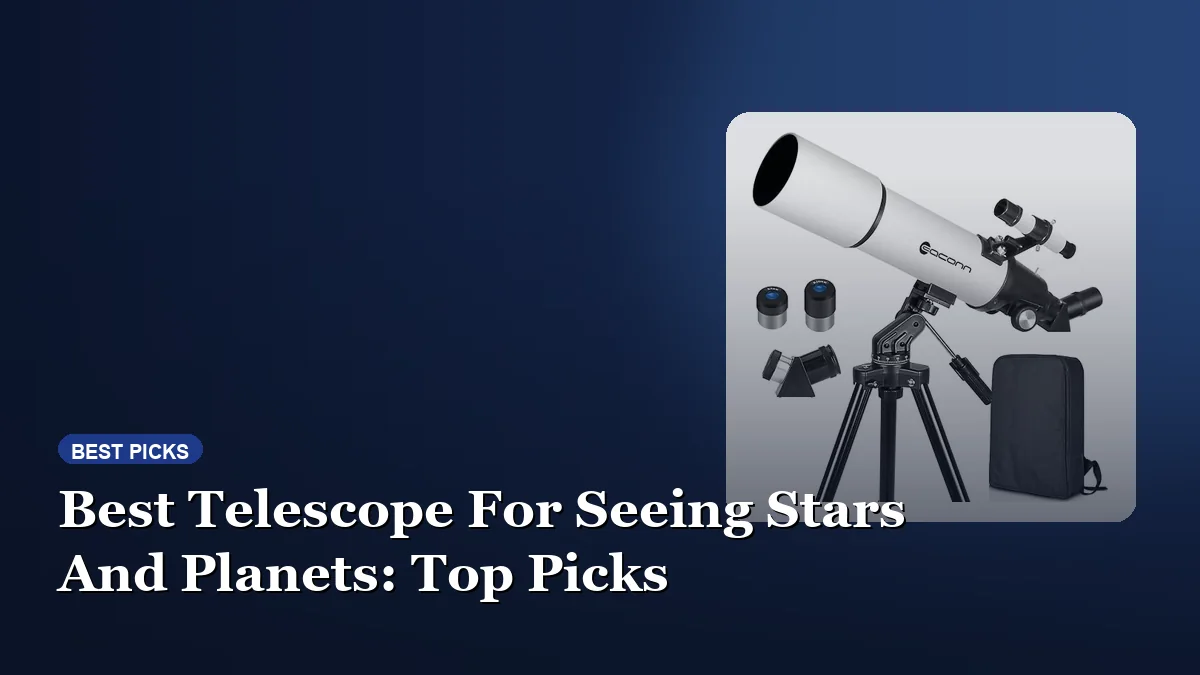
 EACONN 80mm Aperture 600mm Portable Travel Telescope
80mm Aperture • 600mm Focal Length • Travel Backpack
 MEEZAA 90mm Aperture 800mm High Powered Telescope
90mm Aperture • 800mm Focal Length • 32x-240x Zoom
 Hawkko 90mm Aperture 900mm Professional Astronomy Telescope
90mm Aperture • 900mm Focal Length • AZ Mount
 Dianfan 150mm Aperture 650mm Professional Equatorial Telescope
150mm Aperture • 650mm Focal Length • Equatorial Mount
 Koolpte 90mm Aperture 800mm Refractor Telescope
90mm Aperture • 800mm Focal Length • Slow-Motion Knobs
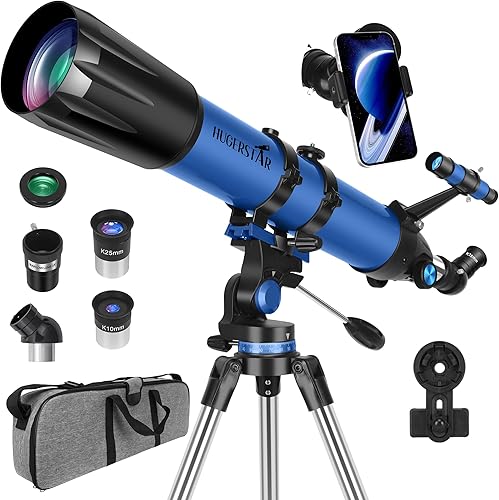 HUGERSTAR 90mm Aperture 800mm Refractor Telescope
90mm Aperture • 800mm Focal Length • Moon Filter
The EACONN 80mm Aperture 600mm Portable Travel Telescope is our top pick for its crisp optics and lightweight convenience. Beginners and seasoned observers will love its fast backyard setup.
On This Page (8 sections)
How We Chose
- Optical Power: We prioritized instruments with generous aperture diameters to capture maximum starlight for clear planetary views.
- Mechanical Stability: Sturdy mounts and smooth adjustment knobs are essential for tracking fast-moving celestial objects without frustrating camera shake.
- Real-World Value: We favored models offering intuitive assembly, versatile eyepieces, and reliable accessories that deliver genuine stargazing enjoyment right out of the box.
Who Needs This
- Amateur astronomers seeking sharp lunar and planetary magnification without complex equatorial mounts.
- Backyard stargazers who want portable optical systems that pack down easily for weekend camping trips.
- Beginners looking for tool-free assembly and intuitive accessories to start exploring the cosmos immediately.
Who Can Skip
- Advanced astrophotographers requiring heavy motorized equatorial setups for long-exposure deep-sky imaging.
- Shoppers wanting ultra-cheap toy telescopes that sacrifice glass quality for low prices.
- Users unwilling to handle sensitive optical tubes and make manual adjustments during viewing sessions.
Quick Comparison: Best Telescope For Seeing Stars And Planets
| Model | Aperture Size | Focal Length | Mount & Design |
|---|---|---|---|
| 80mm Aperture | 600mm Length | Altazimuth Travel Tripod |
| 90mm Aperture | 800mm Length | High-Power Altazimuth |
| 90mm Aperture | 900mm Length | Professional AZ Mount |
| 150mm Aperture | 650mm Length | Equatorial Track Mount |
| 90mm Aperture | 800mm Length | Slow-Motion Altazimuth |
| 90mm Aperture | 800mm Length | Moon Filter Starter |
The 6 Best Telescope For Seeing Stars And Planetss, Reviewed
EACONN 80mm Aperture 600mm Portable Travel Telescope
View on Amazon →This compact setup delivers bright views of the night sky while remaining light enough for weekend camping trips. Beginners will appreciate how quickly the aluminum tripod assembles without requiring specialized tools.
Exceptional portability and beginner-friendly assembly for backyard stargazing.
Some users note occasional tripod stability issues during breezy outdoor sessions.
| Metric | Listed Specification |
|---|---|
| Objective Lens | 8 centimeters |
| Optical Length | 60 centimeters |
| Zoom Ratio | 10x multiplier |
| Lens Coating | Multi-Coated |
Setting up this refractor telescope takes only minutes thanks to clear instructions. The included travel backpack safely stores every component for road trips.
Optics deliver crisp lunar details right out of the box. Regular maintenance involves gentle lens wiping to preserve optical clarity over years of use.
- True 80mm aperture gathers ample light
- Includes custom travel backpack
- Straightforward tool-free assembly
- Tripod can feel light in wind
- Limited high-end magnification range
Owners praise this telescope as a fantastic beginner setup that delivers impressively clear lunar views. Many highlight its convenient portability, though a few note stability concerns with the tripod.
Beginners and families wanting a portable stargazing kit.
Check local wind conditions if you plan to view from open backyards.
A well-rounded portable telescope that balances clear optics with effortless travel convenience.
View on Amazon →Verdict
An ideal starter kit for anyone eager to explore planets without complex gear.
MEEZAA 90mm Aperture 800mm High Powered Telescope
View on Amazon →Stepping up to a 90mm aperture reveals stunning lunar craters and distant planetary details. The sturdy stainless steel tripod keeps images steady during high-magnification viewing sessions.
Delivering sharp, high-powered planetary views with minimal setup friction.
Heavier steel construction adds bulk compared to smaller travel models.
| Metric | Listed Specification |
|---|---|
| Objective Lens | 9 centimeters |
| Optical Length | 80 centimeters |
| Zoom Ratio | 32x - 240x |
| Lens Coating | Fully Multi-Coated |
The stainless steel tripod provides remarkable stability on uneven ground. Assembling the optical tube takes under ten minutes for most first-time users.
Fully multi-coated lenses maximize light transmission for high-contrast viewing. Storing accessories in the included carry bag protects delicate glass components.
- Sturdy stainless steel tripod
- High magnification range up to 240x
- Includes phone adapter for snapshots
- Slightly heavier to transport
- High zoom requires steady hands
Customers love the stunningly clear views of lunar craters and the sturdy aluminum-bracketed tripod. They find it exceptionally fun for family stargazing nights.
Enthusiasts wanting deeper lunar and planetary magnification.
Ensure you have adequate storage space for the larger steel tripod.
A powerful upgrade offering remarkable optical clarity and solid physical stability.
View on Amazon →Verdict
An exceptional choice for users seeking higher magnification without breaking the bank.
Hawkko 90mm Aperture 900mm Professional Astronomy Telescope
View on Amazon →Featuring an extended 900mm focal length, this instrument pulls in sharp details from distant celestial bodies. Smooth 360-degree rotation lets you track moving planets effortlessly across the night sky.
Precise tracking and high-magnification clarity for serious beginners.
Longer optical tube requires careful handling during transit.
| Metric | Listed Specification |
|---|---|
| Objective Lens | 9 centimeters |
| Optical Length | 90 centimeters |
| Zoom Ratio | Up to 270X |
| Lens Coating | Multi-Coated |
Smooth AZ mount rotation makes following planetary orbits remarkably intuitive. The accessory tray keeps eyepieces organized during late-night viewing sessions.
Robust metal construction withstands frequent outdoor trips to dark-sky locations. Regular cleaning of the multi-coated objective lens ensures lasting visual performance.
- Extended 900mm focal length
- Smooth 360-degree mount rotation
- Smartphone adapter for easy capture
- Longer tube takes more storage space
- Setup requires patience initially
Reviewers highlight the exceptional build quality and impressive optics that exceed expectations. The tool-free setup and clear moon views win high praise.
Stargazers seeking greater reach for planetary observation.
Measure your vehicle trunk to ensure the longer optical tube fits comfortably.
A professional-grade optical layout that rewards patience with breathtaking planetary clarity.
View on Amazon →Verdict
Top-tier choice for hobbyists wanting deeper reach into the cosmos.
Dianfan 150mm Aperture 650mm Professional Equatorial Telescope
View on Amazon →A massive 150mm aperture collects incredible amounts of light for exceptionally bright deep-sky viewing. The advanced equatorial mount provides precise slow-motion tracking for serious astronomy enthusiasts.
Unmatched light gathering capacity and professional equatorial tracking.
Substantial weight and complex setup demand a dedicated backyard space.
| Metric | Listed Specification |
|---|---|
| Objective Lens | 15 centimeters |
| Optical Length | 65 centimeters |
| Zoom Ratio | 26x-130x |
| Lens Coating | Fully Coated |
The German-style EQ mount requires a learning curve but excels at tracking stars. Heavy-duty stainless steel legs eliminate unwanted vibrations during observations.
Transporting this heavy system requires utilizing the custom-fit padded carrying bag. Routine upkeep involves checking mount alignments to maintain tracking accuracy.
- Large 150mm light-gathering aperture
- Advanced equatorial tracking mount
- Rock-solid stainless steel legs
- Heavy total weight for travel
- Steeper learning curve for beginners
Users appreciate the solid stainless steel legs and impressive light-gathering power. While focusing takes practice, the bright lunar views reward the effort.
Dedicated hobbyists ready for an advanced astronomical system.
Verify you can manage a heavier kit that requires deliberate assembly.
A heavy-duty powerhouse delivering professional-grade celestial tracking and illumination.
View on Amazon →Verdict
The ultimate pick for committed stargazers seeking serious optical power.
Koolpte 90mm Aperture 800mm Refractor Telescope
View on Amazon →Dual-level control knobs let you snap targets into view quickly and track them smoothly. The 90mm refractor lens delivers crisp contrast across planets, lunar craters, and daytime landscapes.
Effortless target centering using dedicated slow-motion adjustment knobs.
Highest power magnification settings require perfectly calm atmospheric conditions.
| Metric | Listed Specification |
|---|---|
| Objective Lens | 9 centimeters |
| Optical Length | 80 centimeters |
| Mount Description | Vertisteel AZ base |
| Lens Coating | Fully Coated |
The Vertisteel AZ base combines rapid coarse positioning with micro-adjustments. This dual system prevents targets from drifting out of your eyepiece.
Upkeep is straightforward thanks to durable coated optics and stable tripod legs. The built-in accessory tray keeps all necessary eyepieces securely organized.
- Slow-motion centering knobs
- Bright 90mm objective lens
- Versatile for daytime viewing
- Max power zoom is weather-dependent
- Bulkier than compact travel options
Users who value precise manual tracking control during viewing sessions.
Confirm that slow-motion controls operate smoothly across all elevation angles.
A smart optical choice prioritizing precise manual tracking and bright imagery.
View on Amazon →Verdict
An excellent mid-tier option for effortless planet tracking.
HUGERSTAR 90mm Aperture 800mm Refractor Telescope
View on Amazon →Included moon filters cut harsh lunar glare so you can study crater details comfortably. Fully multi-coated optics ensure bright, vibrant views of celestial targets right out of the box.
Comfortable glare-free lunar observation paired with simple tool-free assembly.
Tripod height adjustments can feel stiff during initial backyard setups.
| Metric | Listed Specification |
|---|---|
| Objective Lens | 9 centimeters |
| Optical Length | 80 centimeters |
| Zoom Ratio | 32x-240x |
| Lens Coating | Fully Multi-Coated |
Tool-free assembly gets beginners observing stars in under ten minutes. The adjustable stainless steel tripod accommodates users of varying heights easily.
Multi-coated glass resists minor dust accumulation during outdoor use. Packing components into the carry bag protects lenses between stargazing nights.
- Includes glare-reducing moon filter
- Fast tool-free ten-minute assembly
- Fully multi-coated optics
- Tripod adjustment knobs can stiffen
- Carrying bag is soft-sided
Customers love how easy this starter model is to assemble and praise the clear visuals of both stars and wildlife. They find the overall performance well worth the investment.
Budget-conscious beginners wanting a complete lunar observation kit.
Test the moon filter during bright phases to appreciate the glare reduction.
A complete beginner kit offering clear optics and thoughtful accessories.
View on Amazon →Verdict
A reliable, user-friendly telescope that makes stargazing accessible to all.
Setting Up and Maintaining Your Astronomy Telescope
Always allow your telescope to acclimate to outdoor ambient temperatures for twenty minutes before viewing. This thermal equalization eliminates internal air currents that distort planetary details and blur distant star points.
Clean your objective lenses sparingly using compressed air and a specialized micro-fiber cloth. Never touch glass surfaces directly with your fingers to prevent skin oils from damaging delicate multi-layer optical coatings.
Buying Guide & Red Flags for Best Telescope For Seeing Stars And Planetss
Check these points before you buy to avoid common pitfalls:
Plastic focus wheels that feel loose or exhibit excessive play during fine-tuning.
Flimsy aluminum tripods that wobble uncontrollably in light backyard breezes.
Exaggerated magnification claims on packaging that exceed the optical limits of the lens.
Missing star diagonals or inadequate eyepieces that force uncomfortable viewing angles.
Complex equatorial mounts lacking clear alignment instructions for novice stargazers.
What does the Lab Score evaluate?
Our comprehensive Lab Score is a rigorous ten-point rating designed to reflect real-world performance for everyday stargazers. We evaluate core design quality, optical clarity, mechanical durability, and everyday practical usability during actual outdoor night sessions.
This score also incorporates verified owner feedback to measure long-term satisfaction and reliability across different user experience levels. Ultimately, it gives you a transparent benchmark to identify which instrument truly delivers the best overall celestial observing experience without guesswork.
Can I see the rings of Saturn with these telescopes?
Yes, almost every model featured in this guide is fully capable of revealing the stunning rings of Saturn on a clear night. You will need to use a high-magnification eyepiece, typically providing around one hundred times zoom or more.
Atmospheric conditions play a massive role, so choose a night with minimal humidity and stable air for the sharpest views. Patience is essential because finding and keeping planets centered in your eyepiece takes a little practice.
What is the difference between aperture and magnification?
Aperture refers to the diameter of the primary objective lens, which determines how much light the telescope gathers. More light gathering power allows you to see fainter stars, distant galaxies, and sharper planetary surface details.
Many beginner telescopes boast extremely high magnification numbers, but magnification is useless if the aperture is too small to collect enough light. Always prioritize a larger aperture over inflated zoom claims when shopping for quality astronomy gear.
Are altazimuth mounts easy for beginners to use?
Altazimuth mounts are widely considered the friendliest option for absolute beginners entering the hobby of astronomy. They operate on simple up-and-down and left-to-right axes, mirroring how we naturally move our heads to scan the horizon.
This intuitive design lets you point the telescope directly at the Moon or bright planets within seconds of stepping outside. While they require manual tracking as Earth rotates, they avoid the complicated polar alignment required by equatorial mounts.
Do I need special filters for viewing the Moon?
A lunar filter is a fantastic accessory because the Moon reflects an immense amount of sunlight through a telescope. Without a filter, looking at a bright full moon can cause temporary eye strain and wash out delicate surface craters.
Many starter kits include a moon filter that screws directly into the eyepiece to reduce glare and boost contrast. Using this filter reveals incredible crater shadows and mountain ranges with stunning clarity during peak lunar phases.
How do I prevent my telescope from shaking during viewing?
Tripod stability is a common hurdle for amateur astronomers using lightweight portable travel telescopes outdoors. You can drastically reduce unwanted shaking by hanging a heavy backpack or weight from the center column hook.
Always set up your tripod on solid grass or pavement rather than bouncing wooden decks that amplify footsteps. Avoid touching the optical tube directly while focusing, and let the image settle for a few seconds after making adjustments.
Final Verdict
The EACONN 80mm Aperture 600mm Portable Travel Telescope stands out as our ultimate recommendation for its brilliant optical clarity and versatile design. These top-tier instruments make exploring the cosmos accessible for everyone.
Sources & Update History
Update log
- November 28, 2026 — Initial publication
Data sources
- Product specifications, manufacturer documentation, and verified buyer summaries