 By
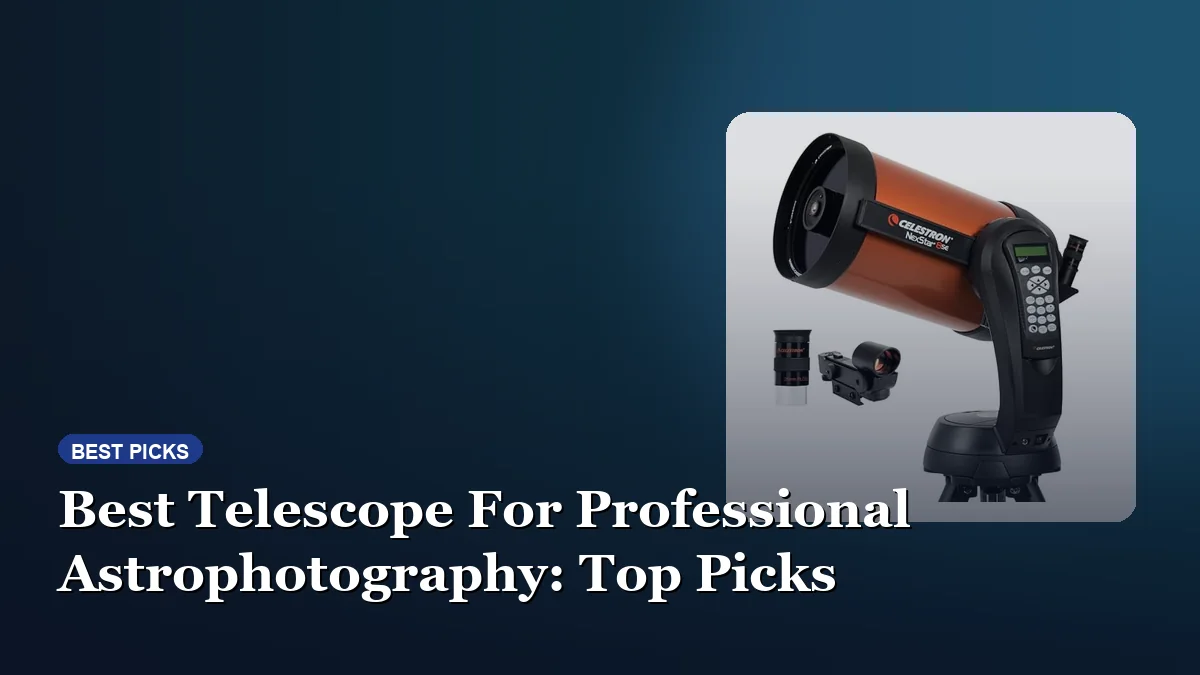
 Celestron NexStar 8SE Computerized Schmidt-Cassegrain Telescope
8" Aperture • GoTo Mount • 2032mm FL
 SVBONY SV503 102mm ED Glass Refractor Telescope
102mm Aperture • ED Glass • 714mm FL
 SVBONY SV48P 90mm F5.5 Refractor OTA
90mm Aperture • 500mm FL • Dual Focuser
 MEEZAA 90mm Aperture 800mm Refractor Telescope
90mm Aperture • 800mm FL • Tripod Included
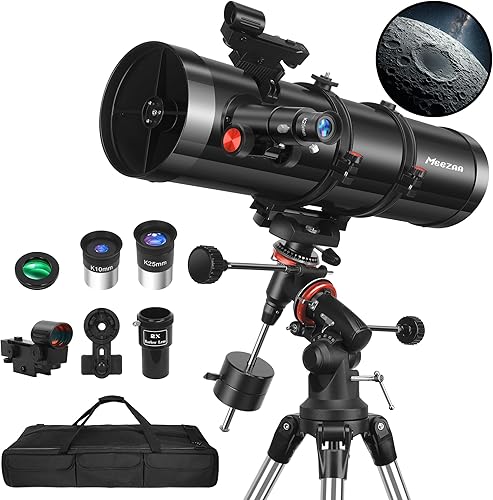 MEEZAA 150EQ Newtonian Reflector Telescope
150mm Aperture • EQ Mount • 650mm FL
 Hawkko 90mm Aperture 900mm Refractor Telescope
90mm Aperture • 900mm FL • AZ Mount
Our top recommendation is the Celestron NexStar 8SE Computerized Schmidt-Cassegrain Telescope for its stellar tracking and automated deep-space location capabilities. Serious imagers will appreciate the robust aperture and optical clarity.
On This Page (8 sections)
How We Chose
- Optical Quality: We prioritize pristine glass elements and advanced coatings that minimize chromatic aberration and deliver razor-sharp stellar resolution across every exposure.
- Mount Stability: We insist on rock-solid tracking platforms that eliminate wind jitter and support heavy camera rigs during extended nighttime imaging sessions.
- Practical Value: We evaluate overall setup complexity and user-friendly features to ensure both intermediate hobbyists and advanced imagers get reliable performance.
Who Needs This
- Advanced hobbyists and dedicated researchers seeking a reliable motorized setup to capture distant nebulae and faint galaxies with stunning clarity.
- Dedicated astrophotographers requiring precise dual-speed focusers and heavy-duty tracking mounts to reliably support professional DSLR or mirrorless camera gear.
- Committed stargazers ready to invest time into mastering equatorial alignment and automated GoTo database systems for deep-sky work.
Who Can Skip
- Casual backyard stargazers who only want a quick, grab-and-go manual scope for casual planetary viewing without complex setup routines.
- Beginners who feel intimidated by complex computerized alignment processes and external battery requirements needed to power heavy motorized tracking mounts.
- Photographers who are unwilling to perform routine optical maintenance like mirror collimation or manage heavy transportable gear cases outdoors.
Quick Comparison: Best Telescope For Professional Astrophotography
| Model | Aperture Size | Focal Length | Mount Type |
|---|---|---|---|
| 8 inches | 2032mm | Computerized GoTo |
| 102mm | 714mm | Tripod Mount |
| 90mm | 500mm | Altaz / EQ |
| 90mm | 800mm | Altazimuth Mount |
| 150mm | 650mm | German Equatorial |
| 90mm | 900mm | Altazimuth Mount |
The 6 Best Telescope For Professional Astrophotographys, Reviewed
Celestron NexStar 8SE Computerized Schmidt-Cassegrain Telescope
View on Amazon →This iconic orange tube delivers stunning planetary views and deep-sky clarity. Its built-in database automates tracking, though aligning the GoTo system can occasionally test your patience during late-night backyard sessions.
It excels at locating faint deep-sky objects effortlessly using the automated database.
The motorized mount demands a steady external power source, and alignment can be tricky for beginners.
| Metric | Listed Specification |
|---|---|
| Objective Lens | 20.3 cm |
| Focal Length | 2032 mm |
| Optical Tube | 43.2 cm |
| Item Weight | 10.88 kg |
Setting up this heavy-duty OTA on its single fork arm requires care. The SkyAlign technology speeds things up once mastered, making backyard stargazing sessions much smoother and more productive.
Long-term durability is solid, but you must invest in external batteries. Regular upkeep of the Schmidt-Cassegrain optics ensures crisp planetary viewing for years of dedicated astronomy.
- Large 8-inch aperture
- Fully automated tracking
- Extensive object database
- Steep initial alignment learning curve
- Requires separate power supply
Owners frequently praise the breathtaking clarity of nebulae and planetary details. However, some note that the tracking setup can occasionally frustrate first-time users.
Intermediate astronomers wanting effortless deep-sky tracking.
Double-check your power options, as batteries are not included in the box.
This legendary scope balances power and automation wonderfully.
View on Amazon →Verdict
A top-tier choice for enthusiasts ready to embrace computerized astronomy.
SVBONY SV503 102mm ED Glass Refractor Telescope
View on Amazon →Engineered with ED glass, this refractor drastically cuts color fringing for pristine astro-images. The smooth dual-speed focuser and 360-degree field rotator make framing deep-sky targets an absolute breeze during long photo sessions.
Delivering razor-sharp, color-accurate astro-images thanks to specialized ED glass optics.
It arrives as an optical tube assembly, meaning you must supply your own sturdy mount.
| Metric | Listed Specification |
|---|---|
| Objective Lens | 10.2 cm |
| Focal Length | 714 mm |
| Optical Tube | 63 cm |
| Item Weight | 3.95 kg |
Living with this refractor is wonderful for photographers who demand precision. The dual-speed focuser lets you nail critical focus effortlessly while attaching heavy filter wheels.
The aluminum retractable hood effectively manages dew and stray ambient light. Regular maintenance is minimal, ensuring reliable performance across countless clear nights.
- Excellent color correction
- Smooth dual-speed focuser
- Handy field rotator
- Mount sold separately
- Slightly heavier OTA build
Users consistently highlight the crisp, clear imagery and robust build quality. A few mention needing patience with the rotating focuser mechanism during adjustments.
Dedicated astrophotographers seeking sharp, color-accurate optics.
Ensure you already own a heavy-duty equatorial mount capable of supporting this OTA.
A phenomenal mid-range refractor built specifically for serious imaging.
View on Amazon →Verdict
An exceptional optical instrument that punches well above its class.
SVBONY SV48P 90mm F5.5 Refractor OTA
View on Amazon →Featuring a wider field of view, this 90mm refractor captures expansive lunar and deep-sky scenes. The double-speed focuser and fully multi-coated optics ensure surprisingly clean edge-to-edge viewing for budding astronomers.
Offering wider stellar fields of view with a reliable double-speed focuser.
Basic configuration means additional eyepieces or mounts are required for full operation.
| Metric | Listed Specification |
|---|---|
| Objective Lens | 9 cm |
| Focal Length | 500 mm |
| Optical Tube | 40.8 cm |
| Item Weight | 3 kg |
Setup is refreshingly lightweight and straightforward on standard mounts. The metal interface guarantees solid optical alignment, making it a dependable grab-and-go travel scope.
Upkeep is virtually nonexistent thanks to robust multi-green coatings. You can easily rotate the focus assembly for optimal framing during quick backyard photography sessions.
- Wide field of view
- Precise double-speed focuser
- Fully multi-coated glass
- Mount and accessories sold separately
- Minor focusing stiffness reported
Beginners appreciate the clear lunar views and sturdy metal construction. Some note that mastering the focusing mechanism takes a little bit of practice.
Astronomy beginners seeking affordable wide-field optical performance.
Remember that this is an optical tube only; budget for a compatible mount.
An accessible gateway into wide-field stargazing and imaging.
View on Amazon →Verdict
Outstanding value for newcomers wanting genuine multi-coated refractor optics.
MEEZAA 90mm Aperture 800mm Refractor Telescope
View on Amazon →Designed with beginners in mind, this complete kit includes everything needed for first-night stargazing. The generous 90mm aperture pulls in ample light while the smartphone adapter lets you easily share lunar craters.
Delivering an all-inclusive beginner kit with a sturdy stainless steel tripod.
Higher magnification levels with the Barlow lens can result in softer, dimmer images.
| Metric | Listed Specification |
|---|---|
| Objective Lens | 9 cm |
| Focal Length | 800 mm |
| Optical Tube | 80 cm |
| Mount Type | Altazimuth |
Assembly takes mere minutes, making it remarkably friendly for family campouts. The adjustable stainless steel tripod keeps vibrations manageable during casual backyard viewing sessions.
Packing up is simple with the included durable carry bag. Routine cleaning requires only a soft brush to keep the multi-coated objective lens dust-free.
- Quick tool-free assembly
- Includes smartphone adapter
- Complete starter bundle
- Barlow lens reduces image brightness
- Basic altazimuth mount
Buyers love how simple it is to set up and capture moon photos. A few note that high-magnification viewing can occasionally feel slightly blurry.
Families and beginners wanting a complete, ready-to-use stargazing kit.
Check that all accessories are secured in the carry bag after outdoor trips.
A fantastic, hassle-free starter package for casual astronomy fans.
View on Amazon →Verdict
The ultimate all-in-one gift for budding backyard stargazers.
MEEZAA 150EQ Newtonian Reflector Telescope
View on Amazon →Packing a massive 150mm aperture, this Newtonian reflector devours starlight for stunning deep-space views. The stable German equatorial mount allows you to manually track celestial bodies smoothly across the night sky.
Gathering immense light for detailed deep-space and planetary observation.
Newtonian reflectors require occasional mirror collimation to maintain peak optical sharpness.
| Metric | Listed Specification |
|---|---|
| Objective Lens | 15 cm |
| Focal Length | 650 mm |
| Optical Tube | 65 cm |
| Mount Type | Equatorial |
The heavy-duty steel tripod provides reassuring stability during long observation windows. Slow-motion control knobs make tracking objects across the equatorial mount smooth and intuitive.
Transporting the tube and counterweights takes some coordination, but the carry bag helps. Routine upkeep involves checking mirror alignment for crispest possible imaging.
- Massive 150mm light grasp
- Sturdy equatorial mount
- Includes moon filter
- Requires periodic collimation
- Bulky setup for travel
Users praise the sturdy build and excellent deep-space visibility out of the box. Some mention that high zoom levels can introduce blur if improperly focused.
Intermediate stargazers wanting deep-space light-gathering power on a budget.
Learn basic mirror collimation procedures to keep your optics properly aligned.
Unmatched light-gathering capability for serious backyard deep-sky viewing.
View on Amazon →Verdict
A stellar choice for explorers ready to tackle faint nebulae.
Hawkko 90mm Aperture 900mm Refractor Telescope
View on Amazon →Featuring a long 900mm focal length, this refractor yields higher native magnification for crisp lunar viewing. Fully multi-coated optics boost light transmission, delivering bright and sharp images for curious beginners.
Providing high-magnification planetary views with its extended focal length.
The longer optical tube is more susceptible to wind vibrations on breezy nights.
| Metric | Listed Specification |
|---|---|
| Objective Lens | 9 cm |
| Focal Length | 900 mm |
| Optical Tube | 90 cm |
| Item Weight | 5 kg |
Assembling the kit takes very little time with clear instructions. The stainless steel AZ mount tripod maintains steady support while allowing smooth 360-degree panning.
Packing everything into the included travel bag is straightforward for weekend camping trips. Routine maintenance is minimal, needing only basic lens care.
- Long 900mm focal length
- Full multi-layer coatings
- Stable steel tripod
- Wind can cause vibrations
- Bulky tube length
Customers love the sharp lunar crater views and remarkably simple assembly process. They also appreciate the portability for taking to dark sky sites.
Beginners seeking detailed planetary views and easy setup.
Ensure you have a sheltered spot to minimize wind shake on the long tube.
A solid, high-powered refractor for planetary and lunar observation.
View on Amazon →Verdict
A reliable, high-magnification scope that delivers great planetary detail.
Setting Up Your Astrophotography Rig for Success
Begin by assembling your tripod on level ground, ensuring all leg clamps are tightly secured to prevent any accidental shifting during long tracking exposures. Attach your optical tube securely.
Calibrate your computerized mount using bright reference stars before attaching your camera. Always allow your optics to acclimate to outdoor temperatures to eliminate internal lens fogging.
Buying Guide & Red Flags for Best Telescope For Professional Astrophotographys
Check these points before you buy to avoid common pitfalls:
Avoid telescopes bundled with flimsy aluminum tripods that sway in gentle breezes and ruin your long-exposure astrophotography frames.
Be extremely cautious of cheap plastic focusers that introduce mechanical slip and prevent you from achieving razor-sharp stellar focus.
Never ignore the power requirements of motorized GoTo mounts, as running out of battery midway through an imaging session halts progress.
Do not purchase Newtonian reflectors unless you are fully comfortable learning routine mirror collimation to maintain optimal optical clarity.
Beware of exaggerated magnification claims on entry-level models that sacrifice optical brightness and field stability for unrealistic zoom numbers.
What makes a telescope suitable for professional astrophotography?
A professional setup requires exceptional glass purity, rock-solid tracking mounts, and precise dual-speed focusers to eliminate vibrations and capture crisp deep-space details.
Why is aperture size important for capturing deep-space objects?
Larger apertures gather significantly more photons from faint nebulae and distant galaxies, drastically reducing your required exposure times for clean astrophotography.
Do I need a computerized GoTo mount for imaging?
While manual tracking works, computerized GoTo mounts automate target acquisition and accurately track celestial rotation, saving valuable imaging hours each night.
How does the editorial Lab Score evaluate these telescopes?
Our Lab Score combines design quality, everyday practicality, material durability, and verified owner satisfaction into a rigorous, comprehensive ten-point evaluation metric.
What is the difference between refractor and reflector telescopes?
Refractors use lenses to bend light, offering superb color accuracy, whereas reflectors use mirrors to gather immense light cost-effectively for deep space.
How do I prevent blur from wind vibrations during shoots?
Always operate your gear on stable ground, deploy a heavy-duty steel tripod, and use an electronic remote shutter release to minimize camera shake.
Is routine maintenance necessary for high-end astrophotography gear?
Yes, reflector mirrors require periodic collimation, and all optical surfaces need careful dust cleaning to maintain peak imaging performance over time.
Final Verdict
Selecting the right equipment elevates your night-sky imagery from simple snapshots to breathtaking art. The Celestron NexStar 8SE Computerized Schmidt-Cassegrain Telescope stands out as our ultimate choice for balanced performance.
Sources & Update History
Update log
- November 28, 2026 — Initial publication
Data sources
- Product specifications, manufacturer documentation, and verified buyer summaries