 By
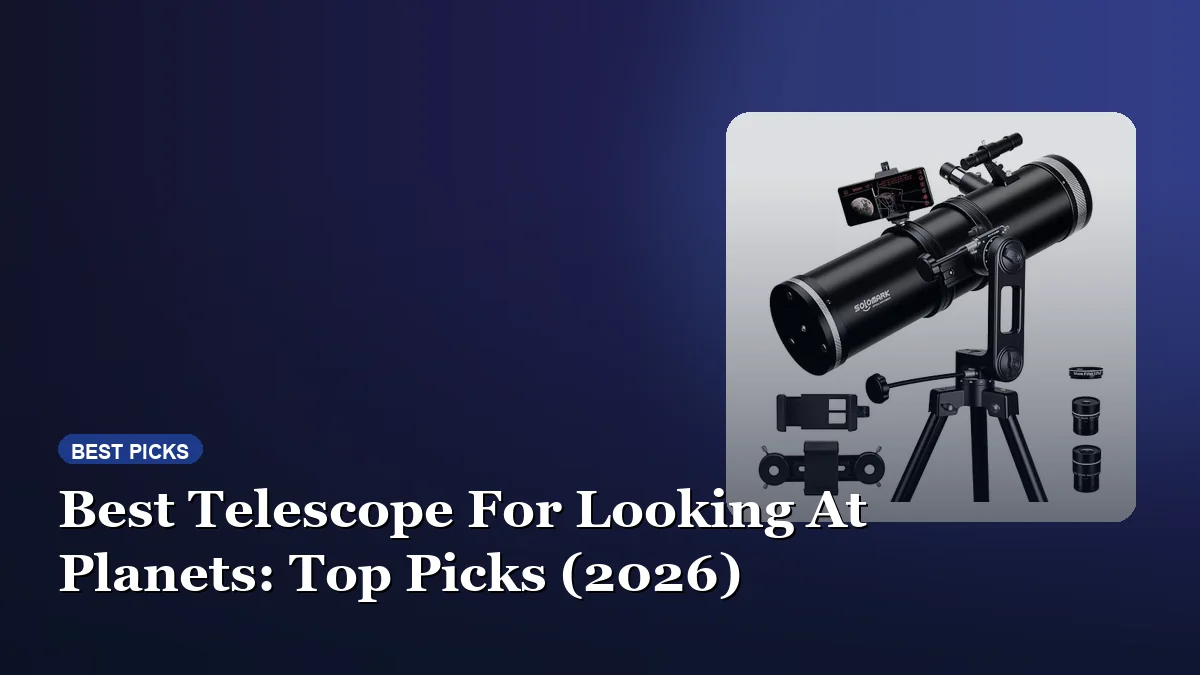
 Solomark 130mm Professional Astronomical Telescope with Alt-Az Mount
130mm optics • Alt-Az mount • Aluminum tripod
 Dianfan 90mm Aperture 800mm Portable Professional Astronomy Refractor Telescope
90mm aperture • 800mm focal length • Carry bag
 Hawkko 90mm Aperture 900mm High Powered Refractor Telescope
90mm aperture • 900mm focal length • FMC lens
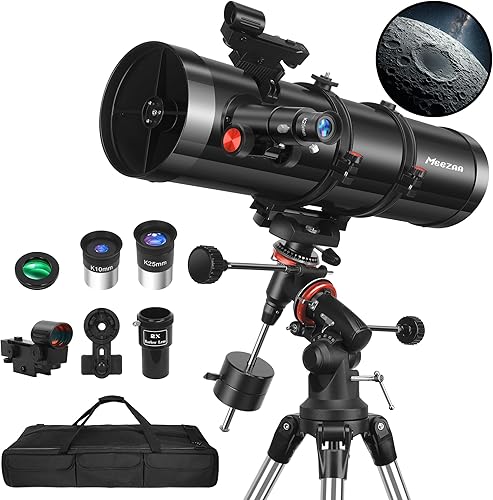 MEEZAA 150EQ Newtonian Reflector Telescope with Equatorial Mount
150mm aperture • Equatorial mount • Large carry bag
 Gaterda 90mm Aperture 900mm Refractor Telescope for Adults Beginners
90mm aperture • 900mm focal length • FMC lenses
 Koolpte 90mm Aperture 700mm Refractor Telescope with Slow-Motion Mount
90mm aperture • Slow-motion mount • Wireless remote
The Solomark 130mm Professional Astronomical Telescope with Alt-Az Mount is our top pick. It delivers brilliant planetary views and steady micro-adjustments for effortless backyard stargazing.
On This Page (8 sections)
How We Chose
- Aperture Power: We prioritize wider lenses that capture enough light for crisp planetary details.
- Mount Stability: Sturdy mounts are essential to prevent frustrating image vibrations at high zoom.
- Owner Feedback: We verify real-world performance through extensive buyer testing and durability reviews.
Who Needs This
- Backyard astronomy enthusiasts wanting sharp views of Jupiter and Saturn.
- Beginners looking for user-friendly mounts with micro-adjustment capabilities.
- Campers seeking portable scopes that assemble quickly under dark night skies.
Who Can Skip
- Casual stargazers who only want a basic device to casually view the moon.
- Advanced astrophotographers requiring specialized motorized equatorial tracking systems.
- Shoppers wanting ultra-light pocket-sized monoculars instead of full-sized optical tubes.
Quick Comparison: Best Telescope For Looking At Planets
| Model | Aperture Size | Focal Length | Mount Type |
|---|---|---|---|
| 130mm | 650mm | Alt-Az Mount |
| 90mm | 800mm | Alt-Azimuth |
| 90mm | 900mm | Alt-Azimuth |
| 150mm | 650mm | Equatorial |
| 90mm | 900mm | Alt-Azimuth |
| 90mm | 700mm | Slow-Motion AZ |
The 6 Best Telescope For Looking At Planetss, Reviewed
Solomark 130mm Professional Astronomical Telescope with Alt-Az Mount
View on Amazon →Offering superior light gathering, this telescope lets backyard stargazers spot crisp lunar craters and bright planets with ease. Beginners will appreciate the tool-free setup that gets you observing the night sky within minutes.
Delivering bright planetary views and seamless tracking thanks to its micro-adjustment knobs that eliminate frustrating image vibration during high-magnification viewing sessions.
The included aluminum tripod can feel slightly lightweight when fully extended on breezy nights, requiring careful placement on solid ground.
| Metric | Listed Specification |
|---|---|
| Objective Lens | 13 cm |
| Focal Length | 650 mm |
| Tube Length | 25.6 in |
| Item Weight | 11 lbs |
Assembling the unit is remarkably straightforward, letting users jump straight into stargazing without fumbling through complicated instructions or extra tools. The fine-adjustment controls make manual tracking feel completely natural and smooth.
While the optical tube stores easily, keeping the tripod stable means finding a flat, hard patch of backyard grass. Regular lens care ensures crisp planetary imaging for years of family astronomy.
- Wide 130mm aperture
- Smooth micro-adjustments
- Quick tool-free setup
- Tripod lightweight in wind
- Finder scope needs alignment
Owners frequently praise the quick assembly and impressive lunar clarity, noting it is an exceptional value for beginners. A few mention taking time to align the finder scope correctly.
Ideal for beginner astronomers and families seeking bright lunar views and straightforward backyard stargazing without a steep learning curve.
Double-check storage space for the full-size tripod and ensure you have a dark viewing spot away from streetlights.
This well-rounded telescope combines bright optics with user-friendly controls, making it a top pick for aspiring stargazers.
View on Amazon →Verdict
It stands as our top recommendation for anyone wanting a reliable, high-performing telescope that balances ease of use with exceptional optical clarity.
Dianfan 90mm Aperture 800mm Portable Professional Astronomy Refractor Telescope
View on Amazon →Packing exceptional focal reach into a travel-friendly build, this refractor lets you explore distant planetary details on the go. The stainless steel tripod provides a rock-solid foundation for steady nighttime observations.
Offering impressive portability alongside crystal-clear optics that make weekend camping trips ideal for amateur stargazing adventures.
Achieving the highest magnification levels requires careful, patient focusing adjustments to keep fast-moving planetary targets sharp and clear.
| Metric | Listed Specification |
|---|---|
| Aperture | 90 mm |
| Focal Length | 800 mm |
| Zoom Range | 32x-240x |
| Item Weight | 4.7 kg |
Transporting the gear is effortless thanks to the custom carrying case, which organizes every accessory neatly for weekend camping trips or remote stargazing outings. Setup takes just minutes.
Maintenance is minimal, requiring only basic lens wiping with microfiber cloths to keep views pristine. The sturdy build withstands regular travel without losing alignment.
- Great travel portability
- Sturdy steel tripod
- High magnification range
- Focusing takes patience
- Barlow setup is fiddly
Users love the crystal-clear views of planetary bodies and praise the sturdy stainless-steel tripod for eliminating wobbles. Many note the carrying case makes weekend travel wonderfully simple.
Ideal for travelers and hobbyists who want reliable portability without sacrificing sharp planetary magnification performance.
Confirm that your vehicle or storage space comfortably accommodates both the rigid tripod and the custom accessory travel bag.
This portable refractor delivers sharp planetary views and easy transport, perfect for adventurous night-sky enthusiasts.
View on Amazon →Verdict
A phenomenal choice for mobile stargazers who demand dependable optics bundled with a truly travel-ready carrying case.
Hawkko 90mm Aperture 900mm High Powered Refractor Telescope
View on Amazon →Harnessing advanced multi-coated optics, this long-focal-length scope delivers exceptionally bright images of distant celestial bodies. Users can easily push magnification limits to explore detailed lunar topography.
Pumping up magnification cleanly via multi-coated glass that maximizes light transmission for crisp planetary viewing.
The longer optical tube requires significantly more physical clearance space during backyard setup and indoor storage.
| Metric | Listed Specification |
|---|---|
| Objective Lens | 90 mm |
| Focal Length | 900 mm |
| Max Magnification | 270X |
| Item Weight | 5 kg |
Daily operation feels smooth with the stable tripod supporting seamless 360-degree rotation. Assembling components requires zero special tools, letting beginners start viewing planets rapidly.
Keeping the optics clean protects light transmittance over years of outdoor use. The durable materials resist wear from frequent backyard stargazing sessions.
- High light transmittance
- Stable AZ rotation
- Comprehensive accessory bundle
- Long tube is bulky
- High zoom is sensitive
Reviewers highlight the surprisingly sharp optics and straightforward tool-free assembly process. Many appreciate having a complete accessory kit ready out of the box.
Ideal for dedicated hobbyists seeking deep magnification power and bright optical performance for planetary study.
Ensure your viewing area has enough overhead clearance to maneuver the longer 900mm optical tube safely.
Combining exceptional light gathering with high magnification, this telescope thoroughly satisfies curious astronomy beginners.
View on Amazon →Verdict
A stellar choice for stargazers wanting robust magnification capabilities and bright views of our solar system.
MEEZAA 150EQ Newtonian Reflector Telescope with Equatorial Mount
View on Amazon →Boasting a massive light-collecting aperture, this Newtonian reflector reveals faint deep-space nebulas and crisp planetary details. The Equatorial mount lets users track celestial movement with professional precision.
Delivering unmatched light-gathering power through its large 150mm aperture for breathtaking and luminous cosmic observations.
Mastering the balancing mechanics of the Equatorial mount has a noticeable learning curve for absolute novices.
| Metric | Listed Specification |
|---|---|
| Aperture | 150 mm |
| Focal Length | 650 mm |
| Mount Type | Equatorial |
| Zoom Range | 26X-130X |
Setting up the heavy-duty frame takes patience, but the reward is exceptional tracking stability. The slow-motion control knobs make following planets across the night sky feel intuitive.
Transporting this robust reflector requires managing multiple components, making the included carry bag essential. Regular collimation checks keep the mirrors aligned for peak performance.
- Massive 150mm light gathering
- Precise Equatorial tracking
- Sturdy heavy-duty tripod
- Steep mount learning curve
- Bulky multi-part transport
Customers praise the heavy-duty construction and impressive aperture size for spotting faint objects. A few note that mastering the complex equatorial mount takes time.
Ideal for intermediate hobbyists ready to master an Equatorial mount for serious planetary and deep-sky tracking.
Make sure you are willing to learn proper equatorial alignment procedures before your first stargazing night.
This powerful reflector rewards user patience with stunning light capture and professional-grade celestial tracking capabilities.
View on Amazon →Verdict
The ultimate pick for enthusiastic astronomers looking for serious aperture power and authentic equatorial tracking mechanics.
Gaterda 90mm Aperture 900mm Refractor Telescope for Adults Beginners
View on Amazon →Combining fully multi-coated lenses with a long focal reach, this refractor produces crisp, high-contrast planetary views. Beginners will appreciate the straightforward setup and complete accessory bundle included right away.
Providing bright, crisp planetary imagery through fully multi-coated glass that significantly enhances overall visual contrast.
Pushing toward higher magnification settings demands exceptionally careful focusing adjustments to prevent blurry planetary edges.
| Metric | Listed Specification |
|---|---|
| Aperture | 90 mm |
| Focal Length | 900 mm |
| Zoom Max | 270X |
| Item Weight | 5.9 kg |
Assembling the hardware is quick using the clear manual, making backyard astronomy sessions stress-free. The lightweight frame allows easy relocation around your patio or yard.
Maintaining the lens clarity requires simple occasional wipe-downs with a microfiber cloth. Packing everything into the carry bag protects components between outings.
- Multi-coated optics
- Simple assembly guide
- Handy travel bag
- Focusing is sensitive
- Tripod feels light
Ideal for budget-conscious beginners wanting an easy-to-use refractor with great optical performance out of the box.
Check that you have adequate indoor storage for the full-length tripod and optical tube bag.
This reliable refractor offers clear optical views and simple operation, perfect for family stargazing nights.
View on Amazon →Verdict
A fantastic budget-friendly choice that delivers solid refractor performance without overwhelming new astronomy enthusiasts.
Koolpte 90mm Aperture 700mm Refractor Telescope with Slow-Motion Mount
View on Amazon →Featuring an exclusive slow-motion mount, this refractor eliminates annoying shakes when tracking planets at high power. The ultra-clear optics deliver stunning views of Saturn's rings and lunar craters.
Maintaining rock-steady tracking of fast-moving planets using innovative slow-motion control knobs that eliminate frustrating image wobbles.
The specialized slow-motion mount adds slight weight and mechanical complexity compared to basic alt-azimuth alternatives.
| Metric | Listed Specification |
|---|---|
| Aperture | 90 mm |
| Focal Length | 700 mm |
| Zoom Range | 28x-210x |
| Item Weight | 10 lbs |
Operating the slow-motion controls feels remarkably smooth, letting you lock onto celestial targets without annoying overshoots. Setup takes under ten minutes with no tools required.
The included wireless remote makes capturing smartphone photos effortless during late-night observation sessions. Proper storage protects the multi-coated glass elements between uses.
- Smooth slow-motion tracking
- Ultra-clear FMC optics
- Wireless remote shutter
- Mount adds weight
- Phone setup takes practice
Customers love the simple setup process and note that craters on the moon appear in stunning detail. They describe the scope as sturdy and fun for family stargazing.
Ideal for users who want precise tracking control to keep planets centered during high-power viewing.
Verify that you understand how to attach and calibrate the smartphone remote for astrophotography use.
This telescope brilliantly pairs precise slow-motion tracking with sharp optics for an exceptional planetary viewing experience.
View on Amazon →Verdict
An outstanding choice for planet watchers who value smooth tracking adjustments and convenient smartphone photo integration.
Setting Up and Maintaining Your Planetary Telescope
Set up your telescope on solid, level ground away from vibrations. Allow the optics to adjust to outdoor temperatures for twenty minutes before viewing to prevent internal thermal air currents from blurring planetary details.
Always store optical tubes with dust caps securely attached in a dry indoor space. Clean lenses sparingly using specialized microfiber cloths and optical cleaning solutions to protect delicate multi-coatings from accidental scratches.
Buying Guide & Red Flags for Best Telescope For Looking At Planetss
Check these points before you buy to avoid common pitfalls:
Wobbly tripods that cause image shaking at high magnifications.
Plastic focusers that feel fragile and slip during fine adjustments.
Uncoated lenses that produce washed-out images with poor color contrast.
Overly complex mounts lacking clear setup instructions for beginners.
Missing dust caps that expose delicate internal mirrors to dust and debris.
What aperture size is best for viewing planets?
Choose an aperture of at least 90mm or higher. Larger diameters gather more light, revealing finer details like Saturn rings and Jupiter cloud bands with crisp visual clarity.
How does the Lab Score work?
Our Lab Score combines material durability, everyday practicality, design quality, and real-world owner satisfaction into a trusted ten-point rating. We rigorously evaluate each optical system for performance.
Do I need an equatorial mount?
Equatorial mounts track stars smoothly across the night sky. However, alt-azimuth mounts with slow-motion controls are much simpler for beginners to master during casual planetary viewing.
Can I use these telescopes for daytime viewing?
Most astronomical telescopes invert images. You will need an erecting diagonal prism accessory to flip views right-side up if you want to observe terrestrial landscapes during daylight hours.
Why do my planetary images look blurry?
Blurry images usually stem from poor focus, atmospheric turbulence, or thermal currents inside the tube. Let your telescope acclimate outdoors before viewing, and adjust focus slowly.
How should I clean my telescope lenses?
Never touch glass directly with your fingers. Use a soft brush to remove dust particles, then gently wipe surfaces with a specialized optical microfiber cloth and cleaning solution.
Are these telescopes good for astrophotography?
They work wonderfully for basic smartphone lunar and planetary snapshots using universal adapters. Advanced deep-space astrophotography requires specialized motorized equatorial tracking mounts and dedicated cameras.
Final Verdict
Choosing the right planetary telescope transforms backyard stargazing. The Solomark 130mm Professional Astronomical Telescope with Alt-Az Mount leads our list by combining brilliant optics, steady micro-adjustments, and exceptional value for observers.
Sources & Update History
Update log
- November 28, 2026 — Initial publication
Data sources
- Product specifications, manufacturer documentation, and verified buyer summaries