 By
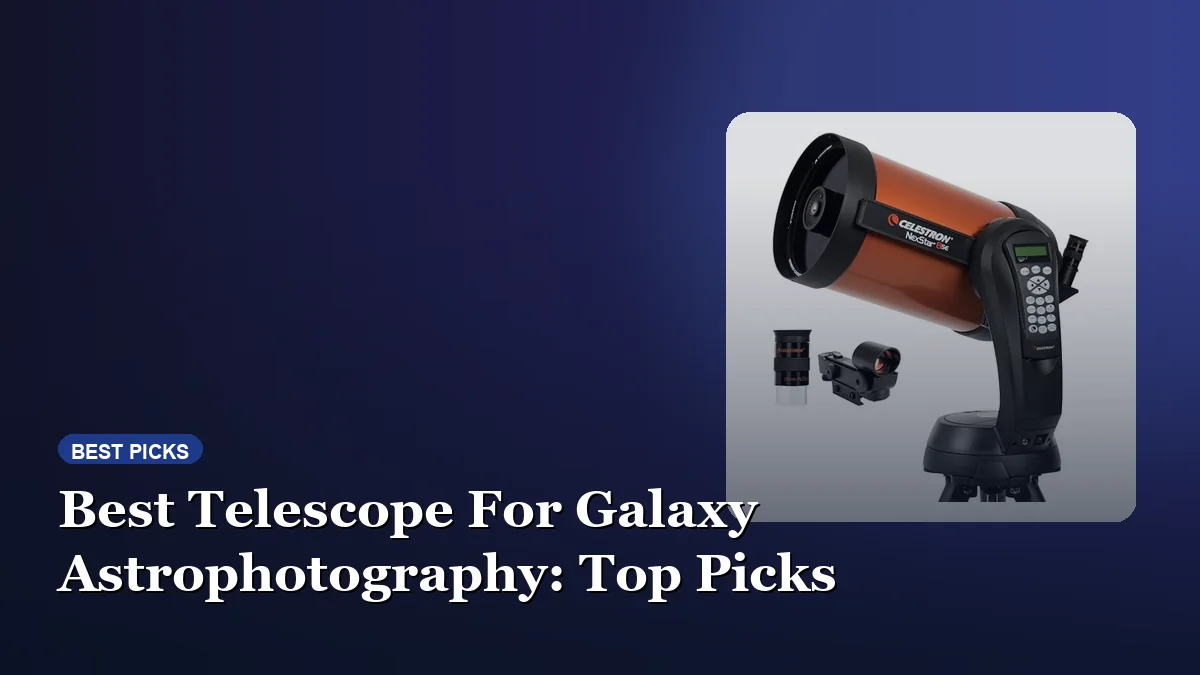
 Celestron NexStar 8SE Computerized Schmidt-Cassegrain Telescope
8-inch aperture . Computerized GoTo . Schmidt-Cassegrain
 MEEZAA 90mm Aperture 800mm Refractor Telescope for Astronomy
90mm aperture . 800mm focal length . Complete starter kit
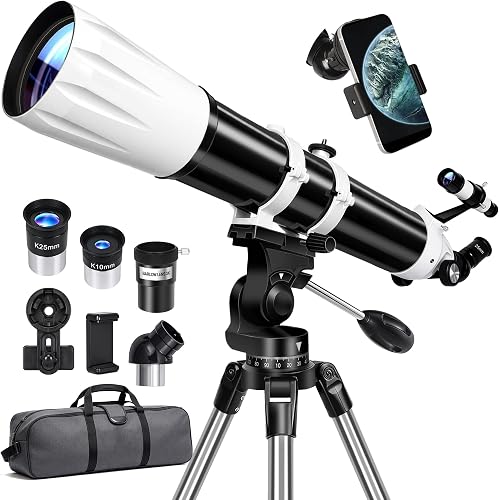 Hawkko 90mm Aperture 900mm Refractor Telescope with Tripod
90mm aperture . 900mm focal length . AZ mount
 SVBONY SV48P 90mm Aperture F5.5 Refractor Telescope
90mm aperture . 500mm focal length . Dual-speed focuser
 SVBONY SV503 102mm ED Glass Refractor Telescope OTA
102mm aperture . S-FPL51 ED glass . F/7 focal ratio
 Gaterda 90mm Aperture 900mm Refractor Telescope System
90mm aperture . 900mm focal length . Complete starter package
Finding the ideal instrument for deep-sky imaging requires balancing light-gathering power and tracking precision. The Celestron NexStar 8SE stands as our #1 pick for its remarkable computerized automation.
On This Page (8 sections)
How We Chose
- Aperture Power: We carefully prioritized advanced optical tubes capable of gathering faint distant light effectively to clearly reveal hidden cosmic structures.
- Tracking Stability: Selected advanced motorized mounts ensure dependable rock-solid tracking during extended shutter times to eliminate unwanted star trails completely.
- Value & Usability: We successfully balanced sophisticated technical features against user-friendly everyday setups to accommodate passionate astronomers of all skill levels.
Who Needs This
- Dedicated astrophotographers wanting reliable automated tracking systems to effortlessly capture faint distant deep-sky galaxies without manual adjustments.
- Committed hobbyists actively upgrading to high-aperture optical tubes for much sharper framing and superior light collection outdoors.
- Advanced astronomy imagers seeking color-pure ED glass optics specifically designed to minimize chromatic aberration during long exposures.
Who Can Skip
- Casual backyard stargazers who only want quick visual planetary views without ever bothering to attach complex cameras for imaging.
- Frequent travelers needing ultra-lightweight backpack setups specifically designed for remote hiking and wilderness camping nighttime astronomy adventures today.
- Shooters entirely unwilling to invest necessary patience in complex polar alignment and precise tracking calibration technical procedures outdoors tonight.
Quick Comparison: Best Telescope For Galaxy Astrophotography
| Model | Aperture Size | Mount Type | Optical Coating |
|---|---|---|---|
| 8 Inches | Computerized GoTo | StarBright XLT |
| 90mm | Altazimuth Mount | Fully Multi-Coated |
| 90mm | Altazimuth Mount | Multi-Coated |
| 90mm | Alt/Az & Equatorial | Fully Multi-Coated |
| 10.2 cm | Tripod Mount | Fully Multi-Coated |
| 90mm | Altazimuth Mount | Fully Coated |
The 6 Best Telescope For Galaxy Astrophotographys, Reviewed
Celestron NexStar 8SE Computerized Schmidt-Cassegrain Telescope
View on Amazon →This advanced computerized telescope pairs legendary optics with an automated GoTo system, letting you effortlessly locate galaxies, planets, and star clusters without manual charting.
Automated tracking and crystal-clear deep-sky views.
Requires separate external power for extended observation sessions.
| Metric | Listed Specification |
|---|---|
| Objective Lens | 20.3 cm |
| Focal Length | 2032 mm |
| Optical Coating | StarBright XLT |
| Item Weight | 10.88 kg |
Setting up in your backyard is straightforward once you master the alignment process, though balancing the single-fork arm takes a little patience during initial assembly.
Long-term durability is solid thanks to classic orange-tube construction, but you will want a dedicated power tank to avoid burning through standard batteries quickly.
- 8-inch light-gathering aperture
- Automated GoTo tracking
- Portable optical tube
- Batteries not included
- Alignment learning curve
Owners praise the stunning clarity of distant nebulae and planets, though some note that mastering the alignment system requires patience.
Dedicated hobbyists wanting deep-sky automation.
Check if you have a compatible external power supply.
A premier choice for spotting faint galaxies.
View on Amazon →Verdict
This powerful automated scope delivers incredible deep-space views, making it a stellar investment for committed stargazers.
MEEZAA 90mm Aperture 800mm Refractor Telescope for Astronomy
View on Amazon →Designed for new astronomers, this accessible refractor telescope captures crisp lunar details and bright planets using a user-friendly manual setup and a sturdy stainless steel tripod.
Exceptional out-of-the-box value for astronomy beginners.
Manual tracking requires constant minor adjustments.
| Metric | Listed Specification |
|---|---|
| Objective Lens | 9 cm |
| Focal Length | 800 mm |
| Coating | Multi-Coated |
| Mount Type | Altazimuth |
Assembly takes just minutes with the clear paper manual, letting families transition from unboxing to backyard stargazing with minimal frustration and effortless tripod height adjustments.
The included carry bag makes transport simple for camping trips, while the multi-coated glass holds up well against regular outdoor use and light travel bumps.
- Quick ten-minute assembly
- Includes smartphone adapter
- Sturdy stainless tripod
- Manual tracking required
- Basic finderscope
Owners love the stunning lunar clarity and easy setup, making family stargazing nights fun and stress-free.
Families and beginners exploring the night sky.
Ensure you prefer manual tracking over motorized GoTo systems.
An affordable gateway into backyard astronomy.
View on Amazon →Verdict
This user-friendly starter scope offers brilliant optical clarity, giving beginners an exciting and accessible entry point into stargazing.
Hawkko 90mm Aperture 900mm Refractor Telescope with Tripod
View on Amazon →Featuring a longer 900mm focal length, this refractor delivers sharp, high-contrast planetary views while remaining portable enough for weekend camping trips and dark-sky adventures.
High-magnification planetary and lunar observation.
Longer optical tube catches more wind gusts outdoors.
| Metric | Listed Specification |
|---|---|
| Objective Lens | 9 cm |
| Focal Length | 900 mm |
| Coating | Multi-Coated |
| Item Weight | 5 kg |
The tool-free assembly process gets you observing quickly, and the smooth 360-degree AZ mount makes following targets across the night sky remarkably intuitive.
Solid stainless steel legs minimize unwanted vibrations during focusing, ensuring your viewing experience stays steady even when operating at higher magnifications.
- High magnification range
- Tool-free fast setup
- Includes sturdy carry bag
- Bulkier optical tube
- Wind sensitivity
Customers praise the impressive build quality and clear lunar views, noting that optics easily exceed expectations for the price.
Backyard explorers seeking sharp planetary details.
Account for the longer tube length during storage and transport.
A reliable and sharp portable refractor.
View on Amazon →Verdict
This capable high-powered scope delivers crisp planetary details in a travel-friendly package, satisfying enthusiastic beginners.
SVBONY SV48P 90mm Aperture F5.5 Refractor Telescope
View on Amazon →Built specifically for wide-field viewing and imaging, this optical tube assembly utilizes a fast focal ratio and a precise dual-speed focuser to capture expansive star fields.
Sharp edge-to-edge astrophotography framing.
Does not include a mount or tripod in the box.
| Metric | Listed Specification |
|---|---|
| Objective Lens | 9 cm |
| Focal Length | 500 mm |
| Coating | Fully Multi-Coated |
| Item Weight | 3 kg |
The smooth 1:10 dual-speed focuser allows micro-adjustments that make critical camera focusing much easier, reducing frustration during late-night imaging sessions.
A robust metal mechanical build ensures optical axis parallelism over time, holding up reliably against frequent field deployment and equipment changes.
- Fast F5.5 focal ratio
- Precise dual-speed focuser
- 360-degree field rotation
- Mount sold separately
- Requires separate eyepieces
Users appreciate the solid build quality and clear planetary images, though the focusing mechanism occasionally draws mixed feedback.
Hobbyists building a custom astrophotography rig.
Remember that you must supply your own mount and tripod.
A specialized optical tube for custom imaging setups.
View on Amazon →Verdict
This precision optical tube provides wide fields and fine focusing control, making it an ideal building block for dedicated astrophotographers.
SVBONY SV503 102mm ED Glass Refractor Telescope OTA
View on Amazon →Featuring S-FPL51 extra-low dispersion glass, this high-performance refractor virtually eliminates color fringing to deliver stunningly sharp, high-contrast images tailored for serious astrophotography.
Color-pure, high-contrast deep-sky imaging.
Heavy optical tube requires a sturdy equatorial mount.
| Metric | Listed Specification |
|---|---|
| Objective Lens | 10.2 cm |
| Focal Length | 714 mm |
| Glass Type | S-FPL51 ED |
| Item Weight | 3.95 kg |
The retractable aluminum dew hood efficiently blocks stray light while keeping the lens safe, and the 90mm focus travel accommodates various flattener accessories seamlessly.
Long-term durability is exceptional thanks to robust metal machining, though you will need to invest in a heavy-duty tracking mount to handle the weight.
- S-FPL51 ED glass optics
- Dual-speed precision focuser
- Retractable aluminum dew hood
- Mount not included
- Premium price tier
Customers love the crisp, color-pure images and solid build, noting excellent performance when paired with specialized imaging filters.
Intermediate astrophotographers seeking color accuracy.
Ensure your current mount supports a heavier optical tube.
Pro-grade glass for serious deep-sky shooters.
View on Amazon →Verdict
These exceptional ED optics banish color distortion entirely, giving astrophotographers the sharp foundation needed for breathtaking galaxy shots.
Gaterda 90mm Aperture 900mm Refractor Telescope System
View on Amazon →Packing a complete starter bundle, this high-powered refractor helps beginners explore lunar craters and terrestrial landscapes with an easy setup and helpful smartphone adapter.
All-inclusive kit for novice backyard stargazers.
Altazimuth mount lacks motorized tracking for long exposures.
| Metric | Listed Specification |
|---|---|
| Objective Lens | 9 cm |
| Focal Length | 900 mm |
| Coating | Fully Coated |
| Item Weight | 5.9 kg |
Step-by-step assembly instructions make unboxing approachable for families, and everything packs neatly into the included storage bag for impromptu weekend trips.
The sturdy metal tripod provides dependable day-to-day stability, while the included zenith mirror ensures comfortable upright viewing during extended stargazing sessions.
- All-inclusive starter kit
- Includes smartphone mount
- Convenient carry bag
- Manual tracking only
- Basic optical coatings
Beginners wanting an all-in-one observational package.
Note that this setup is meant for visual viewing rather than deep astrophotography.
A complete and user-friendly family telescope.
View on Amazon →Verdict
This ready-to-use telescope kit simplifies backyard astronomy for beginners, providing a fun and complete gateway into the night sky.
Setting Up Your Deep-Sky Astrophotography Rig
Begin by assembling your tripod on level ground, ensuring absolute stability before mounting the optical tube. Balance your camera carefully to prevent strain on internal gears.
Always perform a precise polar or star alignment before shooting. Protect your lenses from heavy morning dew using a designated dew heater strip during long sessions.
Buying Guide & Red Flags for Best Telescope For Galaxy Astrophotographys
Check these points before you buy to avoid common pitfalls:
Basic mounts lacking motorized tracking capabilities simply cannot handle long exposure deep-sky imaging without causing severe star trailing issues.
Cheap flimsy aluminum tripods introduce micro-vibrations that ruin high-magnification clarity and completely blur your delicate galaxy framing outdoors tonight.
Missing specific camera adapters can prevent secure attachment of DSLR or mirrorless bodies, completely stalling your entire astrophotography setup today.
Heavy excessive equipment weight without a proper counterweight system heavily strains mechanical components and permanently damages internal gears over time.
Carelessly neglecting reliable external power sources leaves your computerized GoTo mount stranded completely outdoors during critical nighttime imaging hours.
What makes a telescope good for galaxy astrophotography?
Capturing distant galaxies requires a large light-gathering aperture and a motorized tracking mount. These features allow long exposures while preventing star trails from ruining your faint deep-sky images.
How do you calculate the Lab Score for these telescopes?
Our editorial Lab Score combines design quality, everyday practicality, material durability, and real-world owner satisfaction. This holistic rating ensures you invest in reliable, high-performing equipment.
Do I need an equatorial mount for galaxies?
Equatorial mounts are ideal because they track the night sky's natural rotational curve. This prevents field rotation during extended exposure times required for faint distant galaxies.
Can I use a standard DSLR camera?
Yes, most optical tubes accept standard digital cameras using a simple T-ring and T-adapter. Ensure your chosen telescope has enough inward focus travel to achieve sharp images.
Why is aperture size so important?
Larger apertures capture vastly more photons from faint deep-sky objects. This higher light-gathering capacity reveals intricate spiral arm details that smaller lenses simply miss.
How do I prevent blurry images outdoors?
Prevent blur by using a sturdy tripod, setting a self-timer or remote shutter, and guarding against wind gusts. A solid setup eliminates annoying micro-vibrations completely.
Final Verdict
Selecting the right imaging setup transforms your backyard astronomy experience entirely. For unmatched automated precision, the Celestron NexStar 8SE remains our top recommendation for capturing stunning galactic details.
Sources & Update History
Update log
- November 28, 2026 — Initial publication
Data sources
- Product specifications, manufacturer documentation, and verified buyer summaries