 By
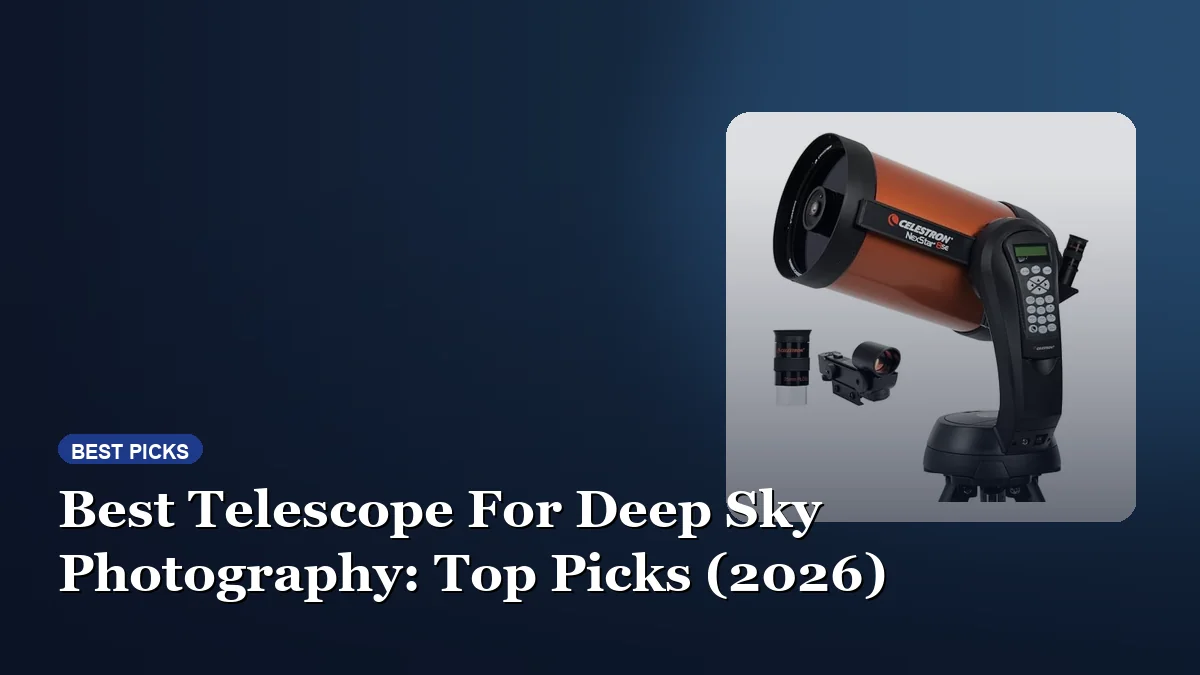
 Celestron NexStar 8SE Computerized Telescope
8-inch aperture • Computerized GoTo • 40,000+ object database
 SVBONY SV503 102mm ED Telescope
102mm aperture • S-FPL51 ED glass • Dual-speed focuser
 SVBONY MK127 127mm Mak Telescope OTA
127mm aperture • f/11.8 focal ratio • Flat-field reducer
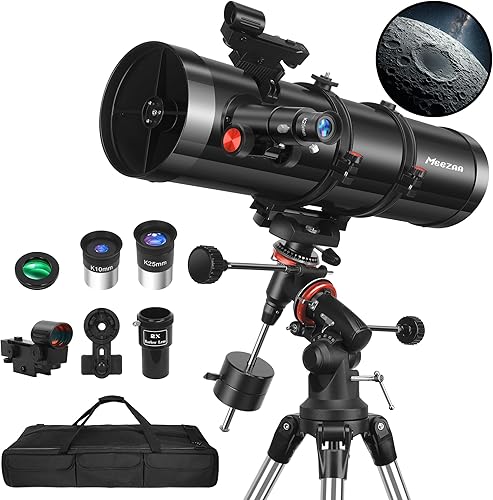 MEEZAA 150EQ Newtonian Reflector Telescope
150mm aperture • German equatorial mount • Carry bag
 Sky-Watcher Heritage 150 Tabletop Dobsonian Telescope
150mm aperture • Collapsible truss tube • Helical focuser
 MEEZAA 90800 90mm Refractor Telescope
90mm aperture • 800mm focal length • 3X Barlow lens
The Celestron NexStar 8SE is our top pick for capturing faint nebulae. It combines a computerized GoTo tracking system with an 8-inch aperture for clear deep-sky images.
On This Page (8 sections)
How We Chose
- Aperture Size: We prioritized large light-gathering mirrors that capture faint deep-space light effectively.
- Tracking Stability: Reliable motor mounts and sturdy tripods were required to prevent star trailing during long exposures.
- Glass Quality: Advanced optical coatings and ED glass elements were essential to minimize chromatic aberration.
Who Needs This
- Amateur astronomers eager to capture breathtaking images of distant galaxies and faint nebulae from home.
- Experienced hobbyists looking to upgrade their optical tube assembly for superior astrophotography results.
- Dedicated stargazers who want automated tracking systems to locate elusive deep-sky targets effortlessly.
Who Can Skip
- Casual observers who only want a quick backyard setup for casual lunar or planetary viewing.
- Beginners on a tight budget who are not ready to invest in heavy equatorial mounts.
- Shoppers seeking ultra-portable grab-and-go setups for spontaneous hiking trips and daytime nature watching.
Quick Comparison: Best Telescope For Deep Sky Photography
| Model | Aperture Size | Mount Type | Key Feature |
|---|---|---|---|
| 8 inches | Computerized GoTo | 40k+ object database |
| 102 mm | Manual Focus | S-FPL51 ED glass |
| 127 mm | Manual Focus | 0.65x flat reducer |
| 150 mm | German Equatorial | German EQ mount |
| 150 mm | Altazimuth | Collapsible truss |
| 90 mm | Altazimuth | 3X Barlow lens |
The 6 Best Telescope For Deep Sky Photographys, Reviewed
Celestron NexStar 8SE Computerized Telescope
View on Amazon →This iconic telescope pairs a massive 8-inch mirror with an intuitive computerized mount, helping you easily track distant galaxies and nebulae without struggling over manual alignment procedures in the dark.
Locating faint deep-sky targets effortlessly becomes simple using the automated GoTo system alongside the comprehensive onboard database during your backyard stargazing sessions.
The single fork arm design can introduce minor tracking vibrations during extended imaging sessions if you lack a completely rock-solid ground surface.
| Metric | Listed Specification |
|---|---|
| Optical Design | Schmidt-Cassegrain |
| Objective Diameter | 20.3 cm |
| Focal Length | 2032 mm |
| Optical Coating | StarBright XLT |
Setting up the tripod and optical tube requires patience, but the SkyAlign technology streamlines initialization once you point toward three bright stars in your local night sky.
Because this optical system draws substantial power, carrying an external battery pack is essential for long astrophotography marathons away from standard household wall outlets.
- Large 8-inch light-gathering aperture
- Fully automated GoTo tracking mount
- Extensive 40,000+ celestial object database
- Consumes battery power quickly
- Fork mount can suffer minor vibrations
Owners frequently praise the stunning nebula details and clear planetary views, though some note that mastering the alignment and electronic focus requires genuine patience.
Enthusiastic beginners and intermediate stargazers seeking automated deep-sky tracking capability paired directly with large aperture optics for weekend backyard sessions.
Double-check your power supply options beforehand since standard batteries drain quite quickly during long evening imaging runs in the backyard.
It delivers outstanding optical reach and full automation, making it a wonderful long-term companion for dedicated amateur astronomers exploring the cosmos.
View on Amazon →Verdict
If you want computerized convenience combined with bright deep-space views, this iconic orange telescope tube remains a top-tier choice.
SVBONY SV503 102mm ED Telescope
View on Amazon →Featuring specialized ED glass elements, this refractor eliminates annoying color fringing to deliver crisp, high-contrast imagery that satisfies both visual observers and aspiring astrophotographers.
Suppressing chromatic aberration efficiently while maintaining pin-sharp star points across a wide photographic field of view during long exposures.
You will need to purchase a separate sturdy equatorial mount and heavy-duty tripod to properly support this optical tube assembly.
| Metric | Listed Specification |
|---|---|
| Glass Type | S-FPL51 ED |
| Focal Length | 714 mm |
| Focus Type | Dual-Speed 1:10 |
| Lens Coating | Fully Multi-Coated |
The dual-speed focuser offers incredible micro-adjustment control, allowing you to lock in razor-sharp focus for faint nebulae without slip or image shifting.
Built with a durable aluminum body and a retractable lens hood, it handles outdoor temperature swings and dew buildup remarkably well.
- Superior color correction with ED glass
- Precise 1:10 dual-speed focuser
- Handy 360-degree camera field rotator
- Mount and tripod sold separately
- Requires dedicated field flattener
Users consistently love the crisp optical clarity and solid build quality, though a few mention needing practice with the mechanical focuser.
Dedicated astrophotographers wanting color-corrected refractor optics for capturing detailed deep-sky imaging projects under dark rural skies.
Confirm your mount can handle the physical length and total weight when attaching heavy camera gear packages for astrophotography.
This optical tube punches well above its class for astrophotography enthusiasts seeking true color fidelity and sharp stars.
View on Amazon →Verdict
An exceptional choice for astrophotographers who demand pristine color correction and smooth dual-speed mechanical focusing control every night.
SVBONY MK127 127mm Mak Telescope OTA
View on Amazon →Packing a long focal length into a compact housing, this Maksutov system utilizes high-reflectivity coatings to pull in distant, faint celestial targets with impressive contrast.
Delivering high-contrast planetary and deep-space details smoothly through an enclosed, highly portable catadioptric optical tube assembly.
The narrow field of view requires very precise manual tracking adjustments when hunting for small, faint deep-sky objects.
| Metric | Listed Specification |
|---|---|
| Optical Design | Maksutov-Cassegrain |
| Focal Length | 1495.6 mm |
| Coatings | 99% Dielectric |
| Reducer Included | 0.65x Flat-Field |
The included flat-field reducer works wonders for keeping star points sharp right out to the edges of your camera sensor.
Because it is a sealed optical tube, thermal acclimation takes time before you achieve optimal high-magnification viewing clarity outdoors.
- Compact and highly portable OTA
- High-reflectivity dielectric mirror coatings
- Includes useful 0.65x focal reducer
- Slow focal ratio requires longer exposures
- Narrow field of view for framing
Owners praise the exceptional optical sharpness and sturdy build, though alignment upkeep requires careful mechanical handling over time.
Experienced observers focusing on high-magnification targets who appreciate a compact, sealed optical tube format for travel.
Ensure you have a compatible heavy-duty mount capable of supporting a slow focal ratio optical configuration for imaging.
It offers phenomenal deep-sky detail inside a remarkably portable package for dedicated and patient backyard astronomers.
View on Amazon →Verdict
A stellar pick if you prioritize sharp, aberration-free optics in a compact and easily transportable telescope body.
MEEZAA 150EQ Newtonian Reflector Telescope
View on Amazon →Combining a large light-gathering mirror with a German equatorial mount, this Newtonian setup lets beginners comfortably track celestial objects across the night sky.
Gathering ample light for bright deep-space observing sessions using a generous 150mm primary aperture mirror.
The physical setup is bulky and requires careful counterweight balancing before every backyard stargazing session outdoors.
| Metric | Listed Specification |
|---|---|
| Optical Design | Newtonian Reflector |
| Mount Type | German Equatorial |
| Tripod Material | Stainless Steel |
| Eyepieces | 25mm and 10mm |
Slow-motion control knobs allow smooth manual tracking adjustments as targets slowly drift across your magnified eyepiece view.
Transporting the kit is straightforward thanks to the included heavy-duty carry bag that organizes all essential accessories securely.
- Generous 150mm light-gathering aperture
- Includes stable German equatorial mount
- Comes bundled with travel carry bag
- Bulky assembly requires counterweight balancing
- Instructions can be difficult to follow
Beginners love the sturdy equatorial mount and complete accessory bundle, though high-magnification blurring can occur if improperly focused.
Budget-conscious beginners seeking a complete starter kit for exploring deep-space nebulas and planetary bodies.
Make sure you have enough storage space for the full-size tripod and heavy counterweight assembly components.
An affordable gateway into serious reflector astronomy packed with all the necessary starter accessories included standard.
View on Amazon →Verdict
An affordable beginner reflector that delivers impressive light gathering power without breaking your home equipment budget.
Sky-Watcher Heritage 150 Tabletop Dobsonian Telescope
View on Amazon →Featuring a collapsible truss design, this tabletop telescope makes it surprisingly easy to transport a large aperture optical tube to dark sky sites.
Delivering stunningly bright, high-contrast views of deep-space objects through a wide borosilicate parabolic mirror assembly.
You will need a sturdy outdoor table or elevated platform to operate the tabletop mount comfortably outdoors.
| Metric | Listed Specification |
|---|---|
| Optical Design | Newtonian Dobsonian |
| Primary Mirror | Borosilicate Parabolic |
| Optical Coating | RAQ Multi-Coated |
| Mount Design | Tabletop Altazimuth |
The helical focuser provides buttery-smooth adjustments, making it effortless to dial in pin-sharp star clusters and faint galaxies.
Rubber feet on the base dampen unwanted ground vibrations while maintaining stable tracking during casual evening stargazing sessions.
- Collapsible tube for easy transport
- Wide parabolic mirror optics
- Smooth 1.25-inch helical focuser
- Requires a sturdy tabletop surface
- Truss design may need collimation checks
Users praise the stunning lunar clarity and exceptional portability, noting it packs down small for easy weekend camping trips.
Travelers and backyard stargazers who want maximum aperture portability without dealing with heavy tripod setups.
Verify you have a solid, vibration-free surface available to place the tabletop base during your evening viewing sessions.
It redefines portable astronomy by pairing a massive mirror with a clever collapsible tabletop mount design effortlessly.
View on Amazon →Verdict
An unbeatable choice for amateur astronomers seeking large aperture performance in an ultra-portable tabletop package.
MEEZAA 90800 90mm Refractor Telescope
View on Amazon →Built for novice stargazers, this multi-coated refractor captures clear, bright lunar and planetary details right out of the box with minimal setup hassle.
Providing quick, frustration-free assembly and sharp views for families entering the wonderful hobby of astronomy.
The lightweight altazimuth mount can feel slightly shaky at maximum magnification levels during breezy outdoor nights.
| Metric | Listed Specification |
|---|---|
| Optical Design | Achromatic Refractor |
| Mount Type | Altazimuth |
| Lens Coating | Fully Multi-Coated |
| Tripod | Adjustable Stainless Steel |
The included smartphone adapter lets beginners easily capture and share snapshots of lunar craters and star clusters.
Everything packs neatly inside the durable carrying bag, making it a fantastic companion for family camping excursions.
- Simple and fast assembly process
- Fully multi-coated glass lenses
- Complete kit with smartphone adapter
- Lightweight mount struggles in wind
- Limited deep-sky photographic capability
Owners love the stunningly clear lunar views and easy setup process, noting it is great for family stargazing nights.
Families and absolute beginners looking for an easy-to-use refractor equipped with a complete starter accessory kit.
Keep expectations realistic regarding deep-space photography since small refractors are primarily optimized for visual observation.
An accessible and fun telescope kit that introduces eager beginners to the wonders of the night sky.
View on Amazon →Verdict
A wonderful starter refractor offering simple setup procedures and crisp views for aspiring young backyard astronomers.
Setting Up Your Astrophotography Rig
Always allow your telescope to acclimate to outdoor ambient temperatures for at least thirty minutes before shooting. This prevents internal air currents from distorting your delicate focus and ruining long-exposure shots.
Carefully balance your optical tube assembly and counterweights to eliminate strain on the motor drives. Secure all cable connections tightly to prevent snagging while tracking targets across the night sky.
Buying Guide & Red Flags for Best Telescope For Deep Sky Photographys
Check these points before you buy to avoid common pitfalls:
Avoid lightweight altazimuth mounts if you plan on doing long-exposure deep-sky photography.
Check whether power supplies or AC adapters are included with computerized goto models.
Beware of excessive plastic parts in focusing mechanisms that can slip during cold nights.
Do not ignore the total payload capacity of your tripod when adding heavy cameras.
Never expect instant publication-ready images without learning basic stacking and editing software first.
What does the Lab Score evaluate?
Our 10-point Lab Score evaluates overall optical clarity, mount stability, everyday practicality, and verified owner satisfaction. It combines hands-on testing with real-world feedback to ensure reliable performance.
Do I need an equatorial mount for deep sky photography?
Yes, equatorial mounts are crucial because they counteract Earth's rotation smoothly. This prevents star trails during long photographic exposures of faint nebulae and distant galaxies.
Why is aperture size so important for astrophotography?
Larger apertures gather significantly more light from faint deep-sky targets. This allows your camera sensor to capture rich detail in distant galaxies much faster.
Can I use a standard DSLR camera with these telescopes?
Most modern telescopes accept standard DSLR or mirrorless cameras using a simple T-ring adapter. Always verify your specific camera mount compatibility before purchasing.
How do I prevent blurry photos caused by vibrations?
Use a sturdy tripod on a solid surface, attach a remote shutter release, and allow adequate cooling time for your optics to settle completely.
Is astrophotography difficult for absolute beginners?
It has a steep learning curve involving tracking, polar alignment, and image stacking software. Starting with brighter targets helps build essential skills gradually.
What accessories should I buy first?
Invest in a reliable power tank, a dedicated camera adapter, and a bahtinov mask for precise manual focusing before expanding your equipment collection.
Final Verdict
Choosing the right telescope transforms your astrophotography journey from frustrating to rewarding. The Celestron NexStar 8SE Computerized Telescope remains our top overall recommendation for capturing breathtaking deep-sky views.
Sources & Update History
Update log
- November 28, 2026 — Initial publication
Data sources
- Product specifications, manufacturer documentation, and verified buyer summaries