 By
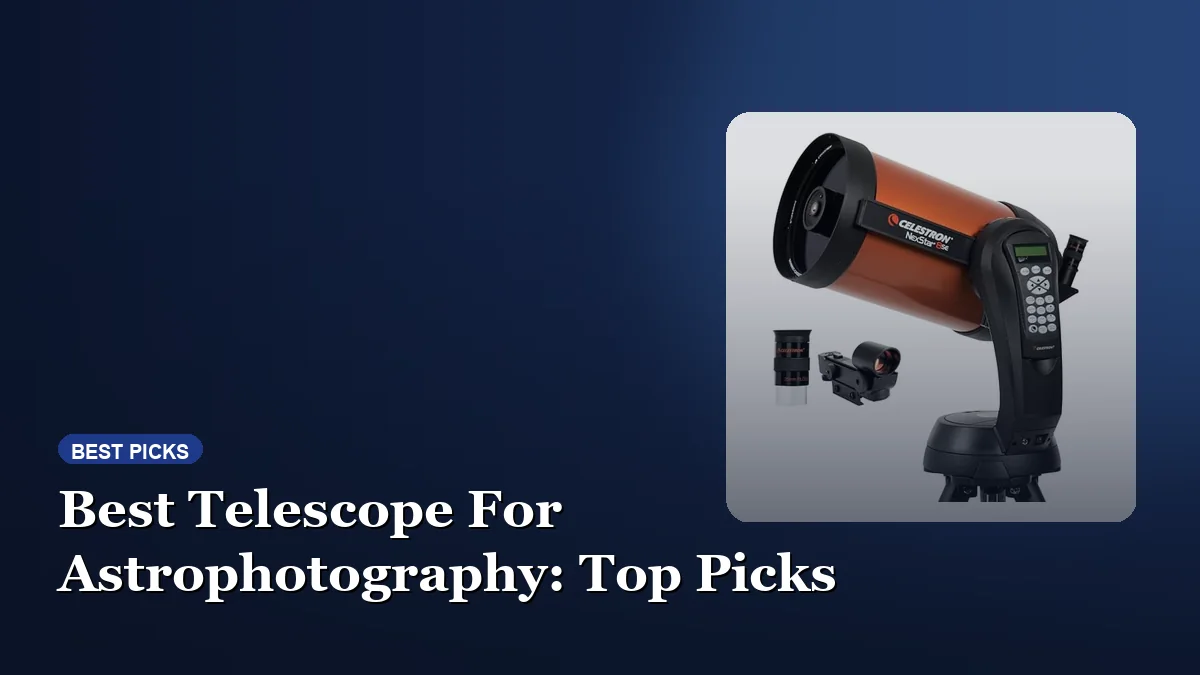
 Celestron NexStar 8SE Computerized Schmidt-Cassegrain Telescope
8" Aperture · Computerized Mount · GoTo Tech
 DWARF 3 Smart Telescope App-Controlled Astrophotography Camera
35mm Lens · 4K Tracking · Ultra-Light
 SVBONY SV503 102mm F7 ED Refractor Telescope for Astrophotography
102mm Aperture / ED Glass / Dual Focuser
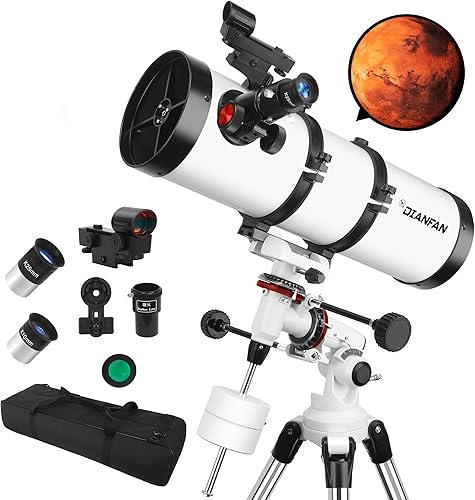 Dianfan 150EQ Professional Astronomy Telescope with Equatorial Mount
150mm Aperture / EQ Mount / Stainless Tripod
 MEEZAA 90mm Aperture 800mm Refractor Telescope for Beginners
90mm Aperture / 800mm Focal / Altazimuth Mount
 SOLOMARK 90mm Aperture 1000mm High Powered Telescope
90mm Aperture / 1000mm Focal / AZ Mount
Our top pick is the Celestron NexStar 8SE computerized telescope for its brilliant automated GoTo tracking and sharp optics. Beginners and experts alike will appreciate its deep-sky performance.
On This Page (8 sections)
How We Chose
- Optical Power: We prioritized large apertures and advanced glass coatings for bright, sharp celestial images.
- Tracking Tech: Automated GoTo mounts and smart tracking features were essential for long-exposure photography.
- Build Quality: Sturdy mounts and durable optical tubes ensure stability during outdoor nighttime photo sessions.
Who Needs This
- Aspiring astrophotographers wanting computerized GoTo tracking to capture detailed deep-sky nebulae and galaxies.
- Experienced hobbyists seeking sharp refractor optics to eliminate chromatic aberration in planetary shots.
- Tech-savvy beginners looking for smart camera integration for effortless smartphone image stacking.
Who Can Skip
- Casual stargazers who only want quick visual peeks without dealing with camera attachments.
- Shoppers on an ultra-strict budget who want a grab-and-go toy rather than a serious imaging rig.
- Users lacking patience for complex polar alignments and computerized setup routines.
Quick Comparison: Best Telescope For Astrophotography
| Model | Aperture | Focal Length | Mount Type |
|---|---|---|---|
| 20.3 cm | 2032 mm | Computerized Fork |
| 35 mm | Custom Smart | Altazimuth |
| 10.2 cm | 714 mm | Tripod Mount |
| 15 cm | 650 mm | Equatorial Mount |
| 9 cm | 800 mm | Altazimuth Mount |
| 9 cm | 1000 mm | Altazimuth Mount |
The 6 Best Telescope For Astrophotographys, Reviewed
Celestron NexStar 8SE Computerized Schmidt-Cassegrain Telescope
View on Amazon →Combines large 8-inch optics with automated tracking to deliver bright, detailed views of deep-sky objects right from your backyard.
Capturing stunning, detailed deep-sky celestial images with automated GoTo tracking.
Setup can feel tricky for beginners navigating the computerized alignment process.
| Metric | Listed Specification |
|---|---|
| Objective Lens Diameter | 20.3 centimeters |
| Focal Length | 2032 millimeters |
| Optical Tube Length | 43.2 centimeters |
| Coating | StarBright XLT |
Navigating the computerized GoTo mount requires patience during initial alignment, but the automatic tracking keeps targets locked in steadily for long sessions.
Maintenance involves careful lens care and secure power management to ensure smooth backyard observing sessions over many years of stargazing.
- Powerful 8-inch optics
- Automated tracking
- Extensive object database
- Steep learning curve
- Complex alignment setup
Users rave about the incredible deep-sky detail on planets and nebulae, though some report frustrating alignment glitches during initial setup.
Intermediate astronomers wanting a powerful, automated setup for deep-sky viewing.
Double-check your power supply needs, as the motorized mount drains standard batteries quickly.
This iconic orange tube offers stellar deep-sky performance for dedicated hobbyists.
View on Amazon →Verdict
A powerful computerized telescope that rewards patience with breathtaking planetary and deep-space views.
DWARF 3 Smart Telescope App-Controlled Astrophotography Camera
View on Amazon →Redefines portable stargazing with a featherweight build and automated cloud processing that turns snapshots into stunning cosmic images instantly.
Delivering effortless smartphone astrophotography via smart cloud-powered image stacking.
Small aperture limits raw optical magnification compared to traditional reflector scopes.
| Metric | Listed Specification |
|---|---|
| Objective Lens Diameter | 35 millimeters |
| Focus Type | Auto Focus |
| Item Weight | 2.28 kg |
| Tracking | 4K Auto-Tracking |
Setting up takes mere minutes using the intuitive mobile app, making spontaneous backyard stargazing trips remarkably stress-free and fun.
The rugged, ultra-light chassis travels easily in a standard backpack, ensuring long-term durability for outdoor camping adventures.
- Ultra-portable design
- Dual imaging lenses
- Instant app processing
- Limited optical zoom
- Relies on app connection
Owners love the amazingly quick setup and brilliant Milky Way photos captured even in light-polluted urban areas.
Travelers and beginners craving hassle-free, smartphone-controlled astrophotography.
Ensure your smartphone is compatible with the dedicated control application before heading outdoors.
A revolutionary smart scope that makes deep-sky photography accessible to everyone instantly.
View on Amazon →Verdict
The ultimate travel-friendly smart telescope for capturing breathtaking night skies without technical friction.
SVBONY SV503 102mm F7 ED Refractor Telescope for Astrophotography
View on Amazon →Features ED glass optics that virtually eliminate color fringing, delivering crisp, high-contrast celestial views for serious astrophotographers.
Suppressing chromatic aberration for razor-sharp planetary and deep-space photography.
Requires purchasing a separate mount and tripod for stable field use.
| Metric | Listed Specification |
|---|---|
| Objective Lens Diameter | 10.2 centimeters |
| Focal Length | 714 millimeters |
| Focus Type | Dual-Speed Manual |
| Optical Coating | Fully Multi-Coated |
The dual-speed focuser provides incredible micro-adjustment control, letting you nail critical focus precisely when attaching heavy imaging cameras.
Solid aluminum construction ensures long-term durability, while the retractable hood efficiently blocks stray ambient dew and light.
- S-FPL51 ED glass
- Dual-speed 1:10 focuser
- 360-degree rotator
- Mount sold separately
- Heavier optical tube
Users praise the exceptionally crisp, clean images and solid build quality, though the focusing mechanism has mixed reviews.
Dedicated astrophotographers building a custom rig with premium optical glass.
Budget for a sturdy equatorial mount and compatible heavy-duty tripod separately.
Exceptional ED refractor optics designed for serious imaging enthusiasts.
View on Amazon →Verdict
A top-tier optical tube that delivers pristine color accuracy for dedicated astrophotography builds.
Dianfan 150EQ Professional Astronomy Telescope with Equatorial Mount
View on Amazon →Packs a generous 150mm aperture onto a stable equatorial mount to capture bright, detailed views of lunar craters and deep-sky targets.
Offering massive light-gathering aperture at an accessible entry-level price point.
Assembly and polar alignment take practice and can feel bulky to transport.
| Metric | Listed Specification |
|---|---|
| Objective Lens Diameter | 15 centimeters |
| Focal Length | 650 millimeters |
| Zoom Ratio | 26x-130x |
| Telescope Mount | German-Style EQ |
The German-style equatorial mount uses slow-motion cables to track moving stars smoothly once properly balanced in your backyard.
A rigid stainless steel tripod minimizes vibrations during windy sessions, though storing the oversized carrying bag requires ample closet space.
- Large 150mm aperture
- Stable stainless tripod
- Slow-motion cables
- Complex polar alignment
- Bulky transport size
Buyers love the sturdy stainless steel legs and surprisingly bright lunar views, though manual focusing takes patience to master.
Budget-conscious stargazers wanting serious light-gathering power and manual equatorial tracking.
Ensure you have dedicated storage space, as the complete kit is quite bulky.
A heavy-duty reflector that delivers impressive aperture performance for dedicated beginners.
View on Amazon →Verdict
A capable budget reflector offering serious light-gathering power for aspiring amateur astronomers.
MEEZAA 90mm Aperture 800mm Refractor Telescope for Beginners
View on Amazon →Features a 90mm multi-coated refractor lens that pulls in crisp lunar details and bright planetary views for aspiring stargazers.
Delivering quick, user-friendly setup for families and astronomy beginners.
Altazimuth mount lacks motorized tracking for long-exposure astrophotography.
| Metric | Listed Specification |
|---|---|
| Objective Lens Diameter | 9 centimeters |
| Focal Length | 800 millimeters |
| Magnification | 32x - 240x |
| Coating | Fully Multi-Coated |
Simple assembly allows most users to go from box to backyard observing in under ten minutes without technical headaches.
The adjustable steel tripod stays sturdy on lawn surfaces, and the bundled carrying bag keeps accessories organized between trips.
- Quick 10-minute setup
- Fully multi-coated optics
- Includes smartphone adapter
- No automated tracking
- Limited high-power clarity
Customers praise the remarkably clear lunar crater views and easy family-friendly assembly, making stargazing fun for all ages.
Beginners and families looking for an affordable, straightforward optical setup.
Remember this is best for visual viewing and quick smartphone snaps, not deep-space imaging.
An accessible refractor telescope that brings backyard stargazing within easy reach.
View on Amazon →Verdict
A fantastic starter scope offering clear optics and effortless assembly for curious beginners.
SOLOMARK 90mm Aperture 1000mm High Powered Telescope
View on Amazon →Employs a long 1000mm focal length to deliver magnified views of distant planets and star clusters with reliable stability.
Providing higher base magnification for planetary and lunar observation.
Long optical tube can feel sensitive to wind vibrations outdoors.
| Metric | Listed Specification |
|---|---|
| Objective Lens Diameter | 9 centimeters |
| Focal Length | 1000 millimeters |
| Magnification | 50x - 100x |
| Coating | Fully Coated |
The Vertisteel AZ mount features precision adjustment controls that make tracking celestial bodies across the night sky smooth and intuitive.
Sturdy adjustable tripod legs anchor the long tube securely, ensuring dependable performance during weekend camping trips or backyard sessions.
- Long focal reach
- Precision AZ mount
- Included phone adapter
- Wind vibration sensitivity
- Basic fully coated optics
Users appreciate the clear planetary views of Jupiter and its moons, though setup instructions receive mixed beginner feedback.
Beginners and kids wanting closer planetary magnification without complex setups.
Secure the tripod on firm ground to prevent vibrations from blurring high-magnification targets.
A high-focal-length starter scope that brings distant planets into sharp focus.
View on Amazon →Verdict
A capable entry-level telescope offering extended reach for observing planetary details closely.
Setting Up Your Astrophotography Rig
Always allow your telescope thermal time to adjust to outdoor night temperatures before shooting. Balance your optical tube carefully on the mount to prevent strain and ensure smooth tracking during long exposures.
Buying Guide & Red Flags for Best Telescope For Astrophotographys
Check these points before you buy to avoid common pitfalls:
Avoid flimsy tripods that wobble in the slightest breeze and ruin long exposures.
Watch out for heavy optical tubes that overwhelm lightweight or starter mounts.
Do not ignore the need for proper power sources when running computerized GoTo mounts.
Skip models with poor focusers that slip and blur your fine astrophotography captures.
Beware of complex setup processes if you lack patience for alignment routines.
What makes a telescope good for astrophotography?
Astrophotography requires stable motorized mounts to track Earth's rotation and advanced optics that gather plenty of light for faint deep-sky targets like distant nebulae and spiral galaxies.
Do I need a computerized GoTo mount?
While manual tracking works for bright planets, computerized GoTo mounts are virtually essential for long-exposure deep-sky photography because they automatically lock onto and follow faint celestial objects.
What does the Lab Score evaluate?
Our Lab Score combines optical quality, everyday practicality, material durability, and verified owner satisfaction to give you a trustworthy rating for every tested telescope model.
Are refractor or reflector telescopes better for cameras?
Refractor telescopes excel at sharp planetary contrast, while reflectors and Schmidt-Cassegrains offer larger light-gathering apertures for faint deep-sky objects at reasonable sizes.
How do smart astrophotography telescopes work?
Smart telescopes integrate built-in cameras with automated image stacking software inside companion smartphone apps, making it effortless to capture colorful astrophotography without manual processing.
Can I use a regular camera with these telescopes?
Yes, most traditional optical tubes accept DSLR or mirrorless cameras using a standard T-ring adapter, letting you leverage your existing camera body for detailed stargazing shots.
Final Verdict
Choosing the right astrophotography telescope depends on your experience and budget. For most users, the Celestron NexStar 8SE Computerized Schmidt-Cassegrain Telescope delivers the ideal blend of tracking precision and optical clarity.
Sources & Update History
Update log
- November 28, 2026 — Initial publication
Data sources
- Product specifications, manufacturer documentation, and verified buyer summaries