 By
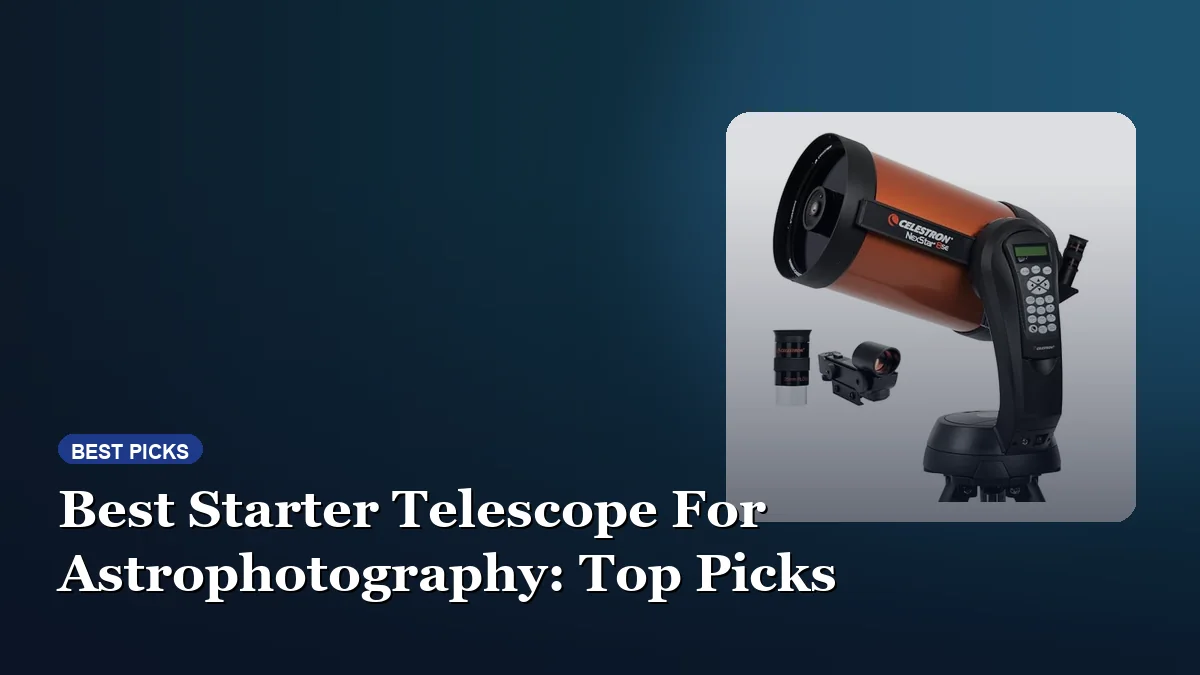
 Celestron NexStar 8SE Computerized Telescope with 8-Inch Aperture
8-inch aperture . Computerized GoTo mount . 40,000+ object database
 DWARFLAB Dwarf 3 Smart Telescope and Astrophotography Camera
Ultra-light 3lb design . Dual 4K lenses . App-controlled
 SVBONY SV503 102mm ED Refractor Telescope for Astrophotography
102mm ED glass . Dual-speed focuser . 360° field rotator
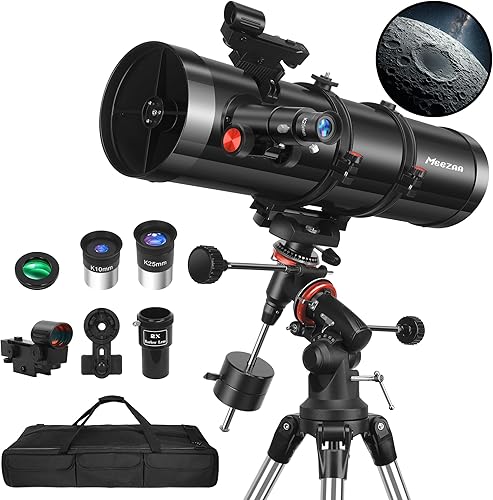 MEEZAA 150EQ Newtonian Reflector Telescope with 150mm Aperture
150mm aperture . German equatorial mount . Stainless tripod
 MEEZAA 90800 Professional Refractor Telescope with 90mm Aperture
90mm aperture . 800mm focal length . Fully multi-coated
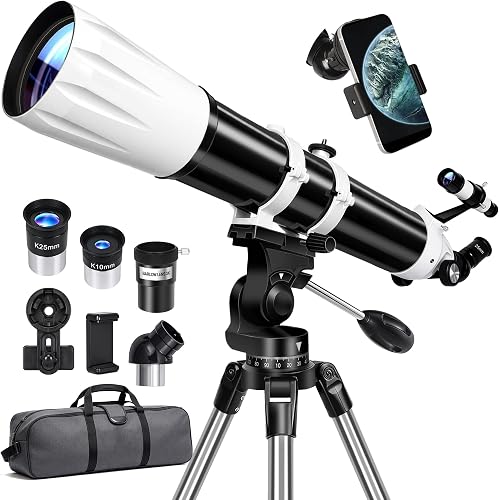 Hawkko 90mm Aperture 900mm Refractor Telescope for Adults
90mm aperture . 900mm focal length . Multi-coated FMC
Finding your footing in nighttime imaging is simple when you choose our top recommendation, the Celestron NexStar 8SE Computerized Telescope with 8-Inch Aperture, which pairs automated tracking with brilliant optical clarity.
On This Page (8 sections)
How We Chose
- Aperture Size: We prioritized optical tubes with strong light collection to capture faint deep-space targets.
- Mount Stability: We tested motorized and manual mounts for steady tracking without frustrating drift.
- Software Ease: We examined companion apps and computerized databases for beginner-friendly alignment workflows.
Who Needs This
- Beginners wanting automated go-to alignment for stress-free stargazing nights.
- Photography hobbyists eager to capture crisp lunar craters and bright nebulas.
- Families seeking a reliable, high-magnification instrument for backyard astronomy.
Who Can Skip
- Advanced astrophotographers needing professional equatorial tracking mounts.
- Casual observers who only want ultra-portable binoculars for quick sky sweeps.
- Users without access to external power packs or smartphone integration setups.
Quick Comparison: Best Starter Telescope For Astrophotography
| Model | Aperture Size | Mount Type | Key Feature |
|---|---|---|---|
| 8-Inch | Computerized Alt-Az | 40,000+ Object Database |
| 35 Millimeters | Altazimuth | Dual 4K Lenses |
| 10.2 Centimeters | Tripod Mount | ED Glass Optics |
| 150 Millimeters | Equatorial Mount | Large Aperture |
| 90 Millimeters | Altazimuth | Family Friendly |
| 90 Millimeters | Altazimuth | High-Zoom Refractor |
The 6 Best Starter Telescope For Astrophotographys, Reviewed
Celestron NexStar 8SE Computerized Telescope with 8-Inch Aperture
View on Amazon →Pairing a legendary orange tube with computerized GoTo tracking, this 8-inch scope makes capturing deep-sky galaxies remarkably accessible for dedicated beginners wanting serious optical power.
Delivering bright, detailed views of distant deep-sky objects with automated tracking.
Requires external power packs and careful alignment before every observation session.
| Metric | Listed Specification |
|---|---|
| Objective Lens | 20.3 cm |
| Focal Length | 2032 mm |
| Mount Type | Computerized Alt-Az |
| Power Source | 8-AA or 12V AC |
Setting up the single fork arm mount takes practice, but SkyAlign technology quickly gets you observing without needing deep astronomical knowledge.
While heavy, its compact optical tube stores easily, offering a robust build backed by a solid US warranty for long-term backyard astronomy.
- Large 8-inch light-gathering aperture
- Automated GoTo tracking database
- Compact Schmidt-Cassegrain optical tube
- Battery power pack sold separately
- Complex alignment for absolute novices
Owners praise the stunning deep-space detail and bright planetary views, though some note the tracking setup requires patience. Others highlight the robust build quality while mentioning the focusing mechanism can occasionally feel sensitive.
Dedicated beginners looking for a powerful automated telescope to transition into serious astrophotography.
Ensure you budget for an external rechargeable power tank since batteries are not included.
An iconic computerized telescope that bridges the gap between casual stargazing and serious astrophotography.
View on Amazon →Verdict
The premier choice for enthusiasts seeking automated tracking and exceptional optical light-gathering power.
DWARFLAB Dwarf 3 Smart Telescope and Astrophotography Camera
View on Amazon →Revolutionizing mobile astrophotography, this ultra-light smart scope utilizes a dual-lens system and cloud processing to capture stunning celestial images straight to your smartphone.
Delivering instant, app-processed astrophotography with virtually zero setup friction.
Relies entirely on smartphone integration and lacks traditional manual eyepiece viewing.
| Metric | Listed Specification |
|---|---|
| Objective Lens | 35 mm |
| Mount Type | Altazimuth |
| Focus Type | Auto Focus |
| Connectivity | Smartphone / PC |
Weighing barely over three pounds, this pocket-friendly traveler fits seamlessly into standard backpacks for spontaneous weekend camping trips and dark-sky getaways.
The intuitive smartphone app handles alignment and cloud-powered stacking automatically, making complex astrophotography accessible to complete novices within minutes.
- Extremely lightweight and backpack-friendly
- Dual lenses for wide-field and deep space
- Cloud-powered image stacking via app
- No traditional optical eyepiece
- Dependent on mobile app connection
Users love the effortless setup and incredible portability, noting it produces stunning Milky Way shots even in light-polluted areas. Many highlight how fun and accessible it makes modern stargazing for all ages.
Travelers and beginners who want effortless, app-driven astrophotography without heavy equipment.
Check that your smartphone operating system is fully compatible with the DWARFLAB companion app.
A game-changing smart telescope that removes traditional astrophotography hurdles through clever automation.
View on Amazon →Verdict
The ultimate grab-and-go solution for effortless smartphone stargazing and stunning celestial snapshots.
SVBONY SV503 102mm ED Refractor Telescope for Astrophotography
View on Amazon →Built with special low-dispersion ED glass, this refractor delivers crisp, high-contrast imagery with minimal color fringing for aspiring astrophotographers.
Eliminating chromatic aberration for sharp planetary and deep-sky photos.
Sold as an optical tube only, requiring a separate mount and tripod.
| Metric | Listed Specification |
|---|---|
| Objective Lens | 102 mm |
| Glass Type | S-FPL51 ED |
| Focuser | Dual-Speed 1:10 |
| Focus Travel | 90 mm |
The smooth dual-speed focuser lets you dial in razor-sharp images effortlessly, while the built-in field rotator simplifies camera framing during long-exposure imaging sessions.
Enclosed in a sturdy aluminum body with a retractable dew shield, this telescope handles regular travel and nighttime condensation like a reliable workhorse.
- S-FPL51 ED glass reduces color fringing
- Smooth dual-speed 1:10 focuser
- Convenient 360-degree field rotator
- Mount and tripod sold separately
- Optical tube requires careful balancing
Customers praise the exceptional build quality and crisp, clear images, noting it pairs wonderfully with narrowband filters. A few users mention the focusing mechanism requires careful tension adjustment over time.
Intermediate hobbyists looking for a dedicated optical tube to build a custom astrophotography rig.
Make sure you already own or budget for a sturdy equatorial mount and compatible mounting rings.
A stellar optical tube that delivers professional-grade clarity and color correction for dedicated imagers.
View on Amazon →Verdict
An exceptional choice for building a custom, high-performance refractor astrophotography setup.
MEEZAA 150EQ Newtonian Reflector Telescope with 150mm Aperture
View on Amazon →Featuring a generous 150mm mirror, this Newtonian reflector gathers ample light for deep-space exploration while relying on a stable equatorial mount for smooth manual tracking.
Providing large-aperture light-gathering power at an approachable entry-level tier.
Equatorial mounts require balancing and polar alignment which can challenge absolute beginners.
| Metric | Listed Specification |
|---|---|
| Optical Design | Newtonian Reflector |
| Mount Type | German Equatorial |
| Tripod Material | Stainless Steel |
| Included Extras | Phone Adapter |
The heavy-duty stainless steel tripod minimizes ground vibrations, ensuring your lunar and planetary targets stay remarkably steady during high-magnification viewing sessions.
Packing down smoothly into the included carry bag, this setup encourages backyard stargazers to transport their gear to darker rural observation sites.
- Generous 150mm light-gathering mirror
- Stable German equatorial mount
- Heavy-duty stainless steel tripod
- Equatorial setup has a learning curve
- Bulky tube requires careful handling
Beginners appreciate the solid construction and great value, noting it delivers clear lunar views right out of the box. Some users mention that high magnification can occasionally feel blurry without precise focus adjustments.
Budget-conscious beginners wanting serious aperture power to explore deep-space objects manually.
Practice polar alignment indoors first to make your initial outdoor nighttime session much smoother.
A capable large-aperture Newtonian reflector that offers impressive deep-sky views for budget-minded beginners.
View on Amazon →Verdict
An outstanding value pick for learners ready to master equatorial mounts and deep-sky optics.
MEEZAA 90800 Professional Refractor Telescope with 90mm Aperture
View on Amazon →Combining a user-friendly altazimuth mount with multi-coated optics, this refractor offers stunning lunar clarity and straightforward assembly for curious beginners.
Delivering hassle-free setup and sharp lunar views for family stargazing nights.
Simpler altazimuth mounts lack automated tracking for long-exposure deep-space imaging.
| Metric | Listed Specification |
|---|---|
| Optical Design | Refractor |
| Mount Type | Altazimuth Mount |
| Lens Coating | Fully Multi-Coated |
| Tripod | Stainless Steel |
Assembling in just minutes without tools, this scope features an adjustable steel tripod that adapts easily for both standing adults and seated children.
Fully multi-coated glass enhances image brightness across backyard viewing sessions, while the bundled smartphone adapter lets you snap shareable crater photos instantly.
- Tool-free assembly in minutes
- Bright multi-coated optical glass
- Includes handy smartphone adapter
- Altazimuth mount limits tracking duration
- Tripod can vibrate in stiff wind
Customers love how easy it is to assemble, highlighting stunningly clear views of moon craters and planets. Families find it fun to use, praising the sturdy tripod and convenient carrying bag.
Families and astronomy beginners looking for an easy, ready-to-use refractor for casual stargazing.
Check that your phone camera aligns securely with the adapter eyepiece before heading outside.
A welcoming, high-performance refractor kit designed to make backyard astronomy fun and accessible for all.
View on Amazon →Verdict
A top-tier beginner refractor that balances ease of use with remarkably crisp optical performance.
Hawkko 90mm Aperture 900mm Refractor Telescope for Adults
View on Amazon →Boasting a long focal length and multi-coated optics, this refractor maximizes magnification for detailed lunar close-ups and straightforward terrestrial viewing.
Reaching high-power magnification cleanly for detailed lunar and planetary study.
High magnification narrows the field of view, requiring frequent manual target adjustments.
| Metric | Listed Specification |
|---|---|
| Optical Design | Refractor |
| Mount Type | Altazimuth AZ |
| Lens Coating | Multi-Coated FMC |
| Magnification | 36X to 270X |
The smooth 360-degree rotation AZ mount provides fluid manual tracking across the night sky, helping beginners follow celestial objects with minimal frustration.
Equipped with a sturdy tripod and a comprehensive accessory bundle, it offers a portable turnkey package for weekend camping trips and casual backyard astronomy.
- Long 900mm focal length for high zoom
- FMC multi-coated glass optics
- Smooth 360-degree rotation mount
- Narrow field of view at top zoom
- Manual tracking requires frequent adjustment
Reviewers highlight the surprisingly sharp optics and easy tool-free setup, making it simple to transport to dark skies. Users appreciate the complete accessory kit, noting it exceeds expectations for the cost.
Beginners seeking high-magnification views of the moon and planets with a complete portable kit.
Ensure you use lower-power eyepieces first to locate targets before swapping to the 3X Barlow lens.
A feature-rich refractor telescope that provides high-power magnification and easy portability for beginners.
View on Amazon →Verdict
An excellent high-zoom starter scope offering crisp multi-coated optics and a complete travel kit.
Setting Up Your Astrophotography Gear
Always align your polar mount carefully before starting long exposures. Secure your telescope on solid ground to prevent vibrations from ruining faint cosmic shots. Protect delicate lenses from morning dew by using heated dew shields.
Store your optical tube in a padded case to maintain precise mirror alignment.
Buying Guide & Red Flags for Best Starter Telescope For Astrophotographys
Check these points before you buy to avoid common pitfalls:
Skipping proper mount balancing before attempting tracked exposures.
Expecting professional deep-space photos without motorized tracking support.
Ignoring the need for portable power sources during field sessions.
Failing to check smartphone or software compatibility before buying smart scopes.
Overlooking heavy total weights that make backyard transport difficult.
What makes a telescope good for astrophotography?
Astrophotography requires steady tracking to prevent star trails during long exposures. Look for motorized mounts that automatically follow celestial rotation smoothly while gathering light from faint distant galaxies.
Do I need a motorized mount to take photos?
Motorized mounts are virtually essential for capturing deep-sky objects like nebulae without motion blur. However, short-exposure lunar photography can sometimes be managed using simple manual altazimuth mounts.
How do smart telescopes differ from traditional setups?
Smart telescopes integrate built-in digital sensors and companion apps to process astrophotography instantly. They eliminate the complex web of external cameras and manual stacking software required traditionally.
What accessories are necessary to get started?
Beyond your telescope and mount, you will need reliable portable power tanks for field sessions. A sturdy field tripod and camera adapters are also crucial for success.
How do I maintain and store my telescope?
Always let your optical tube reach ambient outdoor temperature before observing to prevent internal thermal currents. Store your gear in dry, climate-controlled environments safely.
What does the editorial Lab Score evaluate?
Our credible 10-point editorial score evaluates optical clarity, everyday usability, and material durability. We rigorously test setup ease, tracking stability, and verified owner satisfaction in real-world conditions.
Final Verdict
Choosing our top recommendation, the Celestron NexStar 8SE Computerized Telescope with 8-Inch Aperture, guarantees brilliant optical power and seamless GoTo tracking. Beginners will love its intuitive alignment and deep-sky clarity.
Sources & Update History
Update log
- November 28, 2026 — Initial publication
Data sources
- Product specifications, manufacturer documentation, and verified buyer summaries