 By
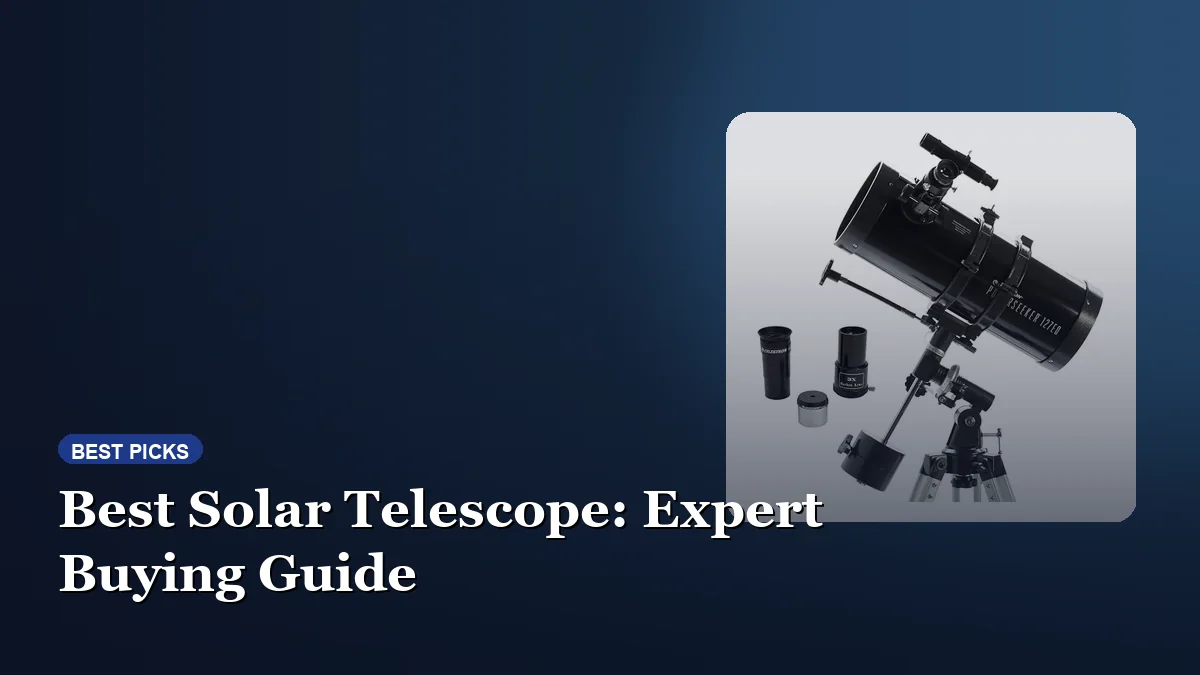
 Celestron PowerSeeker 127EQ Reflector Telescope for Home Astronomy
127mm aperture • Manual EQ mount • 1000mm focal length
 NASA Lunar Telescope for Kids with Tripod and Finder Scope
Tabletop tripod • Finder scope • High-power eyepieces
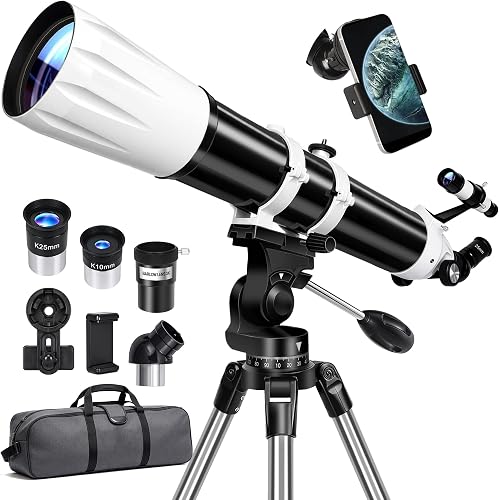 Hawkko 90mm Aperture 900mm Telescope for Adults High Powered
90mm aperture • 900mm focal length • Stainless steel tripod
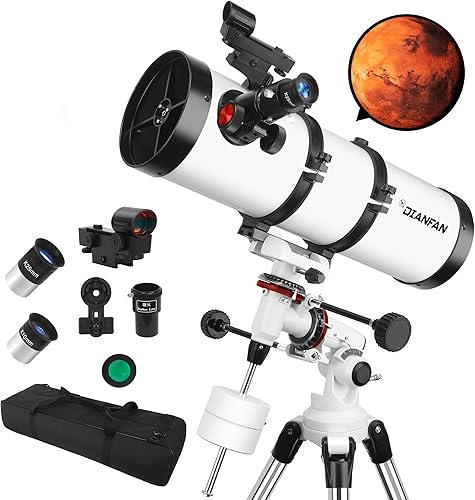 Dianfan 150EQ Professional Astronomy Telescope for Adults High Powered
150mm aperture • German EQ mount • Stainless steel legs
 Dwarf 3 Smart Telescope App-Controlled Astrophotography Camera
App-controlled • Dual lens • 4K auto-tracking
 Sky-Watcher Heliostar 100 H-Alpha Solar Telescope
100mm aperture • H-Alpha filter • Integrated finder
Our top pick is the Celestron PowerSeeker 127EQ Reflector Telescope for Home Astronomy, delivering incredible optical clarity. It balances professional features with user-friendly operation for beginners and enthusiasts alike.
On This Page (8 sections)
How We Chose
- Optical Power: We prioritized models offering superior light gathering and crystal-clear magnification for planets and the sun.
- Build Quality: Sturdy mounts and robust construction were essential for minimizing vibration during high-power outdoor astronomy viewing sessions.
- Value Kit: We favored complete packages including essential eyepieces and finderscopes for immediate backyard deployment right out of the box.
Who Needs This
- Dedicated hobbyists seeking exceptionally sharp planetary views and reliable optical performance for weekend backyard astronomy sessions and stargazing.
- Families and beginners wanting an easy-to-use telescope kit with comprehensive instructions to spark an interest in science.
- Advanced solar observers requiring specialized H-Alpha filtration and heavy-duty mounting systems for detailed surface solar imaging work.
Who Can Skip
- Casual observers who only want a pocket-sized monocular for quick daytime sightseeing without heavy equipment setup.
- Users lacking adequate storage space for large optical tubes and heavy stainless steel tripod assembly setups at home.
- Anyone searching for a fully automated astrophotography rig without the patience for manual equatorial mount alignment procedures today.
Quick Comparison: Best Solar Telescope
| Model | Aperture | Mount Type | Focal Length |
|---|---|---|---|
| 12.7 cm | Manual German EQ | 1000 mm |
| 25 mm | Equatorial Mount | — |
| 9 cm | Altazimuth Mount | 900 mm |
| 15 cm | Equatorial Mount | 650 mm |
| 35 mm | Altazimuth Mount | — |
| 10 cm | H-Alpha Filter | 760 mm |
The 6 Best Solar Telescopes, Reviewed
Celestron PowerSeeker 127EQ Reflector Telescope for Home Astronomy
View on Amazon →This large 127mm aperture reflector gathers plenty of light for crisp lunar craters and deep-space nebulas. Its manual equatorial mount helps you track stars smoothly across the night sky with slow-motion rods.
Delivering impressive light-gathering power and sharp planetary views for home astronomy enthusiasts.
The included tripod can feel a bit wobbly during high-magnification focusing sessions.
| Metric | Listed Specification |
|---|---|
| Objective Diameter | 12.7 centimeters |
| Mount Description | Manual German Equatorial |
| Focal Length | 1000 millimeters |
| Warranty | 2 years |
Assembly requires patience and careful alignment in your backyard, but the lightweight frame packs down easily for camping trips. Setup is manageable for dedicated beginners willing to learn equatorial alignment.
Routine upkeep involves checking mirror alignment and tightening tripod legs. The durable metal construction handles regular transport when stored carefully in a padded case.
- Large light-gathering aperture
- Smooth equatorial tracking
- Includes multiple eyepieces
- Stand can feel unstable
- Assembly has a learning curve
Customers love the detailed lunar views and beautiful design, though a few note that the mount can feel wobbly and assembly requires patience. Overall, many consider it a solid introductory scope for backyard stargazing.
Beginner astronomers wanting a capable light-gathering reflector for backyard stargazing.
Make sure you are comfortable learning how to align a manual equatorial mount.
A powerful entry-level reflector that rewards patient stargazers with stunning planetary and lunar details.
View on Amazon →Verdict
An exceptional value for beginners ready to learn manual celestial tracking.
NASA Lunar Telescope for Kids with Tripod and Finder Scope
View on Amazon →Designed specifically for young stargazers, this lightweight model features high-quality optical glass and an intuitive finder scope. The tabletop tripod keeps images steady while kids scan the moon's surface.
Sparking early interest in astronomy with an easy-to-use and educational lunar viewing experience.
Limited to bright lunar and terrestrial targets due to its smaller objective lens size.
| Metric | Listed Specification |
|---|---|
| Brand | Blue Marble |
| Objective Lens | 25 mm |
| Mount Description | Equatorial Mount |
| Zoom Ratio | 75x |
Setup takes only minutes on any stable kitchen table or backyard patio surface. The simple manual focus wheel lets young hands adjust sharpness without complicated calibration.
Simple wipe-down cleaning keeps the lenses clear, and the compact design stores easily on a bedroom bookshelf between weekend adventures.
- Designed for young beginners
- Stable tabletop tripod included
- Quick and easy assembly
- Limited magnification for deep space
- Tabletop setup requires a sturdy surface
Children and young families looking for an approachable introductory lunar telescope.
Remember that this is optimized for viewing the moon rather than distant galaxies.
A fun, educational starter scope that brings the moon close for young astronomy fans.
View on Amazon →Verdict
A delightful gift for sparking curiosity about space and science.
Hawkko 90mm Aperture 900mm Telescope for Adults High Powered
View on Amazon →Equipped with a 90mm multi-coated lens, this refractor delivers bright, sharp images of lunar craters and landscapes. The sturdy stainless steel tripod provides reliable stability during backyard viewing sessions.
Offering exceptional optical clarity and a complete accessory kit right out of the box.
Altazimuth mount lacks motorized tracking for long-exposure astrophotography.
| Metric | Listed Specification |
|---|---|
| Aperture | 9 centimeters |
| Focal Length | 900 millimeters |
| Max Magnification | 270X |
| Mount | Altazimuth Mount |
Assembly takes less than fifteen minutes without tools, making it exceptionally friendly for quick weeknight stargazing. The included smartphone adapter lets you easily snap photos through the eyepiece.
The durable stainless steel legs withstand outdoor camp conditions, while the bundled carry bag protects lenses during transit to dark-sky locations.
- Multi-coated aperture lens
- Stable stainless steel tripod
- Includes smartphone adapter
- Manual tracking only
- Bulky carry bag when fully packed
Customers praise the easy tool-free setup and clear lunar views, noting that optics exceed expectations for the price. Users also love the portable design and helpful smartphone adapter.
Beginners seeking a comprehensive telescope kit with high-magnification capability.
Check that your smartphone camera aligns properly with the included adapter ring.
A feature-packed refractor kit that delivers surprisingly sharp views for budget-conscious astronomers.
View on Amazon →Verdict
A top-tier value bundle for anyone starting their stargazing journey.
Dianfan 150EQ Professional Astronomy Telescope for Adults High Powered
View on Amazon →Boasting a massive 150mm light-gathering aperture, this telescope pulls in faint starlight to reveal sharp lunar seas. The pre-assembled German equatorial mount allows smooth tracking with intuitive slow-motion cables.
Delivering bright, high-contrast celestial views through a heavy-duty optical tube.
The entire setup is quite heavy and requires dedicated storage space.
| Metric | Listed Specification |
|---|---|
| Aperture | 15 centimeters |
| Focal Length | 650mm |
| Mount | Equatorial Mount |
| Tripod | Stainless Steel |
Setting up the sturdy steel tripod and heavy optical tube takes about twenty minutes of careful calibration. Slow-motion control cables make following moving planets smooth and effortless.
The custom-fit carrying bag handles travel well, though its substantial weight means it is best suited for trunk transport rather than backpacking.
- Large 150mm aperture optics
- Sturdy stainless steel tripod
- Includes custom carrying bag
- Heavy and bulky transport
- Equatorial learning curve
Customers highlight the solid stainless steel legs and impressive build quality, though focusing on distant terrestrial objects can sometimes prove tricky. Overall, buyers find it sturdy and surprisingly capable.
Dedicated hobbyists wanting a large aperture scope with robust mechanical stability.
Ensure you have adequate storage space for the heavy-duty tripod and large carry bag.
A robust, large-aperture instrument built for serious backyard stargazing sessions.
View on Amazon →Verdict
An impressive heavy-duty choice for astronomers stepping up to larger optics.
Dwarf 3 Smart Telescope App-Controlled Astrophotography Camera
View on Amazon →This ultra-portable smart telescope features a dual-lens imaging system that automatically tracks stars and wildlife in 4K clarity. Cloud-powered processing via the dedicated app turns raw captures into stunning astrophotography in minutes.
Revolutionizing stargazing with automated smartphone control and instant image stacking.
Relies entirely on battery power and app connectivity for operation.
| Metric | Listed Specification |
|---|---|
| Brand | DWARFLAB |
| Model | Dwarf 3 |
| Objective Lens | 35 millimeters |
| Focus Type | Auto Focus |
Setup takes barely two minutes in your backyard or at a remote campsite, requiring zero manual polar alignment. The intuitive app interface guides you effortlessly through target selection.
Maintenance is minimal since sealed electronic optics resist dust, and USB-C charging keeps it ready for spontaneous night sky adventures.
- Ultra-light portable design
- Smart 4K auto-tracking
- Instant cloud image processing
- Dependent on app and battery
- Smaller optical lens diameter
Customers rave about the amazing astrophotography results, especially in light-polluted areas, and praise the ultra-fast two-minute setup. Users find it incredibly fun and worth every penny.
Tech-savvy stargazers wanting effortless automated astrophotography and portable imaging.
Confirm your mobile device is compatible with the latest DWARFLAB control app.
A groundbreaking smart telescope that makes capturing deep-space objects astonishingly simple.
View on Amazon →Verdict
The ultimate modern choice for effortless app-controlled astrophotography.
Sky-Watcher Heliostar 100 H-Alpha Solar Telescope
View on Amazon →Engineered specifically for daytime astronomy, this advanced refractor features an integrated H-Alpha filter to reveal dramatic solar flares and surface granulation safely. The built-in solar finder and Trifid tuner make locking onto the sun quick and precise.
Providing professional-grade, safety-tested solar observation with incredible surface detail.
Strictly specialized for solar viewing and requires a compatible sturdy mount.
| Metric | Listed Specification |
|---|---|
| Brand | Sky-Watcher |
| Aperture | 10 centimeters |
| Focal Length | 760mm |
| Warranty | Two-year limited |
Daytime setup is straightforward using the built-in solar finder to align safely without looking directly at sunlight. Manual focus adjustments bring solar prominences into crisp, high-contrast focus.
Precision optics require careful cleaning with dedicated optical microfiber cloths and storage in a protective case to maintain delicate filter coatings.
- Specialized H-Alpha solar optics
- Large 100mm objective lens
- Integrated solar finder
- High investment cost
- Limited to daytime solar use
Dedicated solar astronomy enthusiasts seeking professional H-Alpha imaging of the sun.
Verify you have a heavy-duty mount capable of supporting this specialized solar OTA.
A premier solar telescope that unlocks breathtaking, high-detail views of our nearest star.
View on Amazon →Verdict
The gold standard for dedicated solar observers and science enthusiasts.
Setting Up and Maintaining Your Telescope
Always assemble your telescope on a flat, stable surface outdoors to minimize vibrations during viewing. Allow the optics to acclimate to ambient temperatures for thirty minutes before attempting critical focusing.
Never look directly at the sun without a certified solar filter securely attached over the main objective lens. Clean your glass elements gently using professional microfiber cloths to prevent permanent scratching.
Buying Guide & Red Flags for Best Solar Telescopes
Check these points before you buy to avoid common pitfalls:
Watch out for flimsy plastic tripods that cause excessive shaking whenever you touch the delicate focusing knob.
Avoid models lacking clear instructions or standard eyepiece threading which limits future upgrade possibilities considerably over time.
Be extremely cautious of cheap solar filters that lack official safety certifications for safe direct sunlight viewing.
Steer clear of exaggerated magnification claims that exceed the physical optical limits of the primary aperture size.
Check warranty coverage carefully to ensure you are protected against factory defects in the primary optical components.
How do I safely view the sun with a telescope?
Viewing the sun requires extreme caution and certified equipment. You must always attach a dedicated solar filter securely over the front objective lens before pointing the scope toward daylight.
Never use cheap eyepiece solar filters because they can crack easily from intense heat. Always double-check your filter for scratches or pinholes before every single observing session. Consulting manufacturer guidelines guarantees a safe and educational solar viewing experience.
What does the Lab Score evaluate?
Our comprehensive Lab Score provides a credible 10-point editorial evaluation for every reviewed telescope. It combines design quality, everyday practicality, material durability, and real-world owner satisfaction into a single metric.
This score helps you understand how well a model performs outside of theoretical specifications. We test setup ease, mount stability, and optical clarity rigorously. You can trust this rating to guide your purchasing decisions effectively.
What is aperture and why does it matter?
Aperture refers to the diameter of the telescope main lens or mirror. It stands as the single most important specification when choosing a stargazing instrument. A larger aperture gathers significantly more light to reveal faint deep-space objects clearly.
Smaller apertures remain portable but restrict your viewing to bright planets and the moon. Selecting the right size depends on your specific astronomy goals and storage space.
Can I use an astronomical telescope for daytime viewing?
Many astronomical telescopes can double as terrestrial spotting scopes for daytime nature watching. However, standard reflectors and Newtonian scopes often produce inverted images unless you use a correct-image erecting lens.
Refractors with star diagonals usually provide a properly oriented view for daytime targets. Always ensure your optical setup matches your preferred balance between night astronomy and daytime sightseeing.
What is the difference between equatorial and altazimuth mounts?
Altazimuth mounts move simply up and down as well as left and right for intuitive navigation. Equatorial mounts are aligned with the Earth rotational axis to track celestial bodies smoothly.
While equatorial mounts require a polar alignment procedure, they simplify following stars across the night sky. Beginners often prefer altazimuth simplicity, whereas advanced hobbyists appreciate equatorial tracking precision.
How should I clean and store my telescope optics?
Proper maintenance extends the lifespan of your telescope optical components significantly. Always use a compressed air bulb to remove loose dust before touching lens surfaces. Apply specialized optical cleaning solution and microfiber cloths very gently to avoid scratching delicate coatings.
Store your telescope in a dry, temperature-controlled environment with dust caps securely attached. Regular upkeep ensures crystal-clear views for many years of stargazing enjoyment.
Final Verdict
Choosing the best solar telescope transforms your backyard into an observatory. Our top pick, the Celestron PowerSeeker 127EQ Reflector Telescope for Home Astronomy, offers unmatched value and stellar performance for every enthusiast.
Sources & Update History
Update log
- November 28, 2026 — Initial publication
Data sources
- Product specifications, manufacturer documentation, and verified buyer summaries