 By
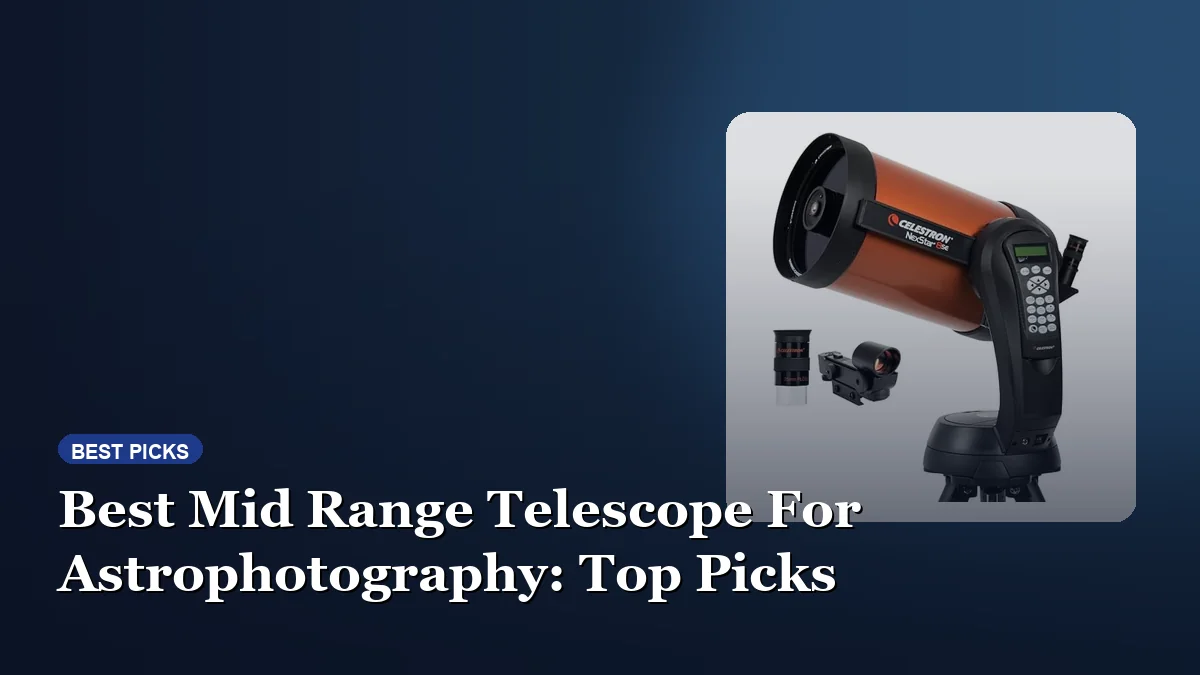
 Celestron NexStar 8SE Computerized Schmidt-Cassegrain Telescope
8" Aperture • Computerized GoTo • 10.88 kg
 SVBONY SV503 102mm ED Refractor Telescope
102mm Aperture • ED Glass • Dual Focuser
 Vaonis Vespera Pro 2 Smart Telescope
50mm Aperture • 12.5MP Sensor • App Controlled
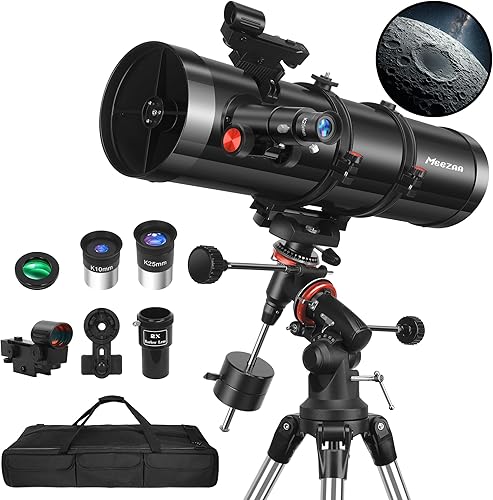 MEEZAA 150EQ Newtonian Reflector Telescope with Mount
150mm Aperture • EQ Mount • Complete Kit
 Celestron NexStar 6SE Computerized Telescope
6" Aperture • GoTo Mount • Portable Design
 Sky-Watcher EQ-AL55i Pro Equatorial Mount
Equatorial • 22 lb Capacity • Built-in WiFi
The Celestron NexStar 8SE Computerized Schmidt-Cassegrain Telescope takes our top spot. It delivers exceptional optical clarity and smart tracking that simplifies deep-sky imaging for enthusiastic hobbyists across the country.
On This Page (8 sections)
How We Chose
- Optical Purity: We prioritize telescopes featuring high-transmission glass and generous aperture sizes that pull in faint starlight without introducing chromatic aberration or blur.
- Tracking Stability: We demand reliable mounts and smooth motorized tracking capable of holding steady coordinates during extended photographic exposures without drifting.
- Real Usability: We favor systems offering straightforward alignment procedures and intuitive controls so you spend more time imaging and less time troubleshooting.
Who Needs This
- Dedicated hobbyists ready to step up from beginner gear to capture stunning deep-sky nebulae, star clusters, and lunar landscapes with serious optical clarity.
- Astrophotography enthusiasts who want automated GoTo tracking systems to simplify alignment and keep faint celestial targets centered throughout long exposure sessions.
- Space enthusiasts seeking a versatile optical tube that transitions smoothly between planetary viewing and deep-space long-exposure photography setups.
Who Can Skip
- Casual backyard stargazers who only want a quick, grab-and-go manual scope for casual planetary viewing without investing time in astrophotography processing.
- Complete beginners who lack the patience to learn alignment routines, software controls, and the nuances of balancing equatorial mounts in the dark.
- Shoppers strictly seeking an ultra-budget setup, since achieving clean astrophotography results requires investing in capable mid-tier optics and stable mounts.
Quick Comparison: Best Mid Range Telescope For Astrophotography
| Model | Aperture Size | Mount Type | Key Feature |
|---|---|---|---|
| 8 Inches | Single Fork Arm | Computerized GoTo |
| 102 mm | Tripod Mount | ED Glass Optics |
| 50 mm | Automated Alt-Az | Smart App Control |
| 150 mm | German Equatorial | Slow-Motion Knobs |
| 6 Inches | Single Fork Arm | Portable GoTo Design |
| — | Equatorial Mount | 22 lb Payload Capacity |
The 6 Best Mid Range Telescope For Astrophotographys, Reviewed
Celestron NexStar 8SE Computerized Schmidt-Cassegrain Telescope
View on Amazon →This powerful telescope brings deep-space astrophotography within reach, combining a generous light-gathering mirror with a fully automated tracking system that finds and follows celestial targets without manual chart reading.
It shines brightest when delivering exceptionally crisp, detailed views of lunar craters and distant galaxies using its reliable computerized alignment and robust optical design.
The single fork arm design can introduce minor tracking vibrations during long exposures, requiring a solid, level surface to maintain optimal stability.
| Metric | Listed Specification |
|---|---|
| Optical Design | Schmidt-Cassegrain |
| Focal Length | 2032 mm |
| Objective Diameter | 20.3 cm |
| Database | 40,000+ Objects |
Setting up the heavy optical tube feels straightforward once you master the alignment routine, though managing external battery packs in the field adds extra clutter to your workspace.
Routine optical maintenance is minimal, but you must store the corrector plate carefully to prevent dust accumulation and preserve long-term clarity during seasonal temperature shifts.
- Large 8-inch light gathering aperture
- Automated GoTo database tracking
- Fast SkyAlign setup technology
- Batteries drain quickly
- Single arm tracking vibrations
Owners frequently praise the stunning deep-sky views and impressive planetary detail, though some note that mastering the alignment process demands patience and steady practice.
Amateur astronomers wanting an all-in-one computerized system capable of resolving faint nebulae and planets with minimal manual calibration.
Ensure you have a reliable external power source ready, as the intensive internal computer quickly drains standard batteries during extended outdoor imaging sessions.
An iconic mid-range choice that balances serious optical power with intuitive automated tracking for dedicated backyard stargazers.
View on Amazon →Verdict
If you want deep-sky versatility and automated convenience, this classic scope delivers outstanding performance despite demanding a bit of field patience.
SVBONY SV503 102mm ED Refractor Telescope
View on Amazon →This dedicated refractor delivers remarkably sharp, color-corrected astrophotography results by using specialized ED glass that virtually eliminates annoying purple fringing around bright stars.
It excels at producing high-contrast planetary images and wide-field stellar portraits without suffering from distracting chromatic aberration or optical distortion.
You will need to supply your own sturdy equatorial mount and camera adapters since this package focuses entirely on the optical tube.
| Metric | Listed Specification |
|---|---|
| Glass Type | S-FPL51 ED Glass |
| Focal Ratio | f/7 |
| Focus Travel | 90 mm |
| Coatings | FMC Coated |
Attaching cameras is simple thanks to the rotating focuser, while the retractable metal dew shield helps manage moisture buildup during damp evening observation sessions.
The robust aluminum construction withstands regular travel, requiring only basic lens cleaning to maintain peak optical performance across changing seasons.
- S-FPL51 ED glass optics
- Smooth dual-speed focuser
- Handy field rotator
- Mount sold separately
- Manual focus control only
Buyers love the crystal-clear optics and sturdy build quality, though a few mention needing practice to fine-tune the manual focus mechanism.
Imaged-focused enthusiasts seeking pure optical clarity and precise manual control for advanced deep-sky photography projects.
Confirm your existing mount handles the physical length and weight of the optical tube plus your camera equipment.
A stellar refractor option that prioritizes pristine optical performance and precision mechanics for dedicated astrophotography hobbyists.
View on Amazon →Verdict
This scope offers exceptional glass quality for sharp imaging, making it a brilliant choice if you prefer manual optical control.
Vaonis Vespera Pro 2 Smart Telescope
View on Amazon →This cutting-edge smart telescope completely automates astrophotography by combining a high-resolution sensor with advanced signal enhancement to capture faint deep-space objects right through your phone.
It shines at capturing stunning multi-night mosaics of distant nebulae automatically without requiring complex equatorial alignment knowledge.
The reliance on built-in battery power and smartphone apps limits long-term shooting flexibility if software glitches arise in the field.
| Metric | Listed Specification |
|---|---|
| Optics | Apochromatic Quadruplet |
| Storage | 225 GB Built-in |
| Battery Life | 11 Hours |
| Mosaic Field | 4.18° x 4.18° |
Setup takes minutes since the automated alt-azimuth mount handles calibration independently, letting you skip tedious star-hop alignment procedures entirely.
The compact hard-shell case makes travel effortless, while firmware updates continually refine the internal stacking algorithms for better image quality.
- Fully automated smart tracking
- High-resolution 12.5MP sensor
- Includes hard case and tripod
- Dependent on app software
- Higher investment tier
Tech-savvy beginners wanting breathtaking astrophotography results without navigating the steep learning curve of traditional manual equipment setups.
Verify your local wireless environment supports stable smartphone pairing for seamless app-based control during extended imaging runs.
A truly automated smart telescope that completely redefines accessible astrophotography for modern backyard astronomy enthusiasts.
View on Amazon →Verdict
If you prioritize effortless app-driven imaging over manual adjustments, this tech-heavy scope delivers remarkable deep-space photographs instantly.
MEEZAA 150EQ Newtonian Reflector Telescope with Mount
View on Amazon →This capable Newtonian reflector provides impressive light-gathering power for exploring lunar craters and bright planets using a stable equatorial mount designed for growing astronomers.
It delivers bright, clear views of deep-space targets using its generous 150mm aperture and smooth slow-motion control knobs.
Manual tracking on the equatorial mount requires patience to master, and high magnification can occasionally introduce image blurring.
| Metric | Listed Specification |
|---|---|
| Optical Design | Newtonian Reflector |
| Magnification | 26X to 130X |
| Finderscope | Red Dot |
| Tripod Material | Stainless Steel |
Assembling the stainless steel tripod and optical tube is straightforward, though the included instruction manual can feel sparse for absolute novices.
Packing everything into the heavy-duty carry bag simplifies transport, though regular collimation checks are necessary to keep mirrors aligned properly.
- Large 150mm light bucket
- Stable equatorial mount
- Comprehensive accessory bundle
- Manual tracking curve
- Blurry at high zoom
Customers praise the sturdy construction and complete accessory bundle, noting it offers great value despite occasional manual tracking challenges.
Budget-conscious beginners looking for a large aperture telescope to learn traditional equatorial tracking and manual alignment techniques.
Double-check that you clearly understand how to properly balance an equatorial counterweight system before taking it outside.
A fantastic budget-friendly reflector that reliably introduces eager beginners to genuine astronomical observation with a complete accessory setup.
View on Amazon →Verdict
This starter scope provides solid light-gathering power and a complete kit, making it a smart value entry.
Celestron NexStar 6SE Computerized Telescope
View on Amazon →This compact computerized scope strikes an ideal balance between optical reach and portability, featuring an automated GoTo system that effortlessly locates thousands of celestial objects.
It reliably excels at delivering vibrant planetary details and crystal-clear star cluster views with minimal setup hassle.
The computerized hand control requires careful alignment routines, and heavy battery consumption means investing in external power is wise.
| Metric | Listed Specification |
|---|---|
| Optical Design | Schmidt-Cassegrain |
| Database | 40,000+ Objects |
| Coatings | StarBright XLT |
| Mount Type | Alt-Az Single Fork |
Transporting the single fork arm and orange optical tube is remarkably easy, fitting comfortably into smaller vehicle trunks for remote stargazing trips.
Routine maintenance is minimal, though you should protect the corrector plate from dew buildup during humid evening viewing sessions.
- Compact portable footprint
- Automated GoTo database
- Sharp 6-inch optics
- Alignment takes practice
- Requires external power
Owners love the crisp lunar views and quick setup process, though tracking consistency can occasionally falter without precise alignment.
Keen stargazers seeking a truly versatile portable automated telescope that handles lunar and planetary observation with supreme convenience.
Confirm you have a dedicated external power tank because standard internal batteries drain quickly during long tracking sessions.
A wonderfully balanced mid-range computerized scope that offers great portability and automated tracking for intermediate hobbyists.
View on Amazon →Verdict
This portable GoTo telescope combines sharp optics with automated navigation for an exceptionally user-friendly stargazing experience.
Sky-Watcher EQ-AL55i Pro Equatorial Mount
View on Amazon →This advanced equatorial mount provides robust motorized tracking and built-in WiFi connectivity, giving astrophotographers a stable foundation for precise deep-sky imaging.
It excels at supporting mid-size imaging setups with its reliable 22-pound payload capacity and automated SynScan GoTo navigation.
Properly configuring wireless ASCOM connectivity and balancing heavy counterweights demands genuine technical patience before capturing clean images.
| Metric | Listed Specification |
|---|---|
| Mount Type | Equatorial GoTo |
| Connectivity | WiFi & Bluetooth |
| Database | 42,900+ Objects |
| Control System | SynScan GoTo |
The heavy-duty metal construction dampens vibrations effectively in the field, while dual counterweight positions enhance physical balance across latitudes.
Firmware updates and careful power management keep the electronic tracking reliable over years of frequent nighttime outdoor usage.
- Built-in WiFi connectivity
- Solid 22-pound payload
- Precise equatorial tracking
- Complex initial setup
- Heavier travel weight
Dedicated astrophotographers needing a robust equatorial platform fully equipped with modern wireless controls for long-exposure camera work.
Always ensure your specific optical tube and camera gear weigh comfortably under the maximum weight limit for optimal tracking.
A truly feature-rich equatorial mount that firmly anchors serious astrophotography rigs with modern wireless tracking precision.
View on Amazon →Verdict
If you need dependable automated tracking and wireless control for long exposures, this mount delivers professional stability.
Setting Up and Maintaining Your Mid-Range Astrophotography Telescope
Begin by assembling your tripod on a firm, level outdoor surface away from local streetlights. Carefully attach your optical tube, balance the counterweights, and perform a precise star alignment to ensure accurate motorized tracking.
Store your optical tube in a dry, dust-free environment using protective lens caps. Clean glass surfaces sparingly with specialized optical microfiber cloths to preserve delicate anti-reflective coatings over years of stargazing.
Buying Guide & Red Flags for Best Mid Range Telescope For Astrophotographys
Check these points before you buy to avoid common pitfalls:
Avoid scopes boasting massive magnification claims while skimping on aperture size, as this usually results in dim, fuzzy, and unusable images.
Never ignore tripod stability; lightweight legs will cause frustrating image vibrations whenever a gentle breeze touches your setup outdoors.
Do not underestimate power requirements; relying solely on internal batteries during cold winter nights will leave your GoTo mount stranded prematurely.
Watch out for packages lacking essential camera adapters or T-rings, which force you to buy extra accessories before shooting astrophotography.
Beware of overly complex software ecosystems that lack reliable customer support or stable firmware updates for modern operating systems.
What does the /10 Lab Score evaluate?
Our 10-point editorial score evaluates overall design quality, everyday practical usability, mechanical durability, and verified owner satisfaction. We test how easily optics assemble, track targets, and withstand regular transport.
Every score reflects real-world performance under actual night skies, ensuring you invest in a reliable mid-range telescope that delivers lasting astrophotography value without hidden mechanical flaws.
We weigh these critical factors carefully against current market standards to help you shop with absolute confidence and avoid costly mistakes.
Do I need an equatorial mount for astrophotography?
An equatorial mount is highly recommended because it compensates for Earth's rotation on a single axis. This prevents image field rotation during long exposure photography sessions.
While alt-azimuth mounts work well for short exposures and planetary imaging, equatorial setups are essential for capturing sharp, detailed deep-space nebulae over extended multi-hour shooting runs.
Learning to polar align your mount properly takes patience, but it unlocks professional-level tracking precision that transforms blurry star trails into crisp galactic portraits.
How important is aperture size for mid-range astrophotography?
Aperture size dictates how much light your telescope gathers from faint deep-space objects. Larger apertures reveal intricate nebula structures and distant galaxies with much greater clarity. However, larger optical tubes also increase weight and wind resistance on your mount.
Finding a balanced aperture ensures you get bright images without sacrificing stability. For most enthusiasts, a mid-range aperture between one hundred and two hundred millimeters hits the sweet spot for portable backyard imaging success.
Can I use my DSLR or mirrorless camera with these telescopes?
Yes, most mid-range telescopes accommodate standard DSLR and mirrorless cameras using a simple T-ring and T-adapter combination. This securely attaches your camera body to the focuser.
You must ensure your telescope's focuser has enough inward travel to achieve proper focus with your specific camera sensor. Some Newtonian reflectors require a Barlow lens.
Checking these adapter requirements beforehand prevents frustrating nights spent trying to capture sharp focus on distant celestial targets without success.
How do I power a computerized GoTo telescope in the field?
Computerized GoTo mounts demand stable electrical power to run internal motors and alignment computers accurately. Relying on standard AA batteries in cold weather is discouraged.
Instead, invest in a dedicated rechargeable power tank or a portable lithium power station with a twelve-volt output. This guarantees uninterrupted tracking throughout long imaging sessions.
Keeping your mount powered correctly prevents sudden alignment drops that can ruin hours of careful astrophotography framing in the middle of the night.
What maintenance do mid-range astrophotography telescopes require?
Mid-range telescopes require careful handling to keep optics clean and aligned. Always replace dust caps immediately after use and store optical tubes in padded cases. Reflector telescopes occasionally need mirror collimation using a laser tool to maintain sharp focus.
Avoid touching glass surfaces directly to protect delicate anti-reflective coatings. Routine mechanical checks on tripod screws and mount gears ensure your tracking remains silky smooth across every single backyard stargazing expedition.
Final Verdict
The Celestron NexStar 8SE Computerized Schmidt-Cassegrain Telescope earns our ultimate recommendation for its stellar optical performance and intuitive GoTo tracking. It remains the best mid-range choice for aspiring astrophotographers.
Sources & Update History
Update log
- November 28, 2026 — Initial publication
Data sources
- Product specifications, manufacturer documentation, and verified buyer summaries