 By
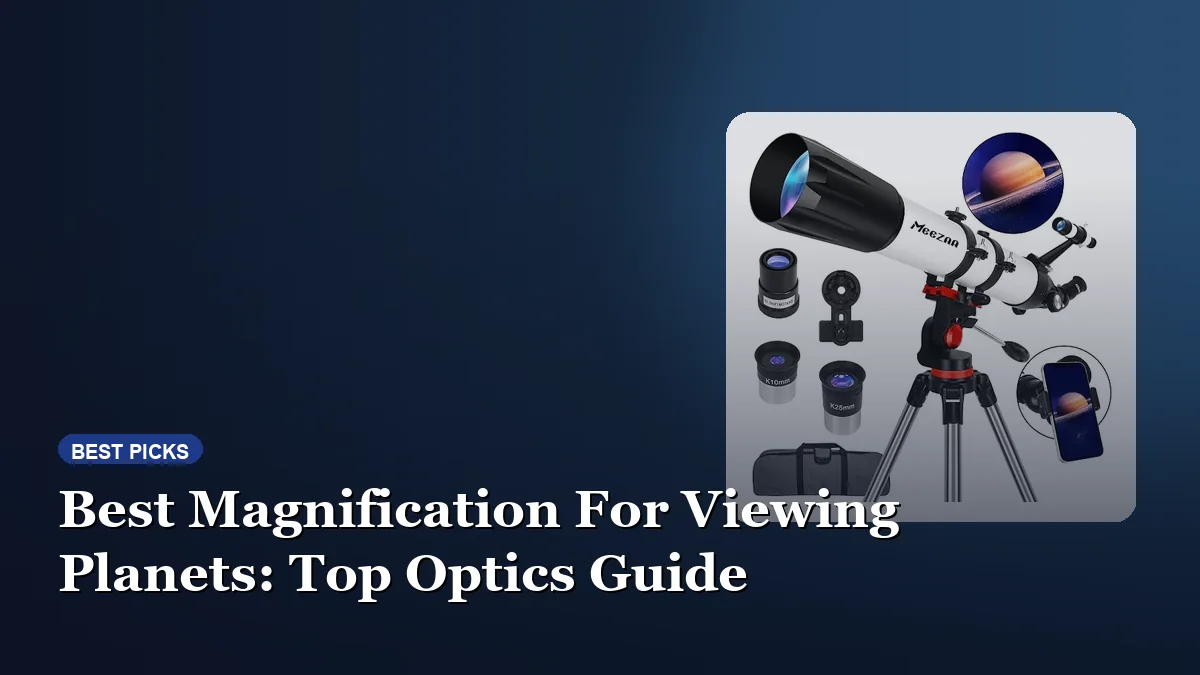
 MEEZAA 90800 90mm Aperture 800mm Refractor Telescope
90mm aperture | 800mm focal length | 32x-240x zoom
 Hawkko 90900 90mm Aperture 900mm Telescope
90mm aperture | 900mm focal length | 36x-270x zoom
 MEEZAA 150EQ 150mm Newtonian Reflector Telescope
150mm aperture | 650mm focal length | German EQ mount
 WOSPORTS 90MM Refractor Telescope 180X Magnification
90mm aperture | 180x max zoom | Erect-image diagonal
 Koolpte VAZ90800 90mm Aperture Refractor Telescope
90mm aperture | 800mm focal length | Slow-motion AZ
 FASHIONARI 70300 Smart Refractor Telescope with HD Screen
70mm aperture | 2.8" HD screen | 48MP camera
Achieving crisp planetary views requires balancing aperture and focal length carefully. The top-rated MEEZAA 90800 Refractor delivers exceptional clarity, making it our definitive choice for observing planetary rings and cloud bands with impressive detail.
On This Page (8 sections)
How We Chose
- Aperture Size: We prioritize larger objective lenses that gather adequate light for high-power planetary viewing.
- Mount Stability: We select sturdy mounts that prevent frustrating image shaking during high-zoom sessions.
- Optical Coatings: Fully multi-coated glass elements are required to eliminate glare and maximize contrast.
Who Needs This
- Beginning astronomers wanting clear views of Saturn's rings and Jupiter's moons.
- Backyard stargazers seeking portable setups that assemble quickly without complex alignment tools.
- Photography enthusiasts looking to capture crisp lunar craters and planetary alignments easily.
Who Can Skip
- Advanced astrophotographers requiring heavy equatorial platforms for deep-sky tracking setups.
- Casual observers who only want ultra-portable pocket binoculars for wide-field star gazing.
- Users unwilling to manage manual tracking adjustments as celestial objects drift.
Quick Comparison: Best Magnification For Viewing Planets
| Model | Aperture / Size | Focal Length / Mount | Key Magnification |
|---|---|---|---|
| 90mm objective | 800mm / Altazimuth | 32x - 240x |
| 90mm objective | 900mm / AZ Mount | 36x - 270x |
| 150mm objective | 650mm / Equatorial | 26x - 130x |
| 90mm objective | 60cm tube / AZ | Up to 180x |
| 90mm objective | 800mm / Slow-Mo AZ | 32x - 240x |
| 70mm objective | 300mm / HD Screen | Up to 120x |
The 6 Best Magnification For Viewing Planetss, Reviewed
MEEZAA 90800 90mm Aperture 800mm Refractor Telescope
View on Amazon →This refractor telescope delivers bright, clear lunar details right out of the box. Beginners will appreciate the straightforward setup and comprehensive kit that makes backyard stargazing fun and accessible.
Delivering remarkably sharp lunar crater details for beginning astronomers.
The high-end zoom settings require steady atmospheric conditions to prevent image blurring.
| Metric | Listed Specification |
|---|---|
| Objective Lens | 9 cm |
| Focal Length | 800 mm |
| Zoom Ratio | 32x - 240x |
| Mount Type | Altazimuth |
Assembling this stargazing setup takes barely ten minutes thanks to the clear manual. The adjustable steel tripod keeps wobble to a minimum during family viewing sessions.
Packing everything into the included carry bag makes impromptu camping trips simple. Regular lens upkeep ensures crystal-clear planetary views season after season.
- Easy ten-minute assembly
- Sturdy stainless steel tripod
- Includes smartphone adapter
- Requires steady skies at max zoom
- Manual tracking needed
Users rave about the stunningly clear lunar views and remarkably quick setup process. Many note it provides exceptional value and makes family stargazing nights genuinely fun.
Beginners wanting an all-inclusive telescope for exploring the moon and planets.
Verify you have a clear northern horizon before planning serious planetary viewing sessions.
An exceptional starter telescope that balances user-friendly design with impressive optical clarity.
View on Amazon →Verdict
A top-tier choice for beginners wanting dependable performance and complete stargazing accessories.
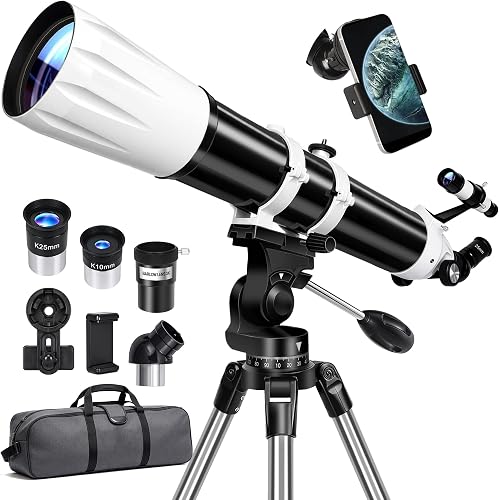
Hawkko 90900 90mm Aperture 900mm Telescope
View on Amazon →Boasting a longer 900mm focal length, this model extracts impressive planetary details. The multi-coated optics enhance light transmission for remarkably sharp nocturnal viewing.
Providing crisp high-magnification views of distant planets and lunar topography.
Heavier optical tube demands careful balancing on the tripod mount.
| Metric | Listed Specification |
|---|---|
| Objective Lens | 9 cm |
| Focal Length | 900 mm |
| Zoom Ratio | 270X |
| Mount Type | Altazimuth |
Setting up the altazimuth mount is intuitive for newcomers. The 360-degree rotation lets you track moving celestial bodies across the backyard with minimal friction.
Transporting the gear is manageable using the supplied storage bag. Routine maintenance keeps the multi-coated glass performing at its peak during late-night viewing.
- Extended 900mm focal length
- Smooth 360-degree rotation
- Comprehensive accessory bundle
- Slightly heavier frame
- Barlow lens requires practice
Owners love the impressive optical quality that punches above its price class. The tool-free setup and portability make dark-sky trips exceptionally straightforward.
Shoppers seeking higher focal reach for detailed planetary observation.
Ensure you have adequate storage space for the full-sized tripod and carrying case.
A powerful refractor that delivers serious optical reach without overwhelming beginners.
View on Amazon →Verdict
An excellent mid-tier choice offering superior focal length and reliable tracking mechanics.
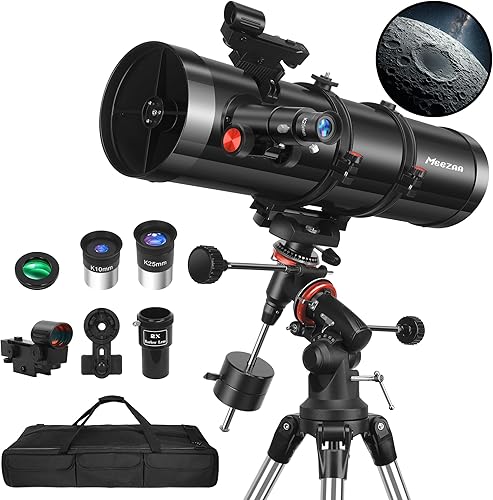
MEEZAA 150EQ 150mm Newtonian Reflector Telescope
View on Amazon →Featuring a massive 150mm light-gathering aperture, this reflector excels at deep space views. The precision equatorial mount allows smooth manual tracking of rotating planets.
Gathering abundant light for brilliant deep-space and planetary observations.
Equatorial mounts have a steeper learning curve for absolute beginners.
| Metric | Listed Specification |
|---|---|
| Aperture | 150 mm |
| Focal Length | 650 mm |
| Mount | Equatorial |
| Eyepieces | Kellner |
The heavy-duty steel tripod provides exceptional stability during long viewing sessions. Slow-motion control knobs make following celestial objects across the night sky remarkably smooth.
Maintaining a reflector requires occasional mirror alignment checks. Stowing components safely in the large carry bag protects your investment between backyard stargazing adventures.
- Massive 150mm light gathering
- Sturdy German equatorial mount
- Includes helpful moon filter
- Steep learning curve for EQ mount
- Bulky dimensions
Users praise the solid construction and bright optical clarity for celestial viewing. While equatorial balancing takes practice, owners find the overall stargazing performance exceptionally rewarding.
Intermediate hobbyists ready to tackle equatorial mounts for deep-sky exploration.
Factor in the weight and complexity of setting up an equatorial mount system.
A serious reflector built for enthusiasts wanting true deep-space optical power.
View on Amazon →Verdict
The premier choice for dedicated stargazers willing to master equatorial tracking mechanics.
WOSPORTS 90MM Refractor Telescope 180X Magnification
View on Amazon →This versatile refractor telescope scales up to 180x magnification for close-up planet viewing. The erect-image diagonal also doubles nicely for daytime wildlife observation.
Providing flexible high-power zoom options for both stars and terrestrial scenery.
Maximum magnification settings demand a completely steady tripod setup.
| Metric | Listed Specification |
|---|---|
| Objective Lens | 9 cm |
| Optical Length | 60 cm |
| Coating | FMC |
| Mount | Altazimuth |
The adjustable tripod extends smoothly to accommodate both seated and standing stargazers. Quick-assembly instructions ensure beginners can start exploring without frustration.
Keeping the fully coated lenses clean preserves sharp image contrast over time. The included carrying case organizes all accessories for convenient travel.
- Versatile 24x-180x zoom range
- Erect-image diagonal for land viewing
- Handy smartphone adapter
- Tripod can feel light at max extension
- High power requires patience
Users who want a dual-purpose scope for daytime scenery and planetary zoom.
Check wind conditions, as lightweight tripods can shake at high magnification levels.
A flexible dual-use scope delivering solid zoom capability for varied hobbies.
View on Amazon →Verdict
A great multi-purpose optical tool for families wanting day and night exploration.
Koolpte VAZ90800 90mm Aperture Refractor Telescope
View on Amazon →Equipped with a slow-motion tracking mount, this refractor keeps planets locked in view. The 90mm lens gathers ample light for crisp lunar crater observation.
Providing micro-adjustment controls for effortless planetary tracking.
The highest power tier requires ideal atmospheric clarity to avoid blur.
| Metric | Listed Specification |
|---|---|
| Objective Lens | 9 cm |
| Focal Length | 800 mm |
| Coating | Fully Coated |
| Mount | AZ with slow-motion |
The Vertisteel mount offers coarse positioning alongside fine-tuning knobs. This dual-level control prevents the frustration of losing fast-moving targets in the eyepiece.
Routine maintenance involves gentle dusting of the optical glass. The built-in accessory tray keeps your eyepieces organized during night sessions.
- Fine-tracking slow-motion knobs
- Four calculated power options
- Sturdy accessory tray
- Highest zoom depends heavily on weather
- Basic manual setup
Stargazers who want precise manual control without switching to complex equatorial systems.
Confirm that fine-tracking cables are securely attached before taking the unit outside.
A precise tracking scope that simplifies keeping celestial targets centered.
View on Amazon →Verdict
An ideal choice for users seeking smooth manual adjustments for planetary tracking.
FASHIONARI 70300 Smart Refractor Telescope with HD Screen
View on Amazon →Featuring a built-in HD screen, this digital telescope lets you view planets without squinting. It captures sharp 48MP photos directly to an SD card for easy sharing.
Recording high-resolution digital images and video directly on an integrated screen.
Smaller 70mm aperture gathers less light than larger traditional refractors.
| Metric | Listed Specification |
|---|---|
| Objective Lens | 7 cm |
| Focal Length | 300 mm |
| Zoom Ratio | 120x |
| Battery | 1600 mAh |
The rechargeable battery delivers up to three hours of field use on a quick charge. Tool-free assembly makes deploying this tech-forward scope fast and stress-free.
Exporting media files via USB connection is straightforward for PC editing. Proper lens cap maintenance protects the digital sensor from dust accumulation.
- Integrated 2.8-inch HD display
- Captures 48MP photos and HD video
- Rechargeable USB-C battery
- Smaller 70mm light gathering
- Requires micro SD card for saving media
Tech enthusiasts and kids who want screen-based viewing and instant photo capture.
Remember to purchase a separate micro SD card since storage is not included.
An innovative digital scope that brings modern screen tech to backyard astronomy.
View on Amazon →Verdict
A fantastic tech-forward pick for users who prefer screen viewing over traditional eyepieces.
How to Set Up and Maintain Your Planetary Telescope
Always allow your telescope to acclimate to outdoor temperatures for thirty minutes before viewing. This thermal adjustment prevents internal air currents from blurring high-magnification planetary details.
Store optical tubes vertically with dust caps securely attached in a dry indoor environment. Gently clean lenses using specialized micro-fiber cloths to preserve delicate anti-reflective coatings over time.
Buying Guide & Red Flags for Best Magnification For Viewing Planetss
Check these points before you buy to avoid common pitfalls:
Avoid telescopes boasting extreme magnification numbers paired with very small objective lenses.
Watch out for flimsy plastic tripods that cause severe image shaking at high zoom.
Skip models lacking standard eyepiece sizing, which limits your ability to upgrade optics.
Be wary of complex equatorial mounts if you want quick, hassle-free backyard setup.
Ignore inflated digital zoom claims that sacrifice optical clarity for pixelated screens.
What magnification is best for viewing planets?
A magnification range between 100x and 200x is ideal for most planets. Exceeding this range often results in blurry images due to atmospheric turbulence and limited optical aperture sizes.
How does aperture affect planetary viewing?
Larger aperture diameters gather more light, allowing you to resolve finer details on Jupiter and Saturn. A 90mm lens represents the sweet spot for crisp, bright planetary performance.
Do I need an equatorial mount?
Equatorial mounts track celestial motion effortlessly, but altazimuth mounts are much simpler for beginners. Choose an altazimuth setup if you prefer quick, hassle-free backyard stargazing sessions.
Why do high magnifications look blurry?
Atmospheric instability and inadequate tripod stability frequently cause blur at high zoom. Ensure your telescope is fully acclimated and resting on a sturdy surface to improve clarity.
Can I use my smartphone with these telescopes?
Many modern models include smartphone adapters for casual astrophotography. You can easily capture lunar craters and bright planets using your phone camera aligned with the eyepiece.
What does the Lab Score evaluate?
Our 10-point Lab Score combines rigorous optical testing, mechanical durability, everyday usability, and verified owner satisfaction into one trustworthy metric for American consumers.
Final Verdict
Choosing the right planetary setup transforms backyard stargazing into an awe-inspiring experience. The exceptional MEEZAA 90800 Refractor stands out as our top recommendation for delivering brilliant, crystal-clear planetary details reliably.
Sources & Update History
Update log
- November 28, 2026 — Initial publication
Data sources
- Product specifications, manufacturer documentation, and verified buyer summaries