 By
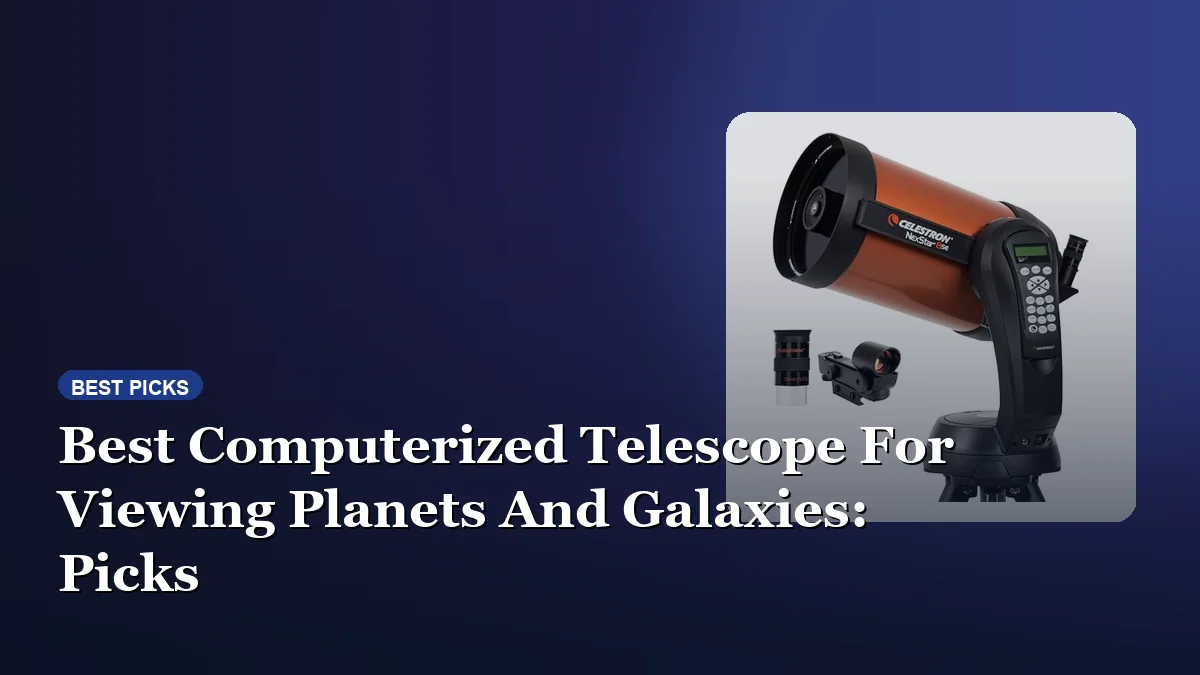
 Celestron NexStar 8SE Computerized Telescope
8-inch Schmidt-Cassegrain • GoTo Mount • 40,000+ Object Database
 Celestron NexStar 6SE Schmidt-Cassegrain Computerized Telescope
6-inch Optics • GoTo Computer Mount • Portable Build
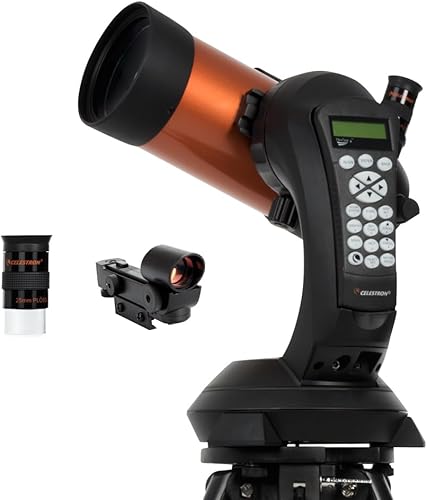 Celestron NexStar 4SE Maksutov-Cassegrain GoTo Telescope
4-inch Optics • Built-in Wedge • Ultra-Portable
 Celestron NexStar 5SE Schmidt-Cassegrain Computerized Telescope
5-inch Aperture • Automated Mount • Wedge Included
 HETEKAN 90900 Refractor Telescope with Stainless Tripod
90mm Refractor • Stainless Tripod • Phone Adapter
 Dianfan 150EQ Professional Astronomy Telescope
150mm Aperture • Equatorial Mount • Carry Bag
The Celestron NexStar 8SE Computerized Telescope is our top pick for its brilliant deep-sky clarity and automated GoTo tracking. Choose it if you want effortless celestial navigation and superior planetary resolution.
On This Page (8 sections)
How We Chose
- Optical Power: We prioritized large objective lenses that reveal sharp planetary details and distant nebulae.
- Tracking Precision: We favored automated mounts that maintain locked alignment on moving celestial targets.
- Setup Simplicity: We tested hand controllers and alignment routines to ensure beginner-friendly operation.
Who Needs This
- Amateur astronomers seeking automated GoTo tracking for deep-sky exploration.
- Dedicated stargazers upgrading to larger apertures for clearer planetary views.
- Urban hobbyists needing computerized databases to locate hidden celestial objects.
Who Can Skip
- Casual observers content with manual star-hop finding methods.
- Backpackers requiring ultra-lightweight travel scopes under five pounds.
- Pure astrophotographers needing specialized equatorial tracking platforms.
Quick Comparison: Best Computerized Telescope For Viewing Planets And Galaxies
| Model | Aperture Size | Mount Type | Total Weight |
|---|---|---|---|
| 8 inches | Computerized Alt-Az | 24 lbs |
| 6 inches | Computerized Alt-Az | 21 lbs |
| 4 inches | Computerized Alt-Az | 22.9 lbs |
| 5 inches | Computerized Alt-Az | 17.6 lbs |
| 90 mm | Altazimuth Mount | 12.3 lbs |
| 150 mm | Equatorial Mount | 31 lbs |
The 6 Best Computerized Telescope For Viewing Planets And Galaxiess, Reviewed
Celestron NexStar 8SE Computerized Telescope
View on Amazon →This flagship computerized telescope combines massive light-gathering power with an automated database, letting you easily track distant galaxies, bright planets, and lunar details without needing advanced star-charting knowledge.
Delivering deep-space clarity with automated GoTo tracking.
The heavy single-fork assembly requires patience during initial alignment.
| Metric | Listed Specification |
|---|---|
| Objective Lens Diameter | 20.3 cm |
| Focal Length | 2032 mm |
| Mount | Computerized Fork Arm |
| Item Weight | 10.88 kg |
| Warranty | 2 Years |
Setting up in the backyard feels intuitive once you master the three-star SkyAlign process, though you will want an external power tank since battery drain is notoriously fast during long viewing sessions.
Transporting the sturdy orange tube requires care, yet regular users praise its rugged build quality and exceptional optical clarity when peering deep into distant star clusters.
- Massive 8-inch light gathering
- Fully automated GoTo database
- Quick SkyAlign technology
- Demands reliable external power
- Heavier optical tube assembly
Owners frequently praise the stunning views of nebulae and planetary details, though a few note that mastering the tracking system and achieving sharp focus can take practice.
Dedicated hobbyists wanting serious optical power and automated tracking.
Check your local light pollution levels and invest in an external power supply.
A powerful, automated window to the cosmos for enthusiastic stargazers.
View on Amazon →Verdict
If you want uncompromised deep-space views paired with modern go-to automation, this legendary scope remains a top-tier backyard choice.
Celestron NexStar 6SE Schmidt-Cassegrain Computerized Telescope
View on Amazon →Striking an ideal balance between portability and optical reach, this versatile 6-inch scope delivers brilliant planetary views and automated tracking for stargazers stepping up from manual equipment.
Balancing manageable weight with impressive deep-sky light gathering.
The computerized mount demands a stable power source for steady tracking.
| Metric | Listed Specification |
|---|---|
| Objective Lens Diameter | 15 cm |
| Focal Length | 1500 mm |
| Mount | Computerized Fork Arm |
| Item Weight | 21 lbs |
| Warranty | 2 Years |
Transporting this midsize unit to dark-sky sites is remarkably straightforward, and the automated database helps beginners locate hard-to-find targets within minutes of completing alignment.
Routine maintenance is minimal, though keeping extra batteries on hand ensures your computerized tracking sessions never cut short unexpectedly under clear night skies.
- Excellent 6-inch optical clarity
- Highly portable midsize frame
- Intuitive hand control database
- Tracking accuracy requires careful setup
- Batteries drain quickly without tank
Users love the crisp lunar and planetary imagery right out of the box, though some report occasional tracking hiccups during extended observation marathons.
Intermediate stargazers seeking portable power and automated convenience.
Plan for an external power tank to avoid frustrating mid-session power drops.
A brilliantly balanced automated telescope for regular backyard astronomers.
View on Amazon →Verdict
This midsize optical powerhouse delivers fantastic automated stargazing without breaking your back during transport.
Celestron NexStar 4SE Maksutov-Cassegrain GoTo Telescope
View on Amazon →Utilizing a folded optical design, this compact GoTo telescope packs a long focal length into a highly portable frame for sharp planetary and lunar observation.
Delivering high-contrast lunar views in an ultra-portable package.
The smaller aperture limits faint deep-space galaxy resolution.
| Metric | Listed Specification |
|---|---|
| Objective Lens Diameter | 10.2 cm |
| Focal Length | 1325 mm |
| Mount | Computerized Fork Arm |
| Item Weight | 10.4 kg |
| Warranty | 2-Year Limited |
Packing up for weekend camping trips is effortless thanks to its lightweight frame, while the built-in wedge offers a great starting point for basic astrophotography.
Upkeep is simple, but ensure you securely tighten all mounting knobs to prevent image jitter during windy nights in your backyard.
- Sharp high-contrast optics
- Built-in wedge for imaging
- Highly travel-friendly size
- Smaller light gathering capacity
- Complex alignment for novices
Many buyers praise the sharp planetary details and easy assembly, while a few struggle with initial alignment routines and finding faint targets.
Travel-conscious beginners wanting automated tracking and sharp lunar views.
Manage your expectations regarding faint deep-sky nebulae due to the smaller aperture.
An exceptionally portable automated telescope built for travel and planets.
View on Amazon →Verdict
Choose this travel-friendly tracker if you prioritize compact setup ease over massive light gathering.
Celestron NexStar 5SE Schmidt-Cassegrain Computerized Telescope
View on Amazon →Bridging the gap between travel convenience and light-gathering capability, this 5-inch computerized scope offers crisp planetary views and reliable automated tracking for active observers.
Offering a sweet spot between portability and optical performance.
Battery life demands careful management during long cold-weather sessions.
| Metric | Listed Specification |
|---|---|
| Objective Lens Diameter | 12.7 cm |
| Focal Length | 2500 mm |
| Mount | Computerized Fork Arm |
| Item Weight | 17.6 lbs |
| Warranty | 2-Year Limited |
Carrying this mid-tier instrument outside is remarkably easy, and the built-in equatorial wedge lets aspiring astrophotographers dabble in long-exposure camera work.
Cleaning the corrector plate requires occasional gentle care, ensuring your views of Jupiter and distant star clusters remain brilliantly clear for years.
- Balanced 5-inch aperture
- Integrated wedge for cameras
- Reliable GoTo database
- Fast battery consumption
- Setup requires patience
Customers highlight the simple setup process and impressive moon views, though opinions vary on long-term electronic reliability and complex alignment steps.
Observers wanting a balanced mix of portability and automated power.
Verify camera compatibility if you plan to attach a DSLR for imaging.
A versatile, highly portable GoTo telescope for curious skywatchers.
View on Amazon →Verdict
This balanced 5-inch tracker gives you automated convenience without the bulk of larger observatory-class instruments.
HETEKAN 90900 Refractor Telescope with Stainless Tripod
View on Amazon →Designed for newcomers and families, this high-powered refractor telescope features a generous 90mm lens and a stable tripod to make backyard planet hunting approachable.
Providing straightforward, lens-based viewing with zero complicated mirrors.
Manual tracking lacks the convenience of computerized motorized databases.
| Metric | Listed Specification |
|---|---|
| Objective Lens Diameter | 9 cm |
| Focal Length | 900 mm |
| Mount | Altazimuth |
| Item Weight | 5.6 kg |
| Warranty | 2 Year |
Assembling the stainless steel tripod takes only minutes, and the included phone adapter lets you easily snap memorable photos of the moon through the eyepiece.
Low-maintenance glass optics make storage worry-free, though you will need to manually guide the scope to keep fast-moving celestial targets centered.
- Simple lens-based refractor
- Sturdy stainless tripod
- Handy phone adapter included
- Manual tracking only
- High magnification needs stability
Beginners appreciate the sturdy build quality and surprisingly clear lunar views, while some note that high magnifications require a steady touch.
Budget-conscious beginners and kids starting their astronomy journey.
Remember this is a manual scope requiring hands-on tracking adjustments.
A user-friendly starter telescope that brings planets within easy reach.
View on Amazon →Verdict
An accessible starter refractor that makes learning the night sky simple and fun for all ages.
Dianfan 150EQ Professional Astronomy Telescope
View on Amazon →Built for serious stargazers, this large-aperture Newtonian telescope uses an equatorial mount to deliver bright, detailed views of deep-space wonders and lunar craters.
Delivering massive light-gathering power via a 150mm aperture.
The equatorial mount has a steeper learning curve for beginners.
| Metric | Listed Specification |
|---|---|
| Objective Lens Diameter | 15 cm |
| Focal Length | 650 mm |
| Mount | Equatorial |
| Item Weight | 14 kg |
| Warranty | 2 Year |
Setting up the robust stainless steel tripod and counterweights takes some practice, but the slow-motion control cables allow remarkably smooth tracking of celestial objects.
The included carry bag simplifies transporting this heavier system to dark-sky locations, ensuring your optics stay protected against bumps during travel.
- Large 150mm light gathering
- Smooth equatorial mount
- Includes rugged carry bag
- Steep learning curve for mount
- Heavy system during transport
Users praise the impressive sturdiness and crisp imagery for the cost, though tuning the manual mount requires patience during initial sessions.
Hobbyists ready to learn traditional equatorial tracking and manual navigation.
Ensure you have adequate storage space for the bulky tripod and bag.
A robust optical instrument for dedicated manual astronomy enthusiasts.
View on Amazon →Verdict
This heavy-duty optical setup rewards patient observers with bright, immersive views of the cosmos.
Setting Up and Maintaining Your Computerized Telescope
Carefully assemble your telescope on a level, vibration-free surface outdoors. Align your computerized mount using bright reference stars to ensure accurate tracking before targeting faint nebulae and distant planets.
Protect fragile optics by storing lenses in dry, temperature-controlled environments. Regularly inspect battery packs and power connections to prevent unexpected shutdowns during long, late-night stargazing expeditions under dark skies.
Buying Guide & Red Flags for Best Computerized Telescope For Viewing Planets And Galaxiess
Check these points before you buy to avoid common pitfalls:
Telescopes lacking adequate power sources that drain internal batteries quickly.
Flimsy plastic tripods causing image shaking at high magnifications.
Complex alignment procedures lacking clear instructions for beginners.
Excessive optical aberration blurring high-contrast planetary edges.
Heavy fork assemblies making single-person transport difficult in the field.
What makes a computerized telescope better for viewing planets and galaxies?
Computerized telescopes utilize motorized mounts and internal databases containing thousands of celestial coordinates. Once you complete a simple alignment routine, the telescope automatically locates and tracks planets and faint galaxies.
This eliminates the tedious frustration of manual star-hopping under dark skies. Beginners can spend more time enjoying breathtaking views rather than hunting for elusive targets.
Do I need an external power source for these telescopes?
Most computerized mounts run on standard batteries, but internal battery trays drain very quickly in cold night air. Experienced stargazers almost always invest in a dedicated rechargeable external power tank or an AC adapter.
Ensuring a stable, continuous voltage prevents motor stalls and keeps your alignment tracking precise all night long. Always check your specific model's power input requirements before heading out.
What aperture size is best for seeing deep-space galaxies?
Aperture refers to the diameter of the telescope's primary lens or mirror, which dictates light-gathering capability. For faint deep-space galaxies and distant nebulae, larger apertures like six or eight inches are strongly recommended.
Smaller lenses easily show bright planets like Jupiter and Saturn, but galaxies demand maximum light collection. Larger optics capture faint photons, revealing subtle spiral structures in dark skies.
How difficult is it to align a GoTo computerized mount?
Modern computerized mounts feature intuitive hand controllers that guide you through simple alignment procedures step-by-step. You typically center two or three bright reference stars in your eyepiece to calibrate the internal computer.
Once finished, the system syncs with the night sky and points accurately. Practice makes the process quick, taking only a few minutes before viewing begins.
Can I use these telescopes for astrophotography?
Many of these computerized models excel at casual planetary imaging using smartphones or dedicated CMOS cameras. However, standard alt-azimuth mounts experience field rotation during long exposures of deep-space galaxies. Serious long-exposure astrophotography usually requires a wedge or an equatorial mount.
Beginners should start with visual observation before tackling advanced photography setups.
How is the 10-point Lab Score calculated?
Our credible 10-point editorial score combines optical design quality, everyday usability, material durability, and verified owner satisfaction. We thoroughly evaluate tracking precision, setup complexity, and optical clarity during hands-on field testing.
This comprehensive rating helps you easily compare overall performance across different telescope models.
Final Verdict
Investing in the Celestron NexStar 8SE Computerized Telescope transforms backyard astronomy into an effortless journey. Match your experience level and light pollution conditions to secure stunning views of distant galaxies and planets.
Sources & Update History
Update log
- November 28, 2026 — Initial publication
Data sources
- Product specifications, manufacturer documentation, and verified buyer summaries