 By
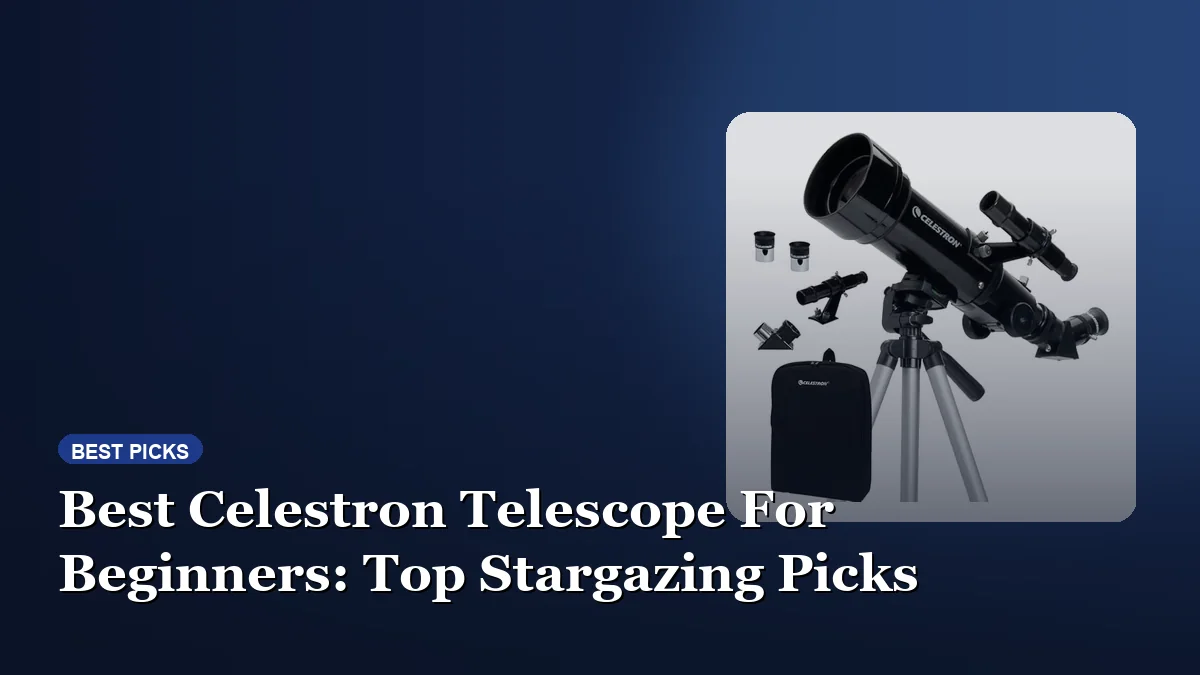
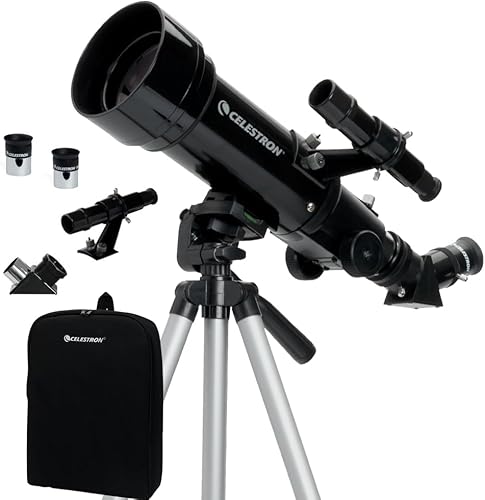 Celestron Travel Scope 70mm Beginner Portable Telescope with Backpack
70mm aperture | Altazimuth Mount | 4.2 lbs
 Celestron PowerSeeker 127EQ Reflector Telescope for Home Astronomy
127mm aperture | German Equatorial Mount | 13 lbs
 Celestron NexStar 8SE Computerized Telescope – Schmidt-Cassegrain
8-inch aperture | GoTo Computerized Mount | 24 lbs
 Celestron Inspire 100AZ Beginner Refractor Telescope with Phone Adapter
100mm aperture | Built-in Phone Adapter | 12.4 lbs
 Celestron StarSense Explorer LT 127AZ Telescope Bundle for Beginners
127mm aperture | Smartphone App Integration | Altazimuth Mount
 Celestron AstroMaster 114AZ Telescope Bundle with Smartphone Adapter
114mm aperture | Red Dot Finder | Altazimuth Mount
Finding the ideal entry-level stargazing instrument depends on your patience and budget. Our top pick is the Celestron Travel Scope 70mm Beginner Portable Telescope with Backpack because it balances portability, ease of use, and incredible value.
On This Page (8 sections)
How We Chose
- Optical Quality: We prioritized clear glass apertures capable of resolving sharp planetary details without frustrating chromatic aberration.
- Mount Stability: We tested how well each tripod and mount resisted wind vibrations and maintained steady targets during high magnifications.
- Beginner Friendly: We favored setups featuring intuitive controls, quick tool-free assembly, and accessible guidance systems for new stargazers.
Who Needs This
- Curious beginners seeking a reliable, ready-to-use gateway into backyard astronomy without a steep learning curve.
- Travelers and campers wanting a lightweight portable scope that packs down easily into a standard backpack.
- Smartphone owners eager to capture quick, shareable snapshots of the moon and bright planets.
Who Can Skip
- Advanced astrophotographers requiring heavy-duty equatorial tracking platforms for deep-sky long-exposure photography.
- Experienced observers who already own high-end optical tube assemblies and premium motorized mounts.
- Shoppers looking for ultra-cheap novelty toys rather than legitimate, precision-aligned optical instruments.
Quick Comparison: Best Celestron Telescope For Beginners
| Model | Aperture | Mount Type | Weight |
|---|---|---|---|
| 70mm | Altazimuth | 4.2 lbs |
| 127mm | Equatorial | 13 lbs |
| 8 inches | Computerized GoTo | 24 lbs |
| 100mm | Altazimuth | 12.4 lbs |
| 127mm | Altazimuth | — |
| 114mm | Altazimuth | — |
The 6 Best Celestron Telescope For Beginnerss, Reviewed
Celestron Travel Scope 70mm Beginner Portable Telescope with Backpack
View on Amazon →Designed for families on the move, this portable setup packs into a compact backpack. It delivers crisp lunar views and doubles as a terrestrial spotting scope for daytime nature watching adventures.
This setup shines brightest through its exceptional portability and fast tool-free assembly, letting you take stargazing anywhere without frustrating setup delays.
The lightweight plastic construction means the tripod can feel somewhat flimsy, requiring a steady hand during windy nights or high magnifications.
| Metric | Listed Specification |
|---|---|
| Objective Lens | 7 cm |
| Optical Tube | 17 inches |
| Mount | Altazimuth |
| Weight | 4.2 lbs |
Assembling this lightweight refractor in your backyard takes mere minutes, making spontaneous stargazing entirely stress-free for families eager to explore the night sky together.
While the included backpack makes field trips effortless, handling the delicate plastic components with care ensures long-term durability during regular outdoor adventures.
- Extremely lightweight and portable
- No-tool quick setup
- Includes custom backpack
- Wobbly tripod stability
- Plastic parts feel fragile
Owners frequently praise this starter scope for its impressive portability and child-friendly design. However, some note that stability varies and image clarity depends heavily on atmospheric conditions.
This telescope is exceptionally well suited for absolute beginners, young children, and traveling families wanting an affordable entry into casual astronomy.
Always double-check whether you might need to invest in a sturdier aftermarket tripod if you plan to observe in breezy outdoor environments.
This ultra-portable refractor offers a wonderfully fun and budget-friendly gateway to backyard astronomy for curious beginners and young explorers.
View on Amazon →Verdict
It easily represents an accessible starter kit for casual stargazers, provided you carefully manage your expectations regarding overall mount stability.
Celestron PowerSeeker 127EQ Reflector Telescope for Home Astronomy
View on Amazon →Offering serious light-gathering power, this Newtonian reflector lets you explore deep-sky wonders like the Orion Nebula alongside stunning lunar craters with impressive optical detail.
This versatile setup excels by providing substantial optical aperture at a remarkably budget-friendly price point for aspiring deep-sky astronomers.
Mastering the manual equatorial mount requires patience and practice before you can comfortably track objects across the night sky.
| Metric | Listed Specification |
|---|---|
| Objective Lens | 12.7 cm |
| Focal Length | 1000 mm |
| Mount | German EQ |
| Weight | 13 lbs |
Setting up this heavier equatorial rig in your yard takes patience, but the manual slow-motion controls allow for smooth celestial tracking once balanced correctly.
Regular collimation upkeep and careful handling of the internal mirror alignments will maintain sharp optical performance throughout years of backyard stargazing sessions.
- High light-gathering aperture
- Smooth slow-motion controls
- Includes 3x Barlow lens
- Steep equatorial learning curve
- Bulky and heavier build
Owners love the bright, detailed views of the Moon and planets, but many mention that the manual equatorial mount has a steep learning curve.
Dedicated hobbyists who are fully willing to learn equatorial tracking mechanics in exchange for deeper space views and planetary observation.
You should always double-check if you have adequate indoor storage space for a slightly heavier tripod and longer optical tube assembly.
This capable reflector delivers impressive light gathering capacity for budget-conscious users ready to tackle traditional equatorial mount learning curves.
View on Amazon →Verdict
It serves as a powerful optical tool for dedicated beginners who are fully willing to master manual equatorial tracking mechanics.
Celestron NexStar 8SE Computerized Telescope – Schmidt-Cassegrain
View on Amazon →Combining legendary optics with an automated GoTo database, this advanced telescope automatically locates and tracks over forty thousand celestial wonders with remarkable precision.
The advanced automated SkyAlign technology quickly locates thousands of celestial targets without requiring prior constellation knowledge from the user.
This premium computerized system demands reliable external power and a significant financial investment from the dedicated hobbyist.
| Metric | Listed Specification |
|---|---|
| Objective Lens | 20.3 cm |
| Focal Length | 2032 mm |
| Mount | Single Fork Arm |
| Weight | 24 lbs |
Setting up this iconic orange tube involves aligning the computerized hand control, which streamlines observing nights once you master the initial calibration steps.
Regular battery management is essential for field use, while the durable Schmidt-Cassegrain optical design ensures lasting performance for serious backyard astronomers.
- Massive 8-inch optics
- Automated GoTo tracking
- Extensive object database
- High financial investment
- Requires external power source
Users rave about the breathtaking, detailed views of distant galaxies and planets. However, some report occasional alignment frustrations and power management challenges in the field.
Serious astronomy enthusiasts who are actively seeking automated tracking convenience and professional-grade deep-sky optical performance for home observation.
You should always ensure you budget for an external power tank since internal batteries drain remarkably quickly during long observing sessions.
This impressive computerized powerhouse offers unmatched automated deep-sky viewing for dedicated stargazers with flexible room in their budget.
View on Amazon →Verdict
It easily represents the gold standard for automated backyard astronomy, blending premium optics with effortless celestial object locating.
Celestron Inspire 100AZ Beginner Refractor Telescope with Phone Adapter
View on Amazon →Featuring an innovative lens cap smartphone adapter and erect image optics, this refractor transitions seamlessly between daytime wildlife spotting and nighttime astronomy.
The clever integrated smartphone adapter and focus micrometer make capturing quick celestial photos remarkably straightforward for eager beginners.
The unique asymmetrical single-arm mount design can occasionally introduce some noticeable stability wobbles when focusing at higher magnifications.
| Metric | Listed Specification |
|---|---|
| Objective Lens | 10 cm |
| Focal Length | 660 mm |
| Mount | Asymmetrical AltAZ |
| Weight | 12.4 lbs |
The folding accessory tray and quick-lock legs allow for lightning-fast setup on your patio, minimizing frustration when impromptu stargazing opportunities arise.
Built-in red LED illumination preserves your night vision during field adjustments, while the durable refractor optics require virtually zero routine maintenance.
- Built-in smartphone adapter
- Erect image for land viewing
- Handy focus micrometer
- Asymmetrical mount wobbles
- Heavy for a refractor
Customers praise the crisp terrestrial views and clever integrated smartphone adapter. However, some note that the tripod legs can feel slightly wobbly during breezy weather.
Versatile hobbyists who are wanting a reliable dual-purpose scope for both daytime wildlife viewing and casual nighttime stargazing sessions.
You should always double-check whether your specific smartphone model aligns properly with the built-in lens cap camera adapter.
This very clever hybrid refractor delivers sharp dual-use performance and effortless smartphone integration for enthusiastic beginner photographers.
View on Amazon →Verdict
It easily stands out as an exceptionally user-friendly starter option for families exploring both terrestrial nature and astronomy.
Celestron StarSense Explorer LT 127AZ Telescope Bundle for Beginners
View on Amazon →By leveraging your smartphone's camera and app, this ingenious telescope guides you across the night sky with real-time directional arrows, eliminating manual star chart guesswork.
The highly innovative StarSense app guidance system makes finding hard-to-spot celestial objects remarkably effortless for absolute beginners.
Accurate optical alignment relies entirely on your personal smartphone remaining securely docked and fully charged during outdoor observation.
| Metric | Listed Specification |
|---|---|
| Objective Lens | 12.7 cm |
| Optical Tube | 18 inches |
| Mount | Altazimuth |
| Focus Type | Manual Focus |
Assembling the lightweight altazimuth mount takes minutes, and launching the companion app turns backyard stargazing into an interactive treasure hunt for families.
Routine mirror collimation is straightforward, while keeping your phone battery charged ensures uninterrupted app tracking throughout extended evening stargazing sessions.
- App-guided object locating
- Solid light-gathering aperture
- Includes moon filter
- Requires compatible smartphone
- Phone battery dependency
Tech-savvy beginners who specifically want interactive, app-guided navigation without paying for an expensive motorized computerized mount system.
You must always verify that your specific smartphone operating system fully supports the proprietary StarSense Explorer mobile application.
This clever app-guided reflector brilliantly bridges the gap between traditional manual scopes and expensive computerized tracking systems.
View on Amazon →Verdict
It easily provides a truly revolutionary app-powered stargazing experience that makes navigating the cosmos accessible to everyone.
Celestron AstroMaster 114AZ Telescope Bundle with Smartphone Adapter
View on Amazon →Equipped with a generous 114mm aperture and an intuitive red dot finder, this manual reflector delivers clear views of lunar craters and Saturn's rings.
The straightforward manual altazimuth mount and red dot finder provide a classic, highly reliable stargazing experience for new learners.
Traditional manual tracking requires frequent micro-adjustments to keep fast-moving celestial targets centered within the high-magnification eyepiece view.
| Metric | Listed Specification |
|---|---|
| Objective Lens | 11.4 cm |
| Optical Tube | 20.5 inches |
| Mount | Altazimuth |
| Focus Type | Manual Focus |
Transporting this lightweight reflector to your backyard is entirely hassle-free, allowing for quick setup on patios or decks during clear nights.
Periodic mirror alignment upkeep ensures lasting optical clarity, while the included moon filter reduces glare for comfortable lunar viewing sessions.
- Bright 114mm optics
- Intuitive red dot finder
- Includes moon filter
- Manual tracking adjustments
- Longer tube storage needed
Traditional beginners who want a dependable, straightforward, and no-frills reflector for deep-sky and detailed lunar viewing sessions.
You should always confirm that you have enough room to store the slightly longer optical tube assembly safely indoors.
This highly reliable manual reflector offers an accessible optical introduction to deep-sky astronomy on a sensible budget.
View on Amazon →Verdict
It remains a solid choice for traditional learners who prefer mastering manual telescope operation over digital electronics.
Setting Up and Maintaining Your Beginner Telescope
Always assemble your mount on level ground indoors before venturing outside into the dark. Secure every thumbscrew firmly to prevent unwanted wobbles while tracking distant planets and faint nebulae across the night sky.
Store your optical tube with dust caps securely attached in a dry closet. Never touch glass lenses directly, instead relying on an air blower to gently remove dust particles without scratching delicate optical coatings.
Buying Guide & Red Flags for Best Celestron Telescope For Beginnerss
Check these points before you buy to avoid common pitfalls:
Flimsy plastic tripods that wiggle uncontrollably whenever you touch the focus knobs.
Exaggerated magnification claims on packaging that exceed the optical limits of the aperture.
Missing finderscopes or poorly threaded mounting hardware that complicates initial alignment.
Lenses showing visible internal dust, smudges, or scratches right out of the shipping box.
Complicated computerized mounts lacking intuitive setup guides or reliable battery compartments.
What makes a telescope good for beginners?
A great beginner telescope combines simple manual controls with reliable optical clarity and sturdy tripod support. Models featuring intuitive altazimuth mounts let you start viewing planets immediately without complex polar alignment procedures.
Lightweight designs and portable backpacks also encourage frequent outdoor stargazing adventures rather than gathering dust in a closet. Ultimately, ease of assembly and clear instructions determine whether a new hobbyist stays engaged with astronomy.
What does the 10-point Lab Score evaluate?
Our rigorous 10-point Lab Score evaluates optical sharpness, everyday mechanical practicality, and material durability. We thoroughly assess how easily each mount tracks targets and whether included accessories genuinely benefit novice users.
Real-world owner satisfaction and long-term build reliability heavily influence our final ratings. This comprehensive editorial review ensures you invest in a genuinely rewarding stargazing instrument.
Do I need a computerized GoTo telescope?
Computerized GoTo telescopes automatically locate thousands of celestial objects using internal databases and motorized tracking mounts. While this advanced technology removes the frustration of searching manually for faint nebulae, it requires reliable external power and initial setup calibration.
Beginners on a budget often prefer manual scopes, while tech-savvy learners enjoy the rapid discovery offered by automated guidance systems.
Can I use my smartphone with these telescopes?
Many modern entry-level scopes include universal smartphone adapters or dedicated companion apps to simplify stargazing. These handy attachments let you align your phone camera with the eyepiece to capture memorable lunar photographs.
Smartphone apps also use your device sensors to guide you directly toward visible planets and constellations in real time. It is a fantastic way for families to share and record their nighttime discoveries easily.
How much aperture do I actually need?
Aperture refers to the diameter of the primary lens or mirror gathering incoming starlight. Larger apertures collect more light, allowing you to observe fainter deep-sky galaxies and resolve sharper planetary details.
For true beginners, an aperture between seventy and one hundred millimeters provides an ideal balance of portability, affordability, and performance. Anything smaller struggles with dim objects, while larger tubes quickly become heavy and cumbersome.
How do I care for and clean my telescope optics?
Proper maintenance ensures your optics remain crystal clear for years of satisfying nighttime exploration. Always replace protective dust caps immediately after every viewing session to prevent airborne debris accumulation.
If dust settles on the glass, use a specialized bulb air blower to gently sweep particles away. Never wipe lenses with dry paper towels or cloth, as this can permanently scratch the sensitive anti-reflective optical coatings.
Final Verdict
Choosing the right entry-level stargazing instrument opens up an entire universe of weekend exploration. For most shoppers, the Celestron Travel Scope 70mm Beginner Portable Telescope with Backpack delivers the ultimate blend of portability, user-friendly operation, and stellar value.
Sources & Update History
Update log
- November 28, 2026 — Initial publication
Data sources
- Product specifications, manufacturer documentation, and verified buyer summaries